Lin Hairuo, Shen Liang, Zhang Xiajun, Xie Jiahe, Hao Huixin, Zhang Yingxue, Chen Zhenhuan, Yamamoto Hiroshi, Liao Wangjun, Bin Jianping, Cao Shiping, Huang Xiaobo, Liao Yulin
State Key Laboratory of Organ Failure Research, Department of Cardiology, Nanfang Hospital, Southern Medical University, Guangzhou, 510515, China.
Department of Cardiology, first affiliated hospital of Jiaxing University, Jiaxing, Zhejiang, China.
PLoS One. 2016 Jun 29;11(6):e0158514. doi: 10.1371/journal.pone.0158514. eCollection 2016.
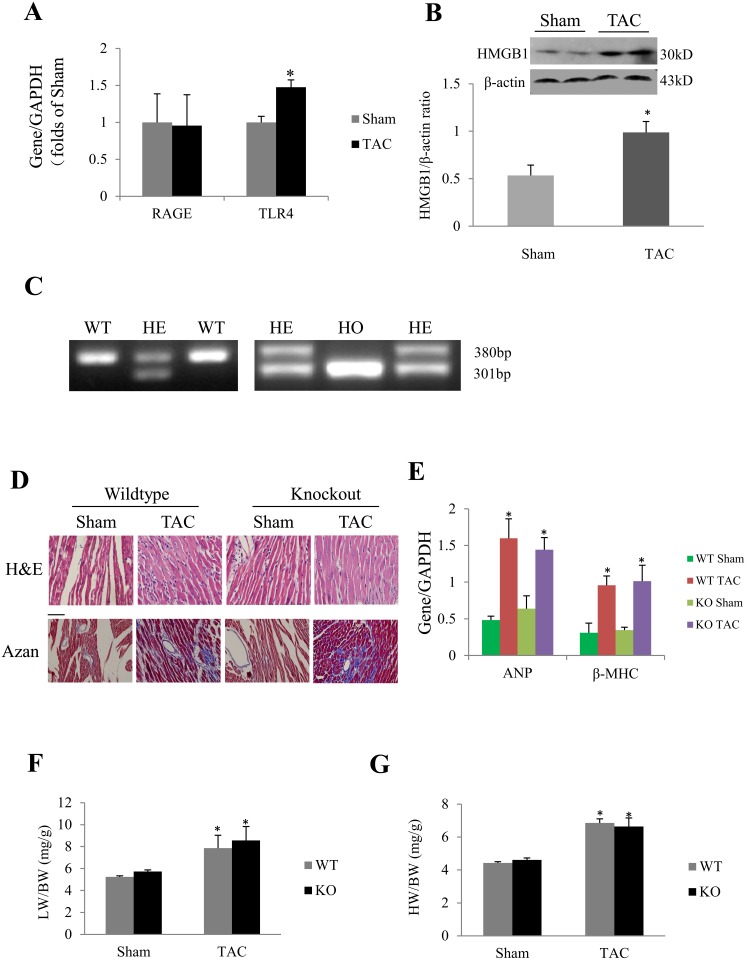
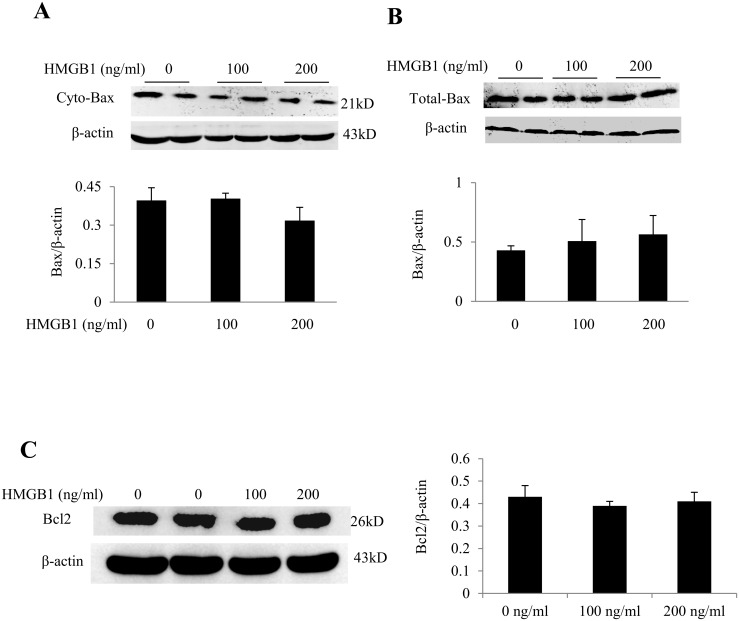
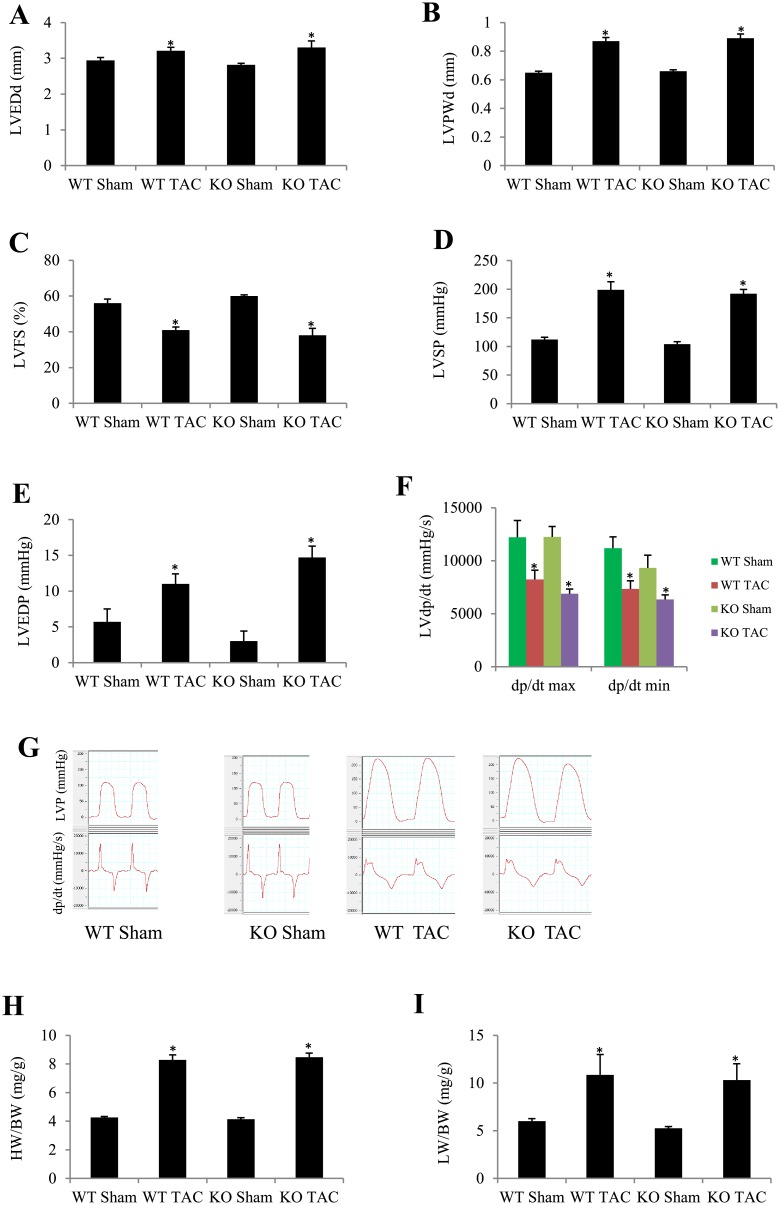
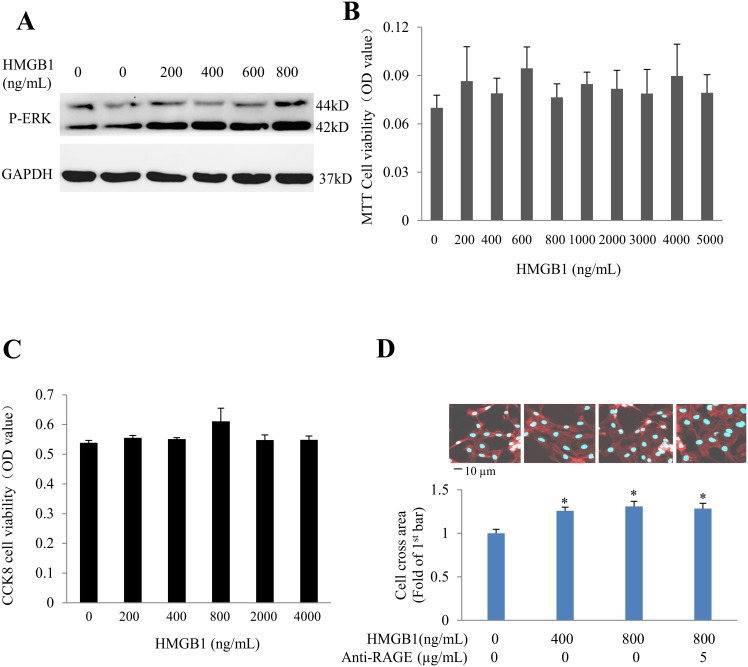
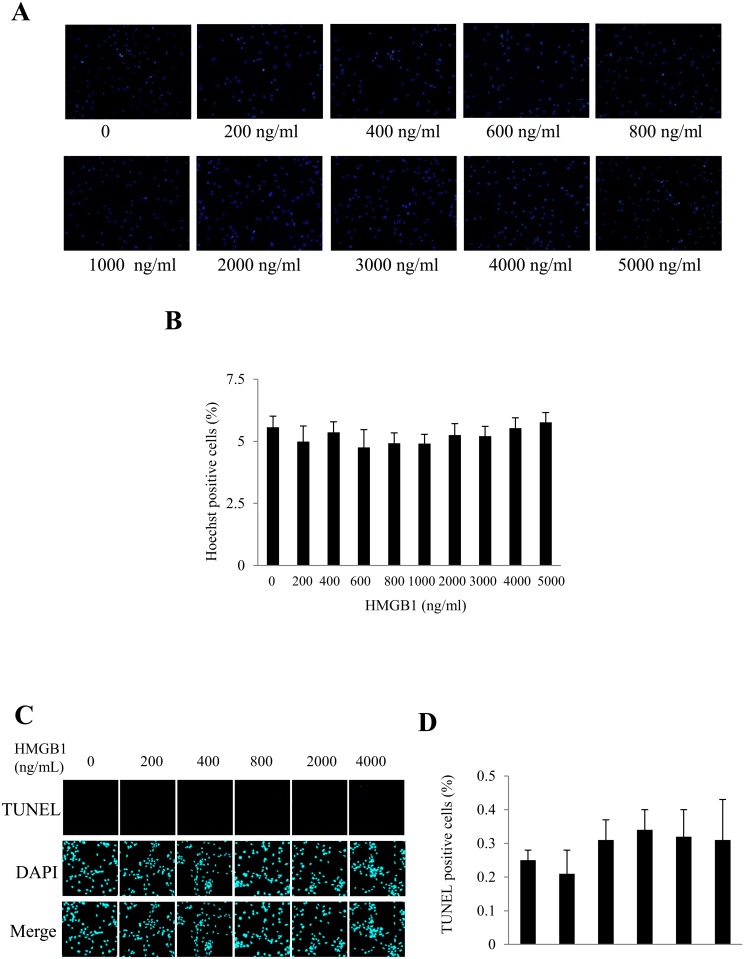
High-mobility group box1 (HMGB1) exerts effects on inflammation by binding to receptor for advanced glycation end products (RAGE) or Toll-like receptor 4. Considering that inflammation is involved in pressure overload-induced cardiac hypertrophy, we herein attempted to investigate whether HMGB1 plays a role in myocardial hypertrophy in RAGE knockout mice as well as in the growth and apoptosis of cardiomyocytes. The myocardial expression of RAGE was not significantly changed while TLR4 mRNA was upregulated in response to transverse aortic constriction (TAC) for 1 week. The myocardial expression of HMGB1 protein was markedly increased in TAC group when compared to the sham group. Heart weight to body weight ratio (HW/BW) and lung weight to body weight ratio (LW/BW) were evaluated in RAGE knockout (KO) and wild-type (WT) mice 1 week after TAC. Significant larger HW/BW and LW/BW ratios were found in TAC groups than the corresponding sham groups, but no significant difference was found between KO and WT TAC mice. Similar results were also found when TAC duration was extended to 4 weeks. Cultured neonatal rat cardiomyocytes were treated with different concentrations of recombinant HMGB1, then cell viability was determined using MTT and CCK8 assays and cell apoptosis was determined by Hoechst staining and TUNEL assay. The results came out that HMGB1 exerted no influence on viability or apoptosis of cardiomyocytes. Besides, the protein expression levels of Bax and Bcl2 in response to different concentrations of HMGB1 were similar. These findings indicate that HMGB1 neither exerts influence on cardiac remodeling by binding to RAGE nor induces apoptosis of cardiomyocytes under physiological condition.
高迁移率族蛋白盒1(HMGB1)通过与晚期糖基化终产物受体(RAGE)或Toll样受体4结合发挥炎症调节作用。鉴于炎症参与压力超负荷诱导的心肌肥大,我们试图研究HMGB1在RAGE基因敲除小鼠的心肌肥大以及心肌细胞生长和凋亡中是否发挥作用。在横向主动脉缩窄(TAC)1周后,RAGE的心肌表达无明显变化,而TLR4 mRNA上调。与假手术组相比,TAC组中HMGB1蛋白的心肌表达显著增加。在TAC术后1周,对RAGE基因敲除(KO)小鼠和野生型(WT)小鼠的心脏重量与体重比(HW/BW)和肺重量与体重比(LW/BW)进行评估。TAC组的HW/BW和LW/BW比值显著大于相应的假手术组,但KO和WT TAC小鼠之间无显著差异。当TAC持续时间延长至4周时,也得到了类似的结果。用不同浓度的重组HMGB1处理培养的新生大鼠心肌细胞,然后用MTT和CCK8法检测细胞活力,用Hoechst染色和TUNEL法检测细胞凋亡。结果表明,HMGB1对心肌细胞的活力或凋亡没有影响。此外,不同浓度HMGB1作用下Bax和Bcl2的蛋白表达水平相似。这些结果表明,在生理条件下,HMGB1既不通过与RAGE结合影响心脏重塑,也不诱导心肌细胞凋亡。