Haider Syed, McIntyre Alan, van Stiphout Ruud G P M, Winchester Laura M, Wigfield Simon, Harris Adrian L, Buffa Francesca M
Computational Biology and Integrative Genomics, Department of Oncology, University of Oxford, Oxford, UK.
Molecular Oncology Laboratories, Department of Oncology, The Weatherall Institute of Molecular Medicine, University of Oxford, Oxford, UK.
Genome Biol. 2016 Jun 29;17(1):140. doi: 10.1186/s13059-016-0999-8.
Altered metabolism is a hallmark of cancer. However, the role of genomic changes in metabolic genes driving the tumour metabolic shift remains to be elucidated. Here, we have investigated the genomic and transcriptomic changes underlying this shift across ten different cancer types.
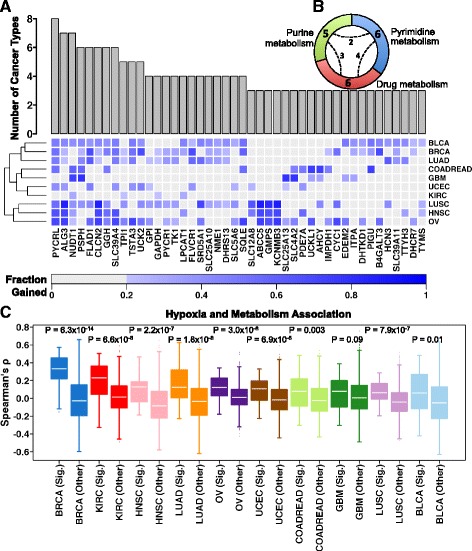
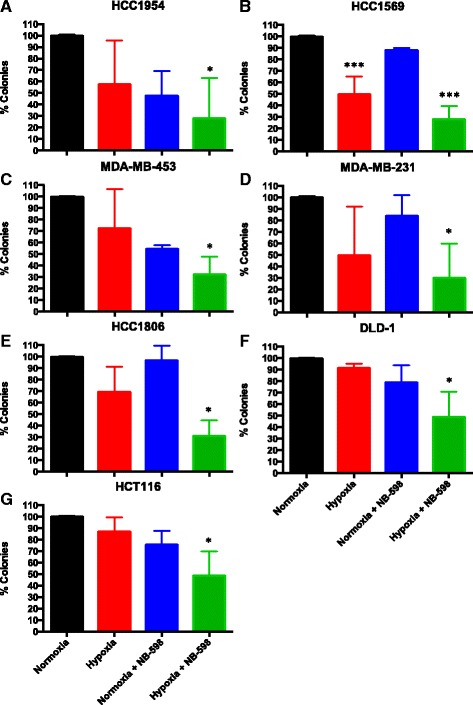
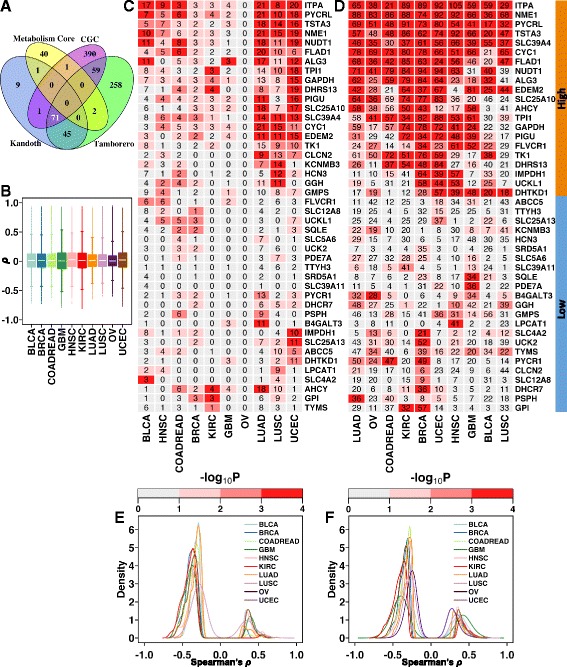
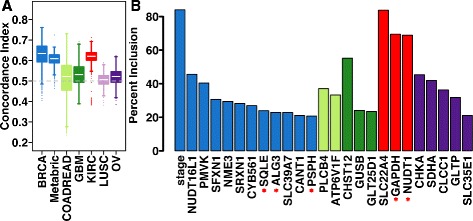
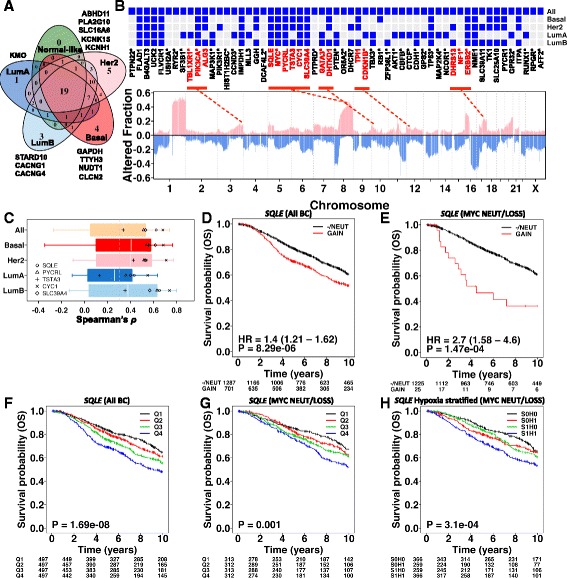
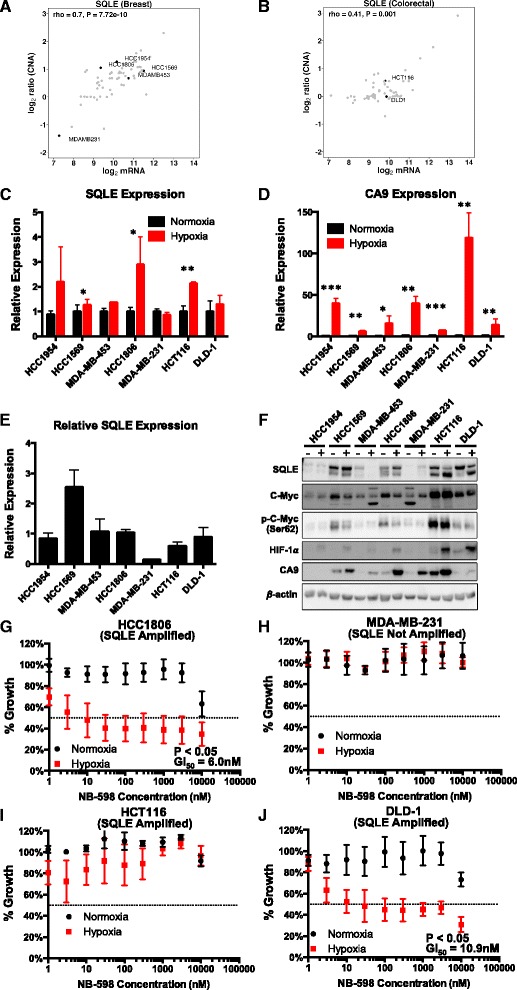
A systematic pan-cancer analysis of 6538 tumour/normal samples covering ten major cancer types identified a core metabolic signature of 44 genes that exhibit high frequency somatic copy number gains/amplifications (>20 % cases) associated with increased mRNA expression (ρ > 0.3, q < 10(-3)). Prognostic classifiers using these genes were confirmed in independent datasets for breast and kidney cancers. Interestingly, this signature is strongly associated with hypoxia, with nine out of ten cancer types showing increased expression and five out of ten cancer types showing increased gain/amplification of these genes in hypoxic tumours (P ≤ 0.01). Further validation in breast and colorectal cancer cell lines highlighted squalene epoxidase, an oxygen-requiring enzyme in cholesterol biosynthesis, as a driver of dysregulated metabolism and a key player in maintaining cell survival under hypoxia.
This study reveals somatic genomic alterations underlying a pan-cancer metabolic shift and suggests genomic adaptation of these genes as a survival mechanism in hypoxic tumours.
代谢改变是癌症的一个标志。然而,驱动肿瘤代谢转变的代谢基因中的基因组变化所起的作用仍有待阐明。在此,我们研究了十种不同癌症类型中这种转变背后的基因组和转录组变化。
对涵盖十种主要癌症类型的6538个肿瘤/正常样本进行的系统性泛癌分析确定了一个由44个基因组成的核心代谢特征,这些基因表现出高频体细胞拷贝数增加/扩增(>20%的病例),且与mRNA表达增加相关(ρ>0.3,q<10(-3))。使用这些基因的预后分类器在乳腺癌和肾癌的独立数据集中得到了验证。有趣的是,这个特征与缺氧密切相关,十种癌症类型中有九种在缺氧肿瘤中这些基因的表达增加,十种癌症类型中有五种在缺氧肿瘤中这些基因的拷贝数增加/扩增增加(P≤0.01)。在乳腺癌和结肠癌细胞系中的进一步验证突出了角鲨烯环氧酶,它是胆固醇生物合成中一种需氧酶,是代谢失调的驱动因素,也是缺氧条件下维持细胞存活的关键因素。
本研究揭示了泛癌代谢转变背后的体细胞基因组改变,并表明这些基因的基因组适应性是缺氧肿瘤中的一种生存机制。