Smalley Claire, Bechelli Jeremy, Rockx-Brouwer Dedeke, Saito Tais, Azar Sasha R, Ismail Nahed, Walker David H, Fang Rong
Department of Pathology, University of Texas Medical Branch at Galveston, Galveston, Texas, United States of America.
Department of Pathology, University of Pittsburgh, Pittsburgh, Pennsylvania, United States of America.
PLoS One. 2016 Jun 30;11(6):e0157231. doi: 10.1371/journal.pone.0157231. eCollection 2016.
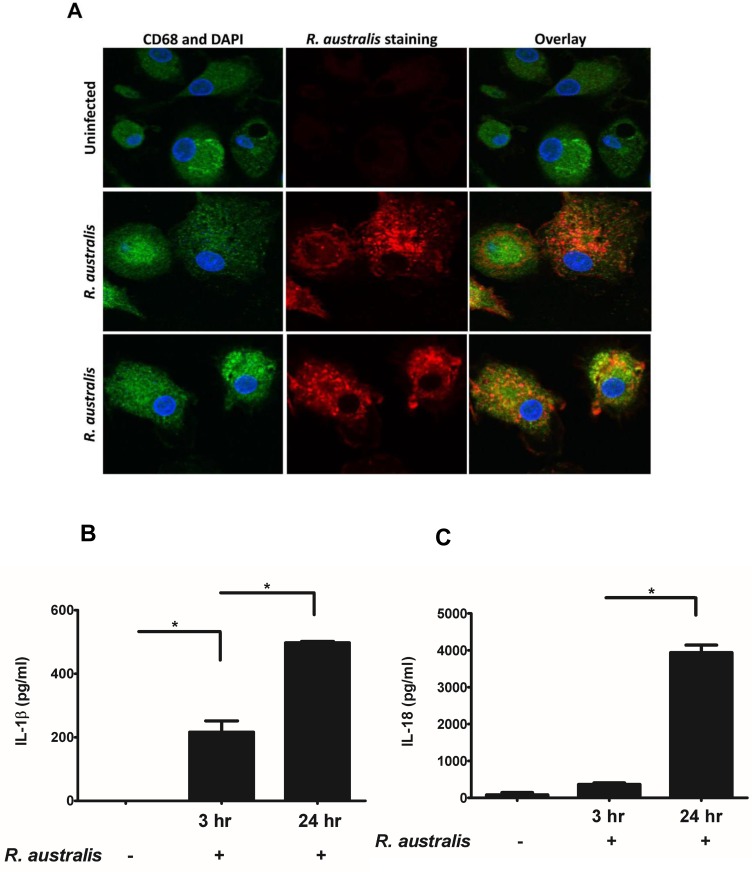
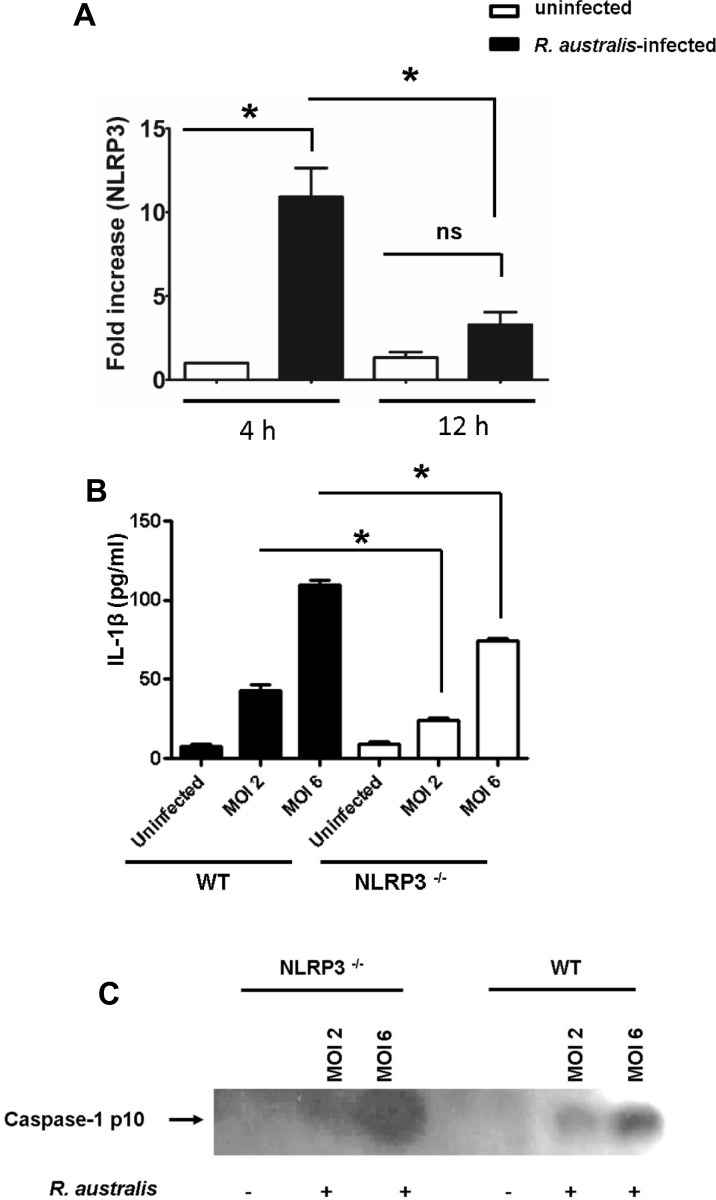
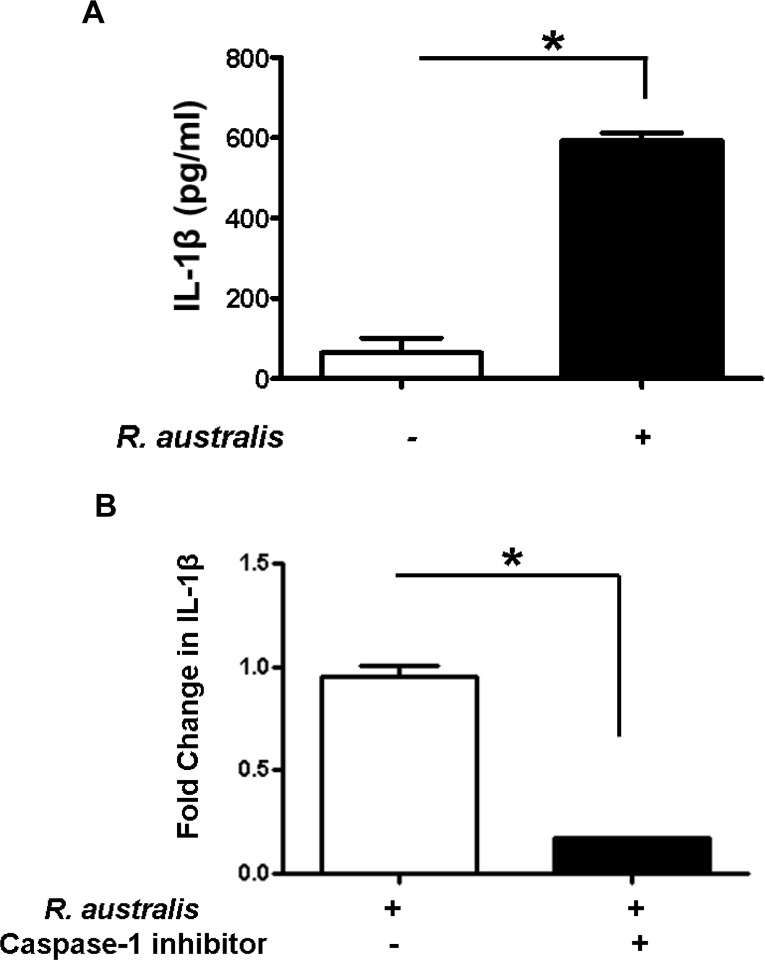
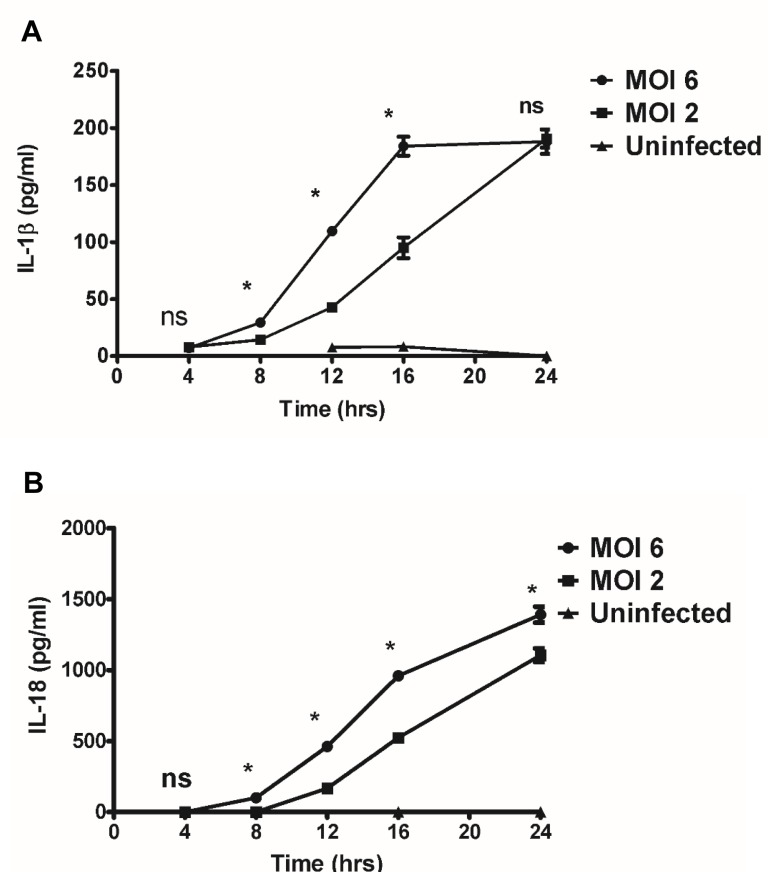
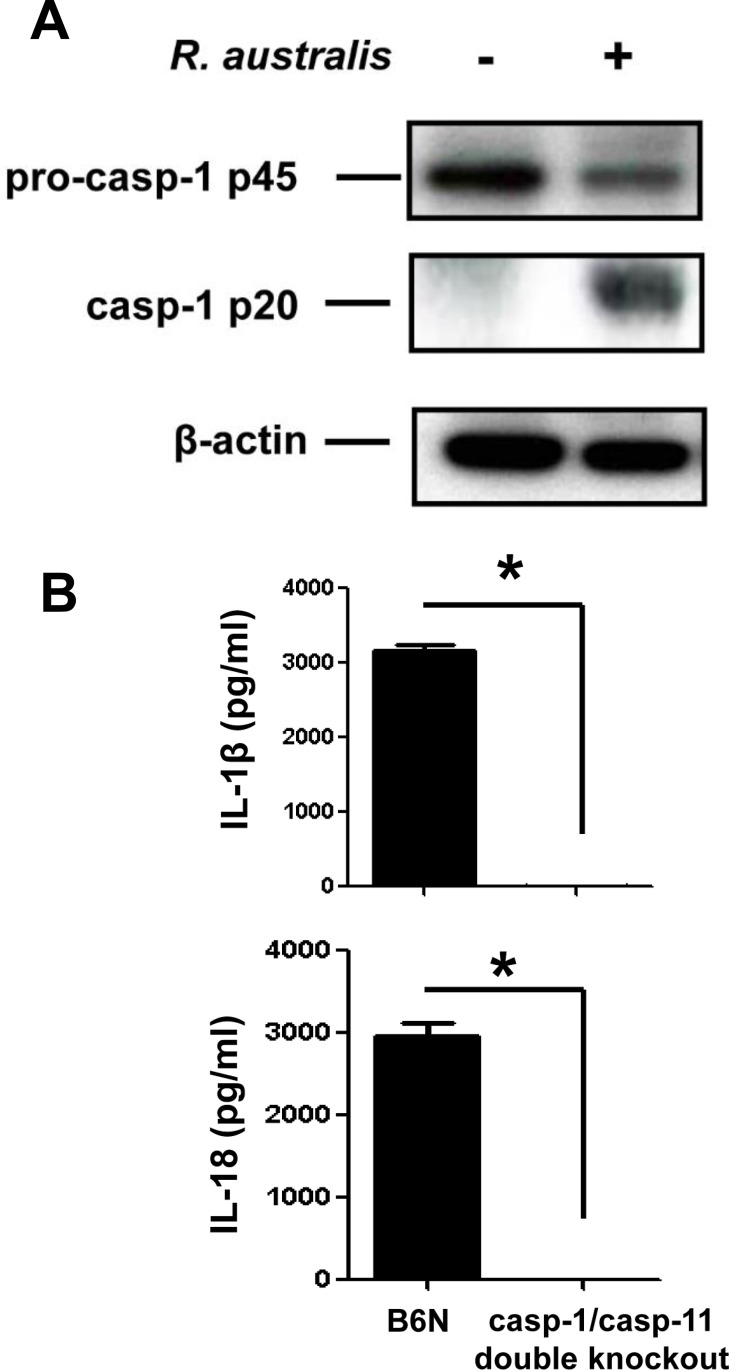
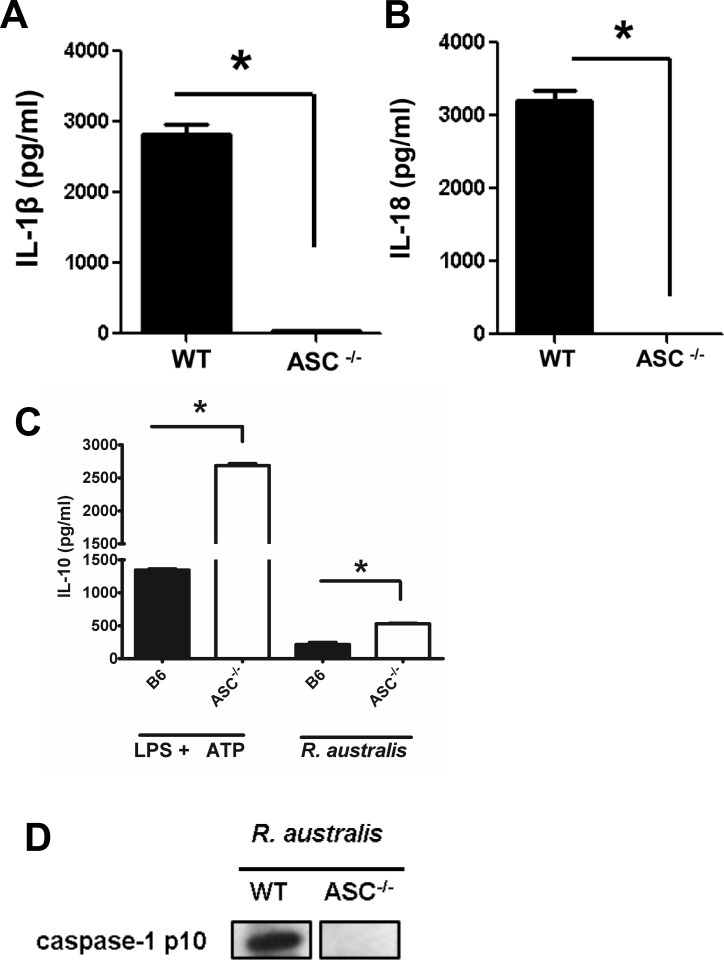
Rickettsiae actively escape from vacuoles and replicate free in the cytoplasm of host cells, where inflammasomes survey the invading pathogens. In the present study, we investigated the interactions of Rickettsia australis with the inflammasome in both mouse and human macrophages. R. australis induced a significant level of IL-1β secretion by human macrophages, which was significantly reduced upon treatment with an inhibitor of caspase-1 compared to untreated controls, suggesting caspase-1-dependent inflammasome activation. Rickettsia induced significant secretion of IL-1β and IL-18 in vitro by infected mouse bone marrow-derived macrophages (BMMs) as early as 8-12 h post infection (p.i.) in a dose-dependent manner. Secretion of these cytokines was accompanied by cleavage of caspase-1 and was completely abrogated in BMMs deficient in caspase-1/caspase-11 or apoptosis-associated speck-like protein containing a caspase activation and recruitment domain (ASC), suggesting that R. australis activate the ASC-dependent inflammasome. Interestingly, in response to the same quantity of rickettsiae, NLRP3-/- BMMs significantly reduced the secretion level of IL-1β compared to wild type (WT) controls, suggesting that NLRP3 inflammasome contributes to cytosolic recognition of R. australis in vitro. Rickettsial load in spleen, but not liver and lung, of R. australis-infected NLRP3-/- mice was significantly greater compared to WT mice. These data suggest that NLRP3 inflammasome plays a role in host control of bacteria in vivo in a tissue-specific manner. Taken together, our data, for the first time, illustrate the activation of ASC-dependent inflammasome by R. australis in macrophages in which NLRP3 is involved.
立克次氏体可主动从液泡中逸出,并在宿主细胞的细胞质中自由复制,而炎性小体则在此监测入侵的病原体。在本研究中,我们调查了澳大利亚立克次氏体与小鼠和人类巨噬细胞中炎性小体的相互作用。澳大利亚立克次氏体可诱导人类巨噬细胞分泌显著水平的白细胞介素-1β(IL-1β),与未处理的对照相比,用半胱天冬酶-1抑制剂处理后,IL-1β的分泌显著减少,这表明存在半胱天冬酶-1依赖性炎性小体激活。立克次氏体早在感染后8 - 12小时(p.i.)就能以剂量依赖的方式在体外诱导感染的小鼠骨髓来源巨噬细胞(BMMs)显著分泌IL-1β和IL-18。这些细胞因子的分泌伴随着半胱天冬酶-1的裂解,并且在缺乏半胱天冬酶-1/半胱天冬酶-11或含有半胱天冬酶激活和招募结构域(ASC)的凋亡相关斑点样蛋白的BMMs中完全消除,这表明澳大利亚立克次氏体激活了ASC依赖性炎性小体。有趣的是,与野生型(WT)对照相比,响应相同数量的立克次氏体时,NLRP3基因敲除的BMMs显著降低了IL-1β的分泌水平,这表明NLRP3炎性小体有助于体外对澳大利亚立克次氏体的胞质识别。与WT小鼠相比,感染澳大利亚立克次氏体的NLRP3基因敲除小鼠脾脏中的立克次氏体载量显著更高,而肝脏和肺中的载量则无显著差异。这些数据表明,NLRP3炎性小体在体内以组织特异性方式在宿主控制细菌方面发挥作用。综上所述,我们的数据首次阐明了澳大利亚立克次氏体在巨噬细胞中激活了涉及NLRP3的ASC依赖性炎性小体。