Chen Su-Ren, Tang J-X, Cheng J-M, Hao X-X, Wang Y-Q, Wang X-X, Liu Y-X
State Key Laboratory of Stem Cell and Reproductive Biology, Institute of Zoology, Chinese Academy of Sciences, Beijing, China.
University of the Chinese Academy of Sciences, Beijing, China.
Cell Death Dis. 2016 Jun 30;7(6):e2281. doi: 10.1038/cddis.2016.191.
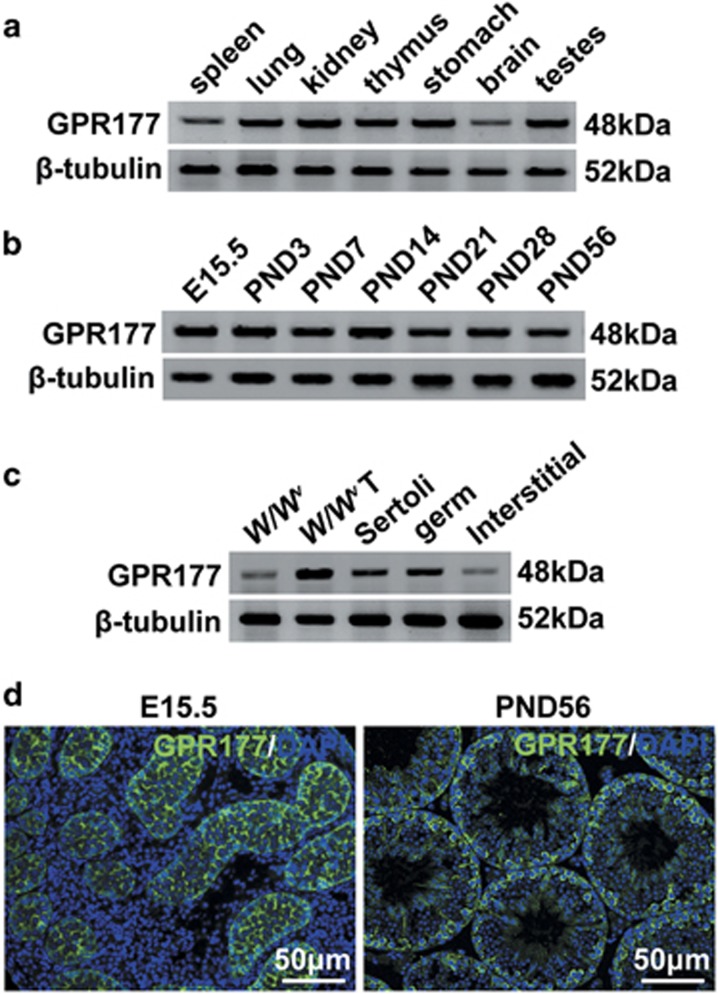
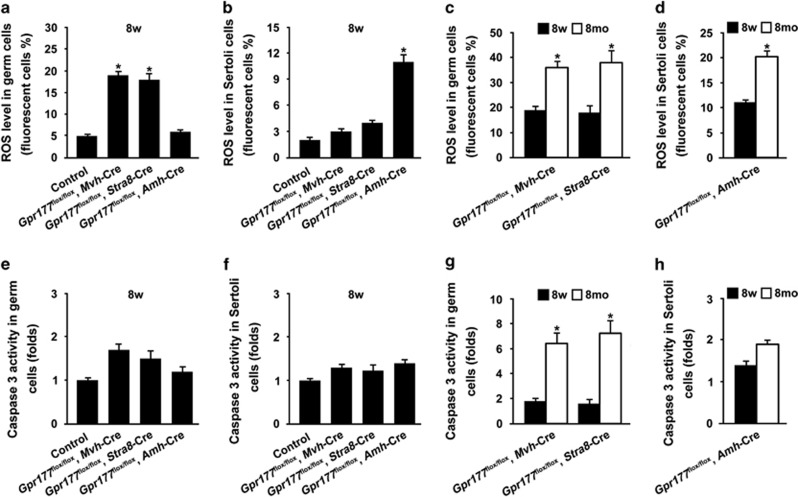
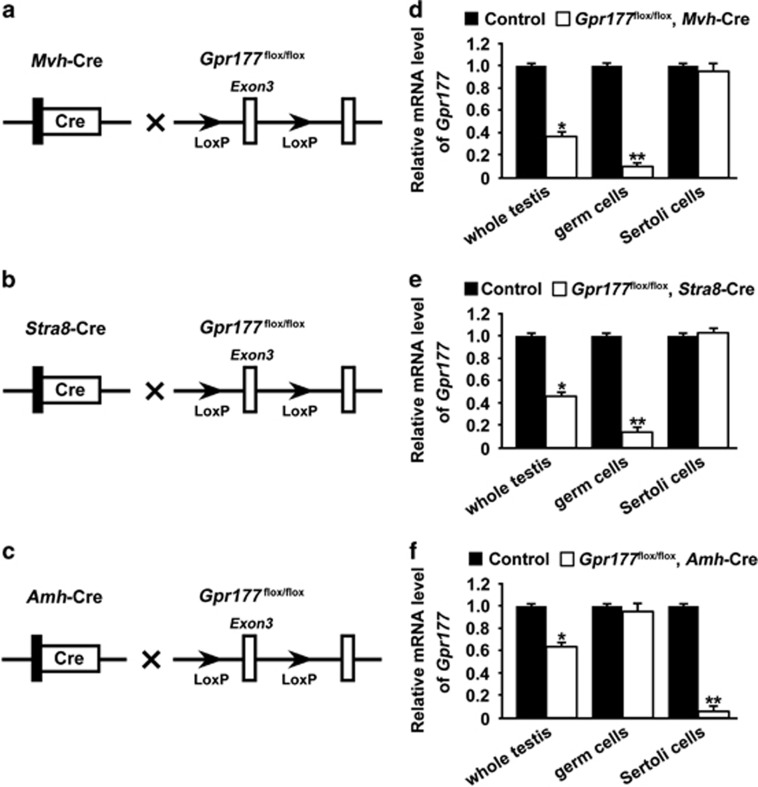
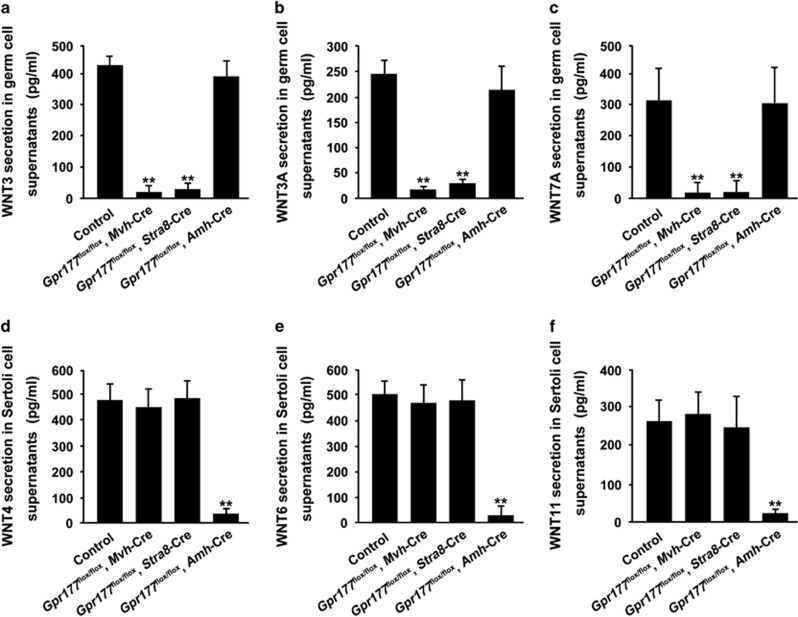
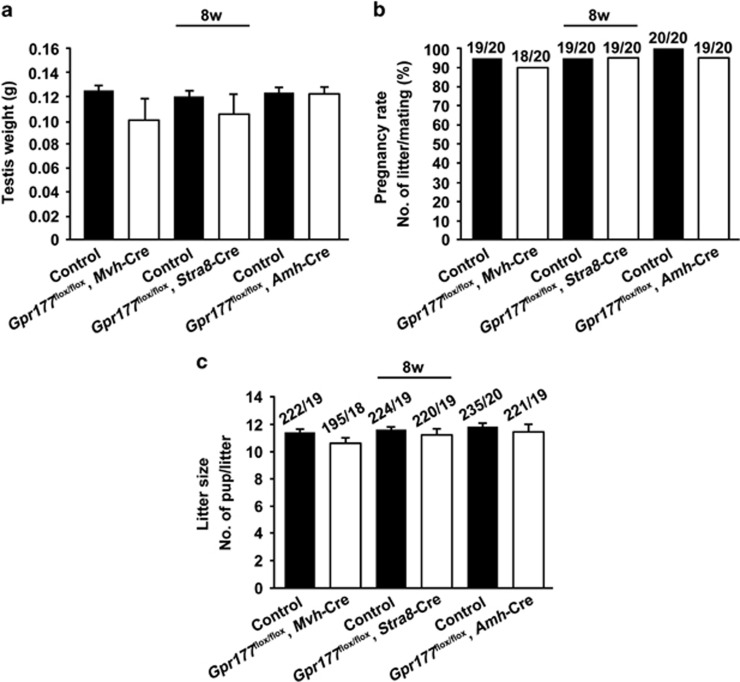
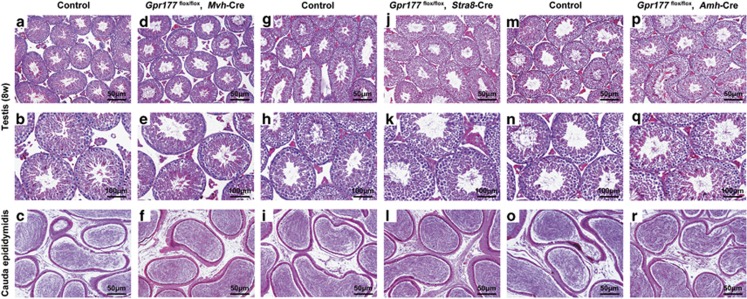
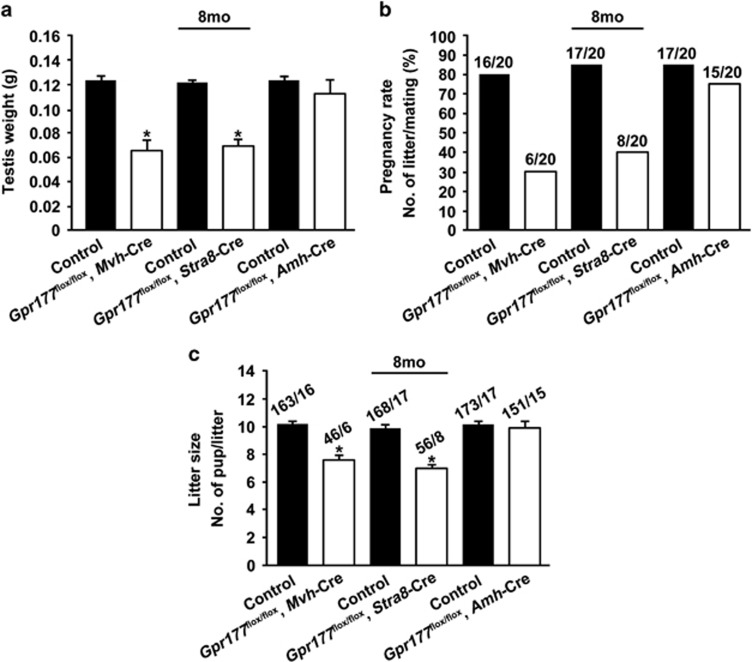
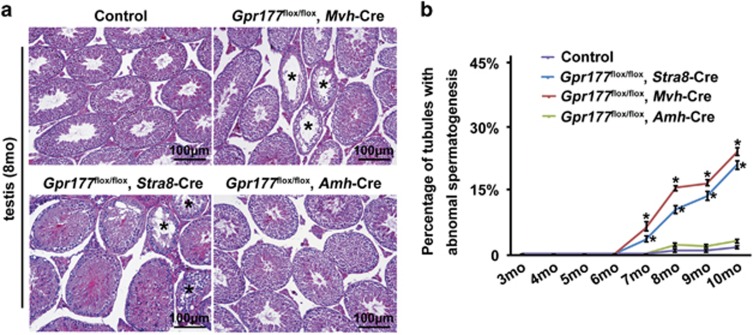
Wingless-related MMTV integration site (WNT) proteins and several other components of the WNT signalling pathway are expressed in the murine testes. However, mice mutant for WNT signalling effector β-catenin using different Cre drivers have phenotypes that are inconsistent with each other. The complexity and overlapping expression of WNT signalling cascades have prevented researchers from dissecting their function in spermatogenesis. Depletion of the Gpr177 gene (the mouse orthologue of Drosophila Wntless), which is required for the secretion of various WNTs, makes it possible to genetically dissect the overall effect of WNTs in testis development. In this study, the Gpr177 gene was conditionally depleted in germ cells (Gpr177(flox/flox), Mvh-Cre; Gpr177(flox/flox), Stra8-Cre) and Sertoli cells (Gpr177(flox/flox), Amh-Cre). No obvious defects in fertility and spermatogenesis were observed in these three Gpr177 conditional knockout (cKO) mice at 8 weeks. However, late-onset testicular atrophy and fertility decline in two germ cell-specific Gpr177 deletion mice were noted at 8 months. In contrast, we did not observe any abnormalities of spermatogenesis and fertility, even in 8-month-old Gpr177(flox/flox), Amh-Cre mice. Elevation of reactive oxygen species (ROS) was detected in Gpr177 cKO germ cells and Sertoli cells and exhibited an age-dependent manner. However, significant increase in the activity of Caspase 3 was only observed in germ cells from 8-month-old germ cell-specific Gpr177 knockout mice. In conclusion, GPR177 in Sertoli cells had no apparent influence on spermatogenesis, whereas loss of GPR177 in germ cells disrupted spermatogenesis in an age-dependent manner via elevating ROS levels and triggering germ cell apoptosis.
无翅相关MMTV整合位点(WNT)蛋白及WNT信号通路的其他几个组分在小鼠睾丸中表达。然而,使用不同Cre驱动子的WNT信号效应因子β-连环蛋白突变小鼠的表型相互不一致。WNT信号级联反应的复杂性和重叠表达使得研究人员难以剖析其在精子发生中的功能。Gpr177基因(果蝇Wntless的小鼠同源物)的缺失是各种WNTs分泌所必需的,这使得从遗传学角度剖析WNTs在睾丸发育中的总体作用成为可能。在本研究中,Gpr177基因在生殖细胞(Gpr177(flox/flox),Mvh-Cre;Gpr177(flox/flox),Stra8-Cre)和支持细胞(Gpr177(flox/flox),Amh-Cre)中条件性缺失。在8周龄时,这三只Gpr177条件性敲除(cKO)小鼠未观察到生育力和精子发生的明显缺陷。然而,在8月龄时,注意到两只生殖细胞特异性Gpr177缺失小鼠出现迟发性睾丸萎缩和生育力下降。相比之下,即使在8月龄的Gpr177(flox/flox),Amh-Cre小鼠中,我们也未观察到精子发生和生育力的任何异常。在Gpr177 cKO生殖细胞和支持细胞中检测到活性氧(ROS)升高,并呈现年龄依赖性。然而,仅在8月龄生殖细胞特异性Gpr177敲除小鼠的生殖细胞中观察到Caspase 3活性显著增加。总之,支持细胞中的GPR177对精子发生无明显影响,而生殖细胞中GPR177的缺失通过升高ROS水平和触发生殖细胞凋亡以年龄依赖性方式破坏精子发生。