Lei R, Zhang K, Liu K, Shao X, Ding Z, Wang F, Hong Y, Zhu M, Li H, Li H
West China Developmental and Stem Cell Institute, West China Second Hospital, and State Key Laboratory of Biotherapy, West China Hospital, Sichuan University, Chengdu 610041, China.
SARITEX Center for Stem Cell Engineering Translational Medicine, Shanghai East Hospital, Tongji University School of Medicine, Shanghai 200123, China.
Cell Death Dis. 2016 Jun 30;7(6):e2282. doi: 10.1038/cddis.2016.170.
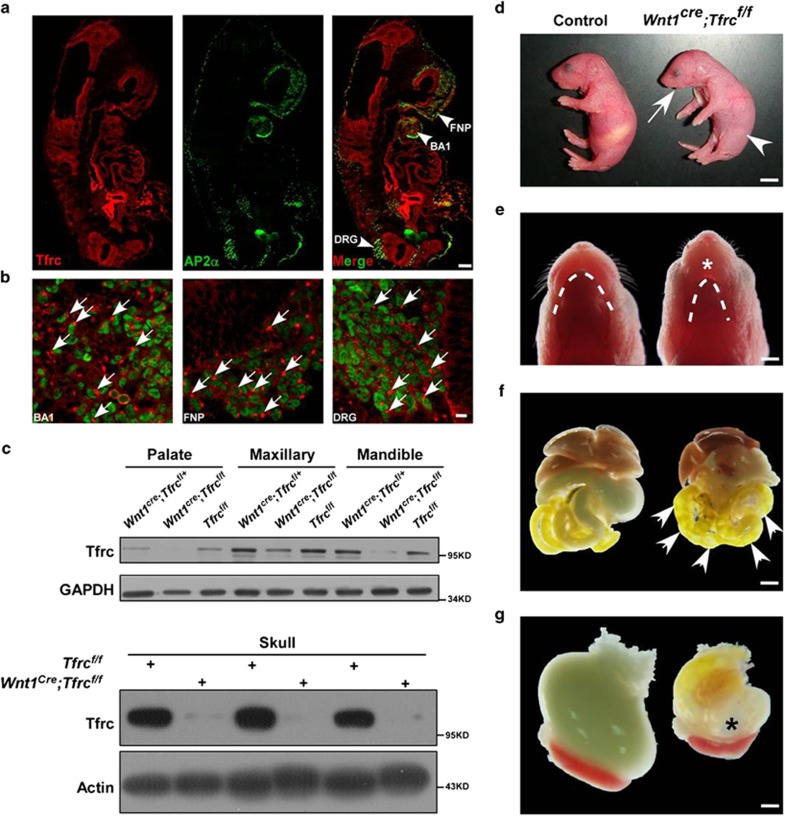
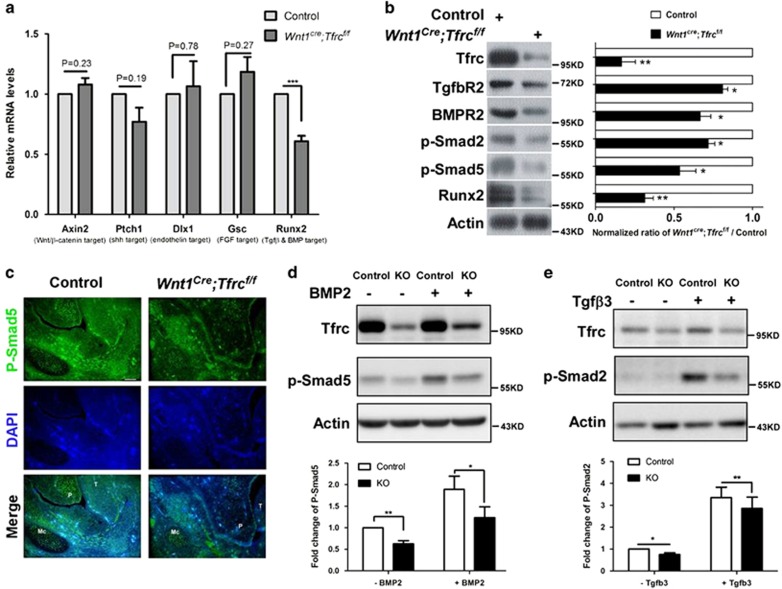
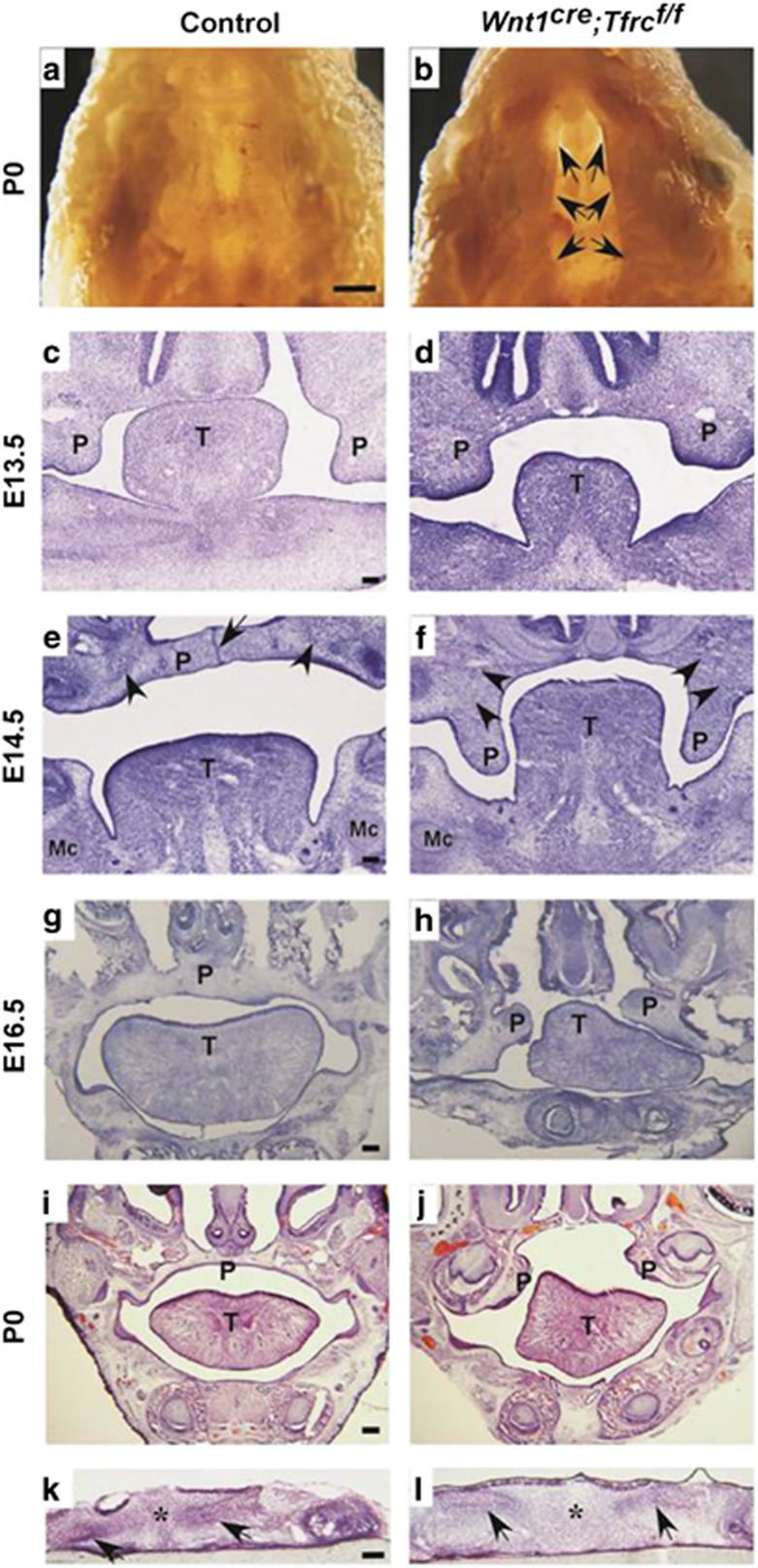
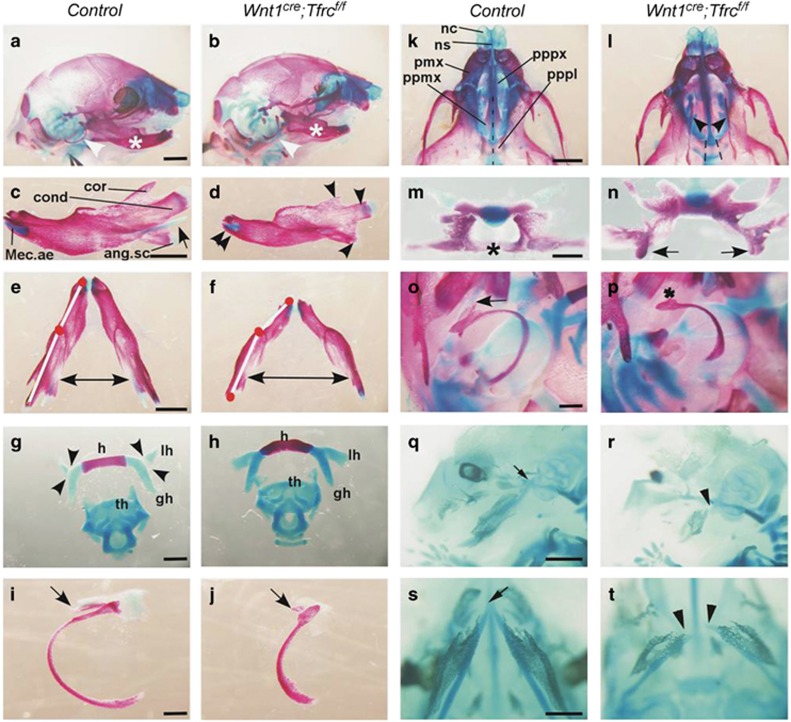
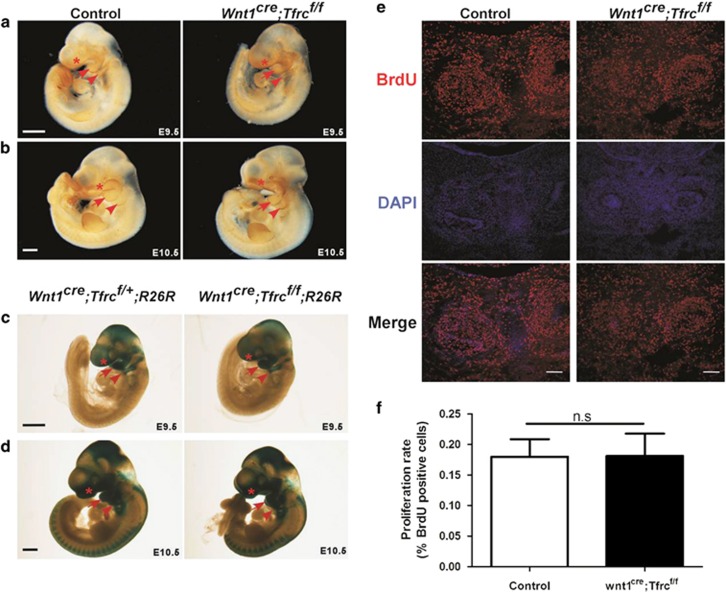
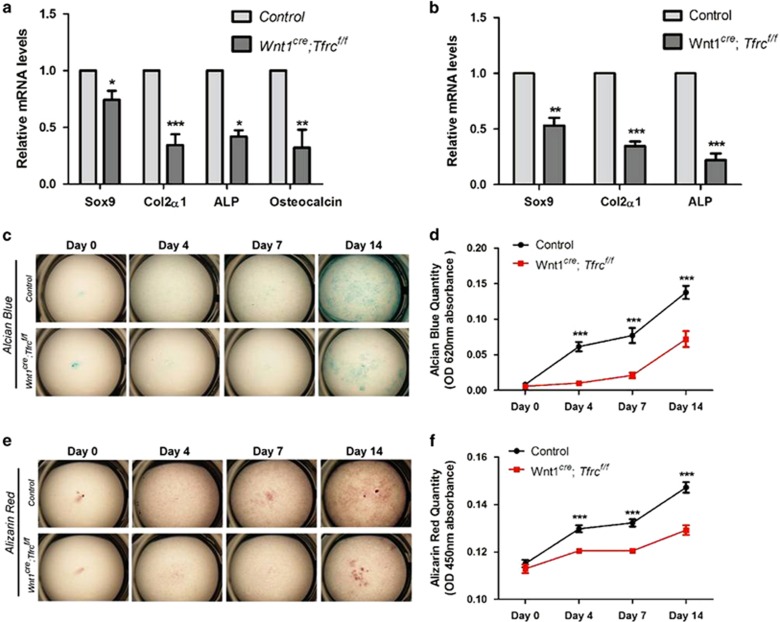
The Pierre Robin Sequence (PRS), consisting of cleft palate, glossoptosis and micrognathia, is a common human birth defect. However, how this abnormality occurs remains largely unknown. Here we report that neural crest cell (NCC)-specific knockout of transferrin receptor (Tfrc), a well known transferrin transporter protein, caused micrognathia, cleft palate, severe respiratory distress and inability to suckle in mice, which highly resemble human PRS. Histological and anatomical analysis revealed that the cleft palate is due to the failure of palatal shelves elevation that resulted from a retarded extension of Meckel's cartilage. Interestingly, Tfrc deletion dramatically suppressed both transforming growth factor-β (TGF-β) and bone morphogenetic protein (BMP) signaling in cranial NCCs-derived mandibular tissues, suggesting that Tfrc may act as a facilitator of these two signaling pathways during craniofacial morphogenesis. Together, our study uncovers an unknown function of Tfrc in craniofacial development and provides novel insight into the etiology of PRS.
皮埃尔·罗宾序列征(PRS)由腭裂、舌后坠和小颌畸形组成,是一种常见的人类出生缺陷。然而,这种异常情况是如何发生的在很大程度上仍不清楚。在此我们报告,在神经嵴细胞(NCC)中特异性敲除转铁蛋白受体(Tfrc),一种著名的转铁蛋白转运蛋白,会导致小鼠出现小颌畸形、腭裂、严重呼吸窘迫和无法吸吮,这些症状与人类PRS极为相似。组织学和解剖学分析表明,腭裂是由于腭突抬高失败所致,而这是由梅克尔软骨延伸延迟引起的。有趣的是,Tfrc缺失显著抑制了源自颅神经嵴细胞的下颌组织中的转化生长因子-β(TGF-β)和骨形态发生蛋白(BMP)信号传导,这表明Tfrc可能在颅面形态发生过程中作为这两条信号通路的促进因子发挥作用。总之,我们的研究揭示了Tfrc在颅面发育中的未知功能,并为PRS的病因提供了新的见解。