Cynis Holger, Frost Jeffrey L, Crehan Helen, Lemere Cynthia A
Ann Romney Center for Neurologic Diseases, Brigham and Women's Hospital, Harvard Medical School, 77 Avenue Louis Pasteur, NRB636, Boston, MA, 02115, USA.
Fraunhofer Institute for Cell Therapy and Immunology, Weinbergweg 22, 06120, Halle, Germany.
Mol Neurodegener. 2016 Jun 30;11(1):48. doi: 10.1186/s13024-016-0115-2.
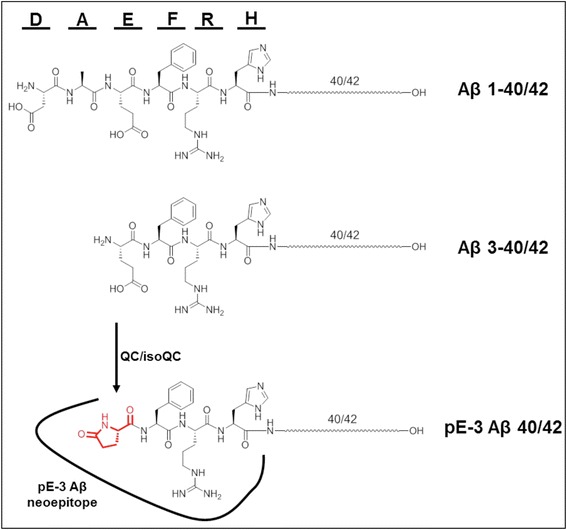
Immunization against amyloid-β (Aβ) peptides deposited in Alzheimer's disease (AD) has shown considerable therapeutic effect in animal models however, the translation into human Alzheimer's patients is challenging. In recent years, a number of promising Aβ immunotherapy trials failed to reach primary study endpoints. Aside from uncertainties in the selection of patients and the start and duration of treatment, these results also suggest that the mechanisms underlying AD are still not fully understood. Thorough characterizations of protein aggregates in AD brain have revealed a conspicuous heterogeneity of Aβ peptides enabling the study of the toxic potential of each of the major forms. One such form, amino-terminally truncated and modified pyroglutamate (pGlu)-3 Aβ peptide appears to play a seminal role for disease initiation, qualifying it as novel target for immunotherapy approaches.
针对阿尔茨海默病(AD)中沉积的β-淀粉样蛋白(Aβ)肽进行免疫治疗,在动物模型中已显示出显著的治疗效果,然而,将其转化应用于人类AD患者仍具有挑战性。近年来,一些有前景的Aβ免疫治疗试验未能达到主要研究终点。除了患者选择、治疗开始时间和持续时间存在不确定性外,这些结果还表明AD的潜在机制仍未完全明确。对AD大脑中蛋白质聚集体的深入研究表明,Aβ肽存在明显的异质性,这使得研究每种主要形式的毒性潜力成为可能。其中一种形式,氨基末端截短并修饰的焦谷氨酸(pGlu)-3 Aβ肽似乎在疾病起始中起着关键作用,使其成为免疫治疗方法的新靶点。