Liang Jun-Hua, Fang Yu-Wei, Yang An-Hung, Tsai Ming Hsien
aDivision of Nephrology, Department of Medicine, Ten-Chen General Hospital, Yang-Mei bDivision of Nephrology, Department of Internal Medicine, Shin Kong Wu Ho-Su Memorial Hospital cUltrastructural and Molecular Pathology, Department of Pathology, Veterans General Hospital, Taipei, Taiwan.
Medicine (Baltimore). 2016 Jun;95(26):e4023. doi: 10.1097/MD.0000000000004023.
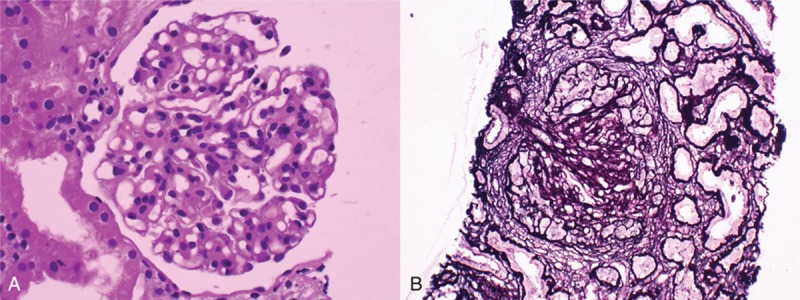
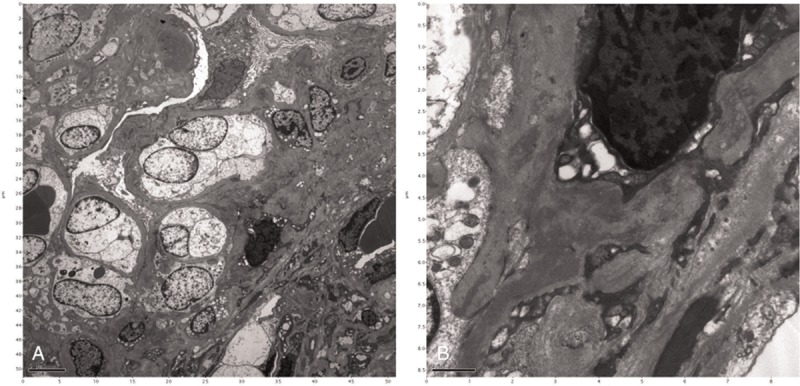
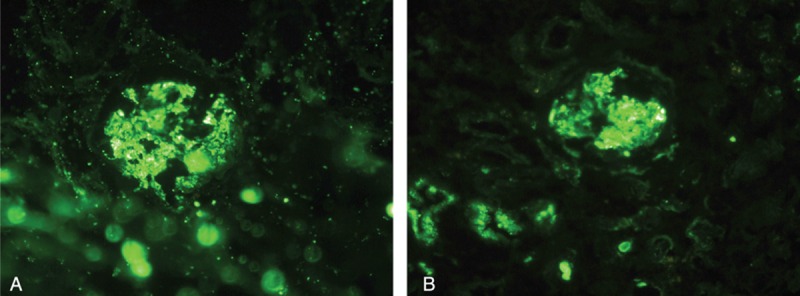
Methicillin-resistant Staphylococcus aureus (MRSA) is an emerging pathogen that infects the skin and soft tissue. However, there are few reports of renal complications from MRSA involving immunoglobulin (Ig)A-dominated rapidly progressive glomerulonephritis (GN). Favorable renal outcomes from IgA GN are achieved by administering timely therapy. In the present study, we describe the case of a healthy young woman suffering from a cutaneous MRSA infection that initially presented with gross hematuria. Six months after eradicating the infection, severe impairment of renal function was noted because of intractable nausea and vomiting. Renal pathology revealed advanced IgA nephropathy with fibrocellular crescent formation. An aggressive treatment plan using immunosuppressants was not adopted because of her irreversible renal pathology, and she was therefore administered maintenance hemodialysis.This instructive case stresses the importance of being aware of the signs of IgA nephropathy post-MRSA infection, such as cutaneous lesions that are mostly painless and accompanied by hematuria and mild proteinuria. If the kidney cannot be salvaged, it will undergo irreversible damage with devastating consequences.
耐甲氧西林金黄色葡萄球菌(MRSA)是一种新兴的病原体,可感染皮肤和软组织。然而,关于MRSA引起的涉及以免疫球蛋白(Ig)A为主的快速进展性肾小球肾炎(GN)的肾脏并发症的报道很少。及时治疗可使IgA肾病获得良好的肾脏预后。在本研究中,我们描述了一例健康年轻女性的病例,该患者患有皮肤MRSA感染,最初表现为肉眼血尿。感染根除六个月后,由于顽固性恶心和呕吐,发现肾功能严重受损。肾脏病理显示为伴有纤维细胞新月体形成的晚期IgA肾病。由于其不可逆的肾脏病理改变,未采取使用免疫抑制剂的积极治疗方案,因此对她进行维持性血液透析。这个具有指导意义的病例强调了认识到MRSA感染后IgA肾病体征的重要性,例如大多数无痛的皮肤病变,并伴有血尿和轻度蛋白尿。如果肾脏无法挽救,将会遭受不可逆转的损害,后果严重。