Sarper Muge, Cortes Ernesto, Lieberthal Tyler J, Del Río Hernández Armando
Cellular and Molecular Biomechanics Laboratory, Department of Bioengineering, Faculty of Engineering, Imperial College London, South Kensington Campus, London SW7 2AZ, United Kingdom.
Sci Rep. 2016 Jul 4;6:27639. doi: 10.1038/srep27639.
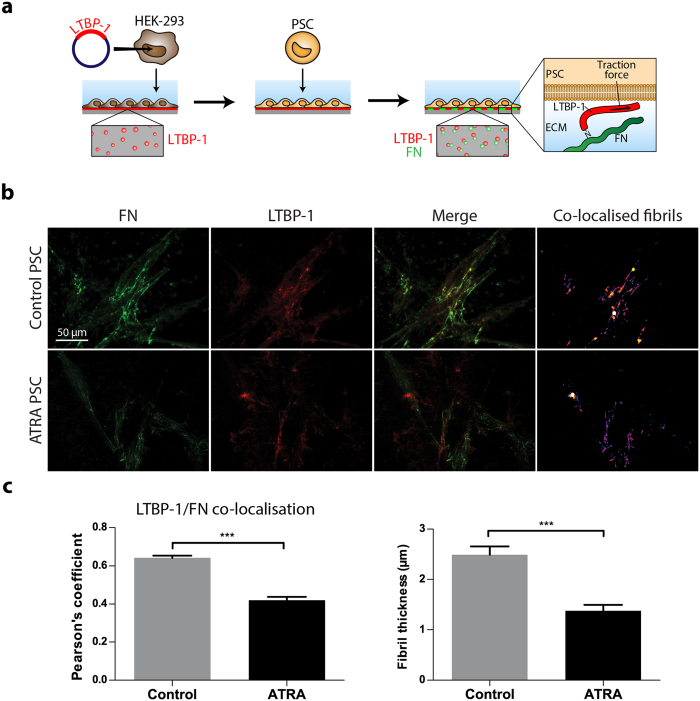
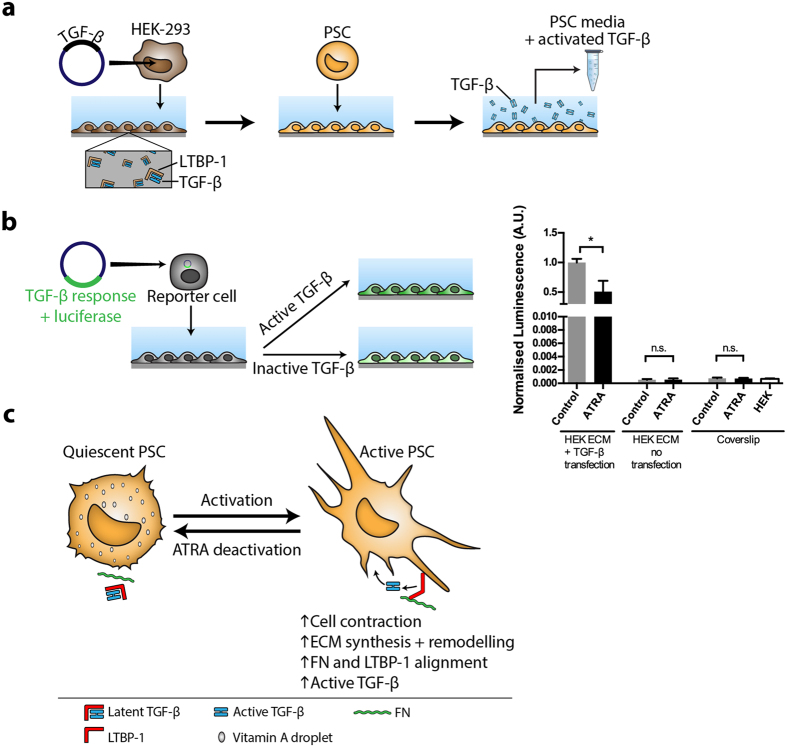
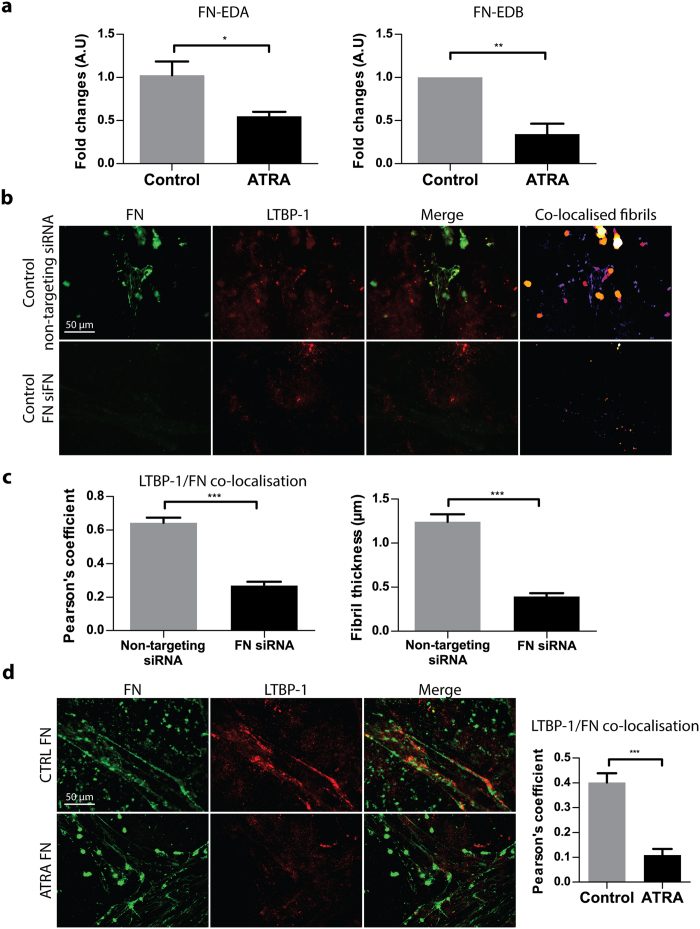
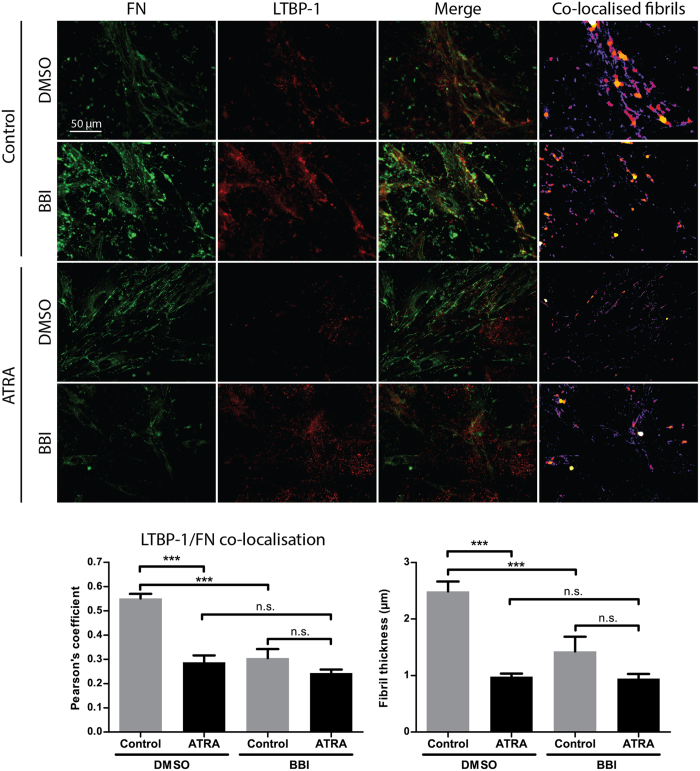
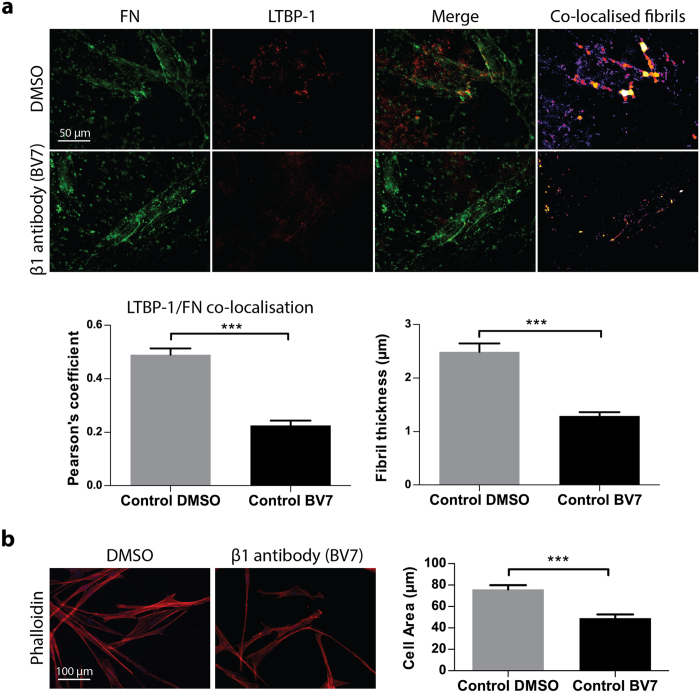
The hallmark of pancreatic ductal adenocarcinoma (PDAC) is abundant desmoplasia, which is orchestrated by pancreatic stellate cells (PSCs) and accounts for the majority of the stroma surrounding the tumour. Healthy PSCs are quiescent, but upon activation during disease progression, they adopt a myofibroblast-contractile phenotype and secrete and concomitantly reorganise the stiff extracellular matrix (ECM). Transforming growth factor β (TGF-β) is a potent activator of PSCs, and its activation requires spatiotemporal organisation of cellular and extracellular cues to liberate it from an inactive complex with latent TGF-β binding protein (LTBP). Here we study the mechanical activation of TGF-β by PSCs in vitro by investigating LTBP-1 organisation with fibrillar fibronectin and show that all trans-retinoic acid (ATRA), which induces PSC quiescence, down-regulates the ability of PSCs to mechanically organise LTBP-1 and activate TGF-β through a mechanism involving myosin II dependent contractility. Therefore, ATRA inhibits the ability of PSCs to mechanically release active TGF-β, which might otherwise act in an autocrine manner to sustain PSCs in an active state and a tumour-favouring stiff microenvironment.
胰腺导管腺癌(PDAC)的标志是大量的促纤维增生,这是由胰腺星状细胞(PSC)精心安排的,并且构成了肿瘤周围大部分的间质。健康的PSC是静止的,但在疾病进展过程中被激活时,它们会转变为肌成纤维细胞收缩表型,并分泌并同时重组坚硬的细胞外基质(ECM)。转化生长因子β(TGF-β)是PSC的一种有效激活剂,其激活需要细胞和细胞外信号的时空组织,以使其从与潜伏性TGF-β结合蛋白(LTBP)的无活性复合物中释放出来。在这里,我们通过研究LTBP-1与纤维状纤连蛋白的组织情况,在体外研究PSC对TGF-β的机械激活,并表明诱导PSC静止的全反式维甲酸(ATRA)通过涉及肌球蛋白II依赖性收缩的机制,下调PSC机械组织LTBP-1并激活TGF-β的能力。因此,ATRA抑制PSC机械释放活性TGF-β的能力,否则TGF-β可能以自分泌方式作用,使PSC维持在活跃状态并形成有利于肿瘤的坚硬微环境。