Marchetto Maria C, Belinson Haim, Tian Yuan, Freitas Beatriz C, Fu Chen, Vadodaria Krishna, Beltrao-Braga Patricia, Trujillo Cleber A, Mendes Ana P D, Padmanabhan Krishnan, Nunez Yanelli, Ou Jing, Ghosh Himanish, Wright Rebecca, Brennand Kristen, Pierce Karen, Eichenfield Lawrence, Pramparo Tiziano, Eyler Lisa, Barnes Cynthia C, Courchesne Eric, Geschwind Daniel H, Gage Fred H, Wynshaw-Boris Anthony, Muotri Alysson R
The Salk Institute, Laboratory of Genetics, La Jolla, CA 92037, USA.
University of California San Francisco, Department of Pediatrics, Institute for Human Genetics, CA 94143, USA.
Mol Psychiatry. 2017 Jun;22(6):820-835. doi: 10.1038/mp.2016.95. Epub 2016 Jul 5.
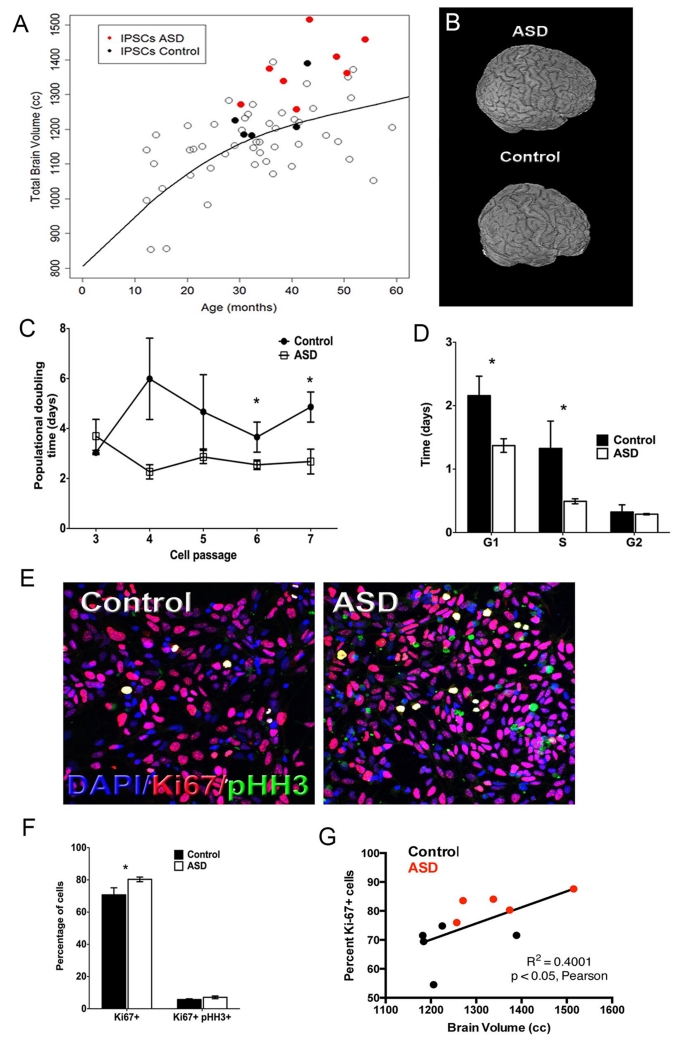
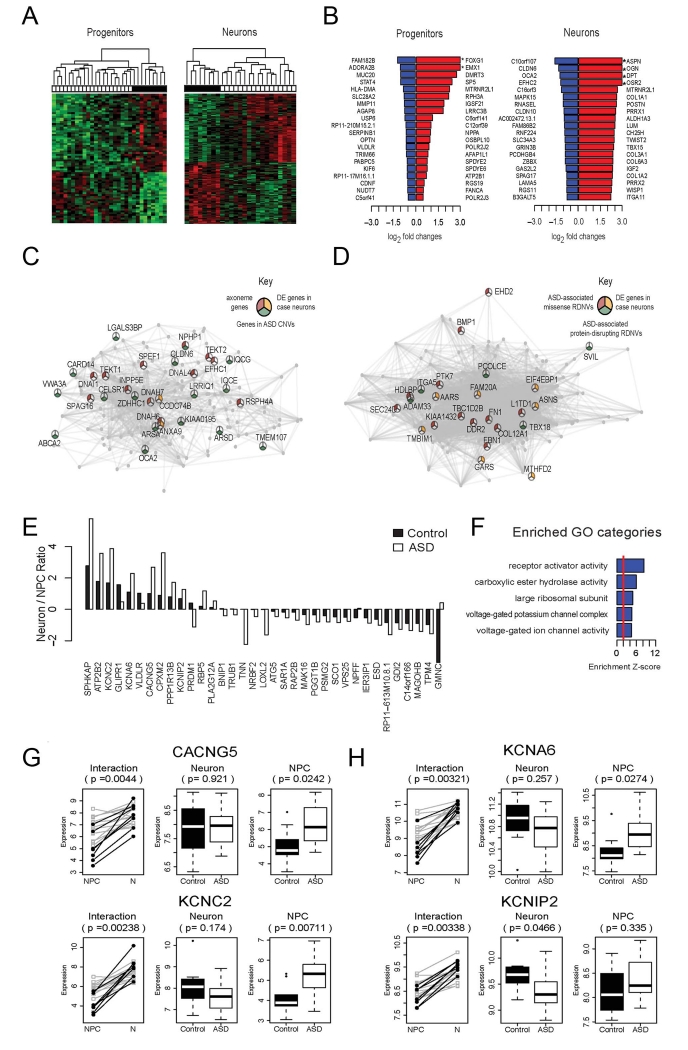
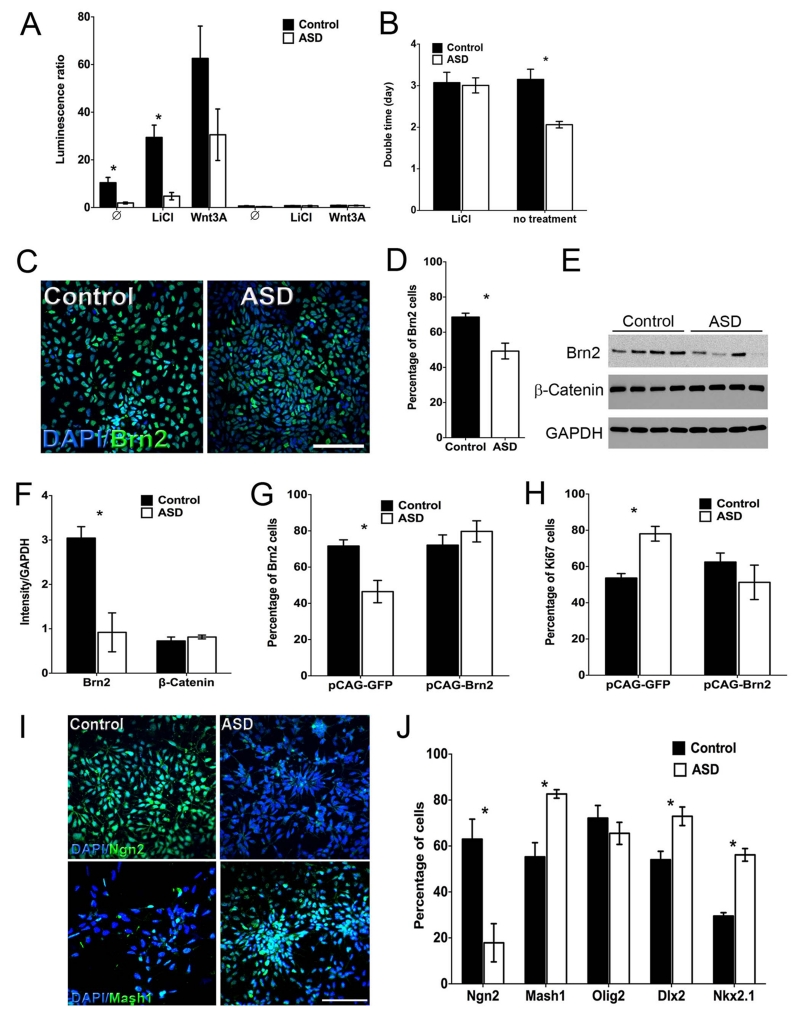
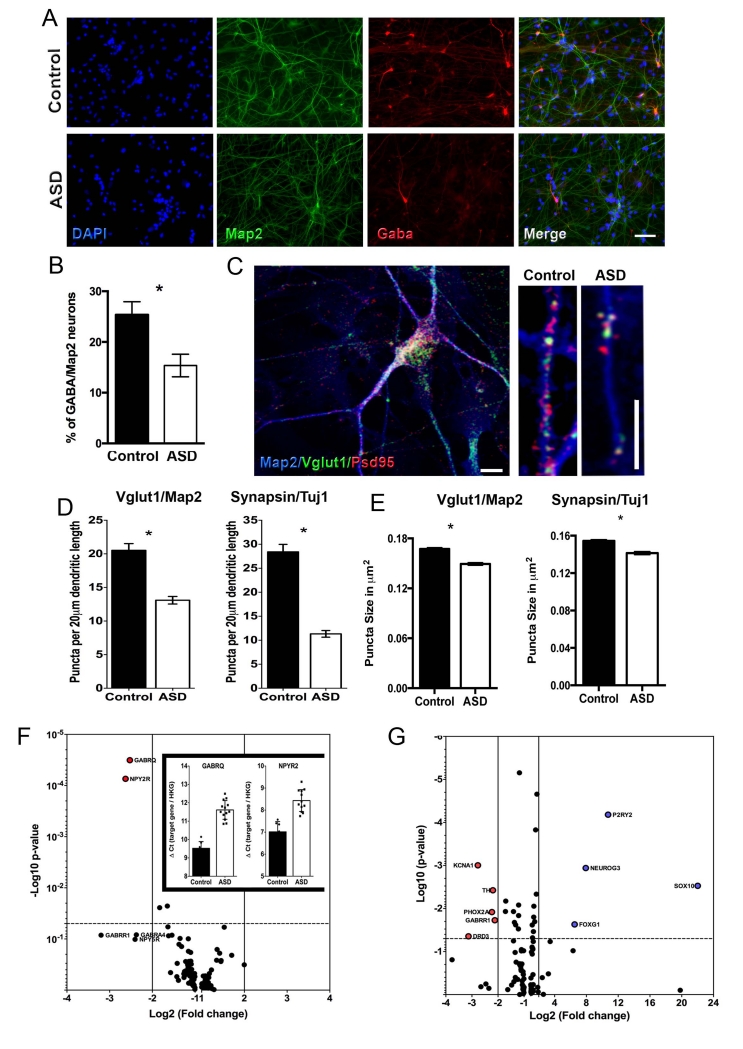
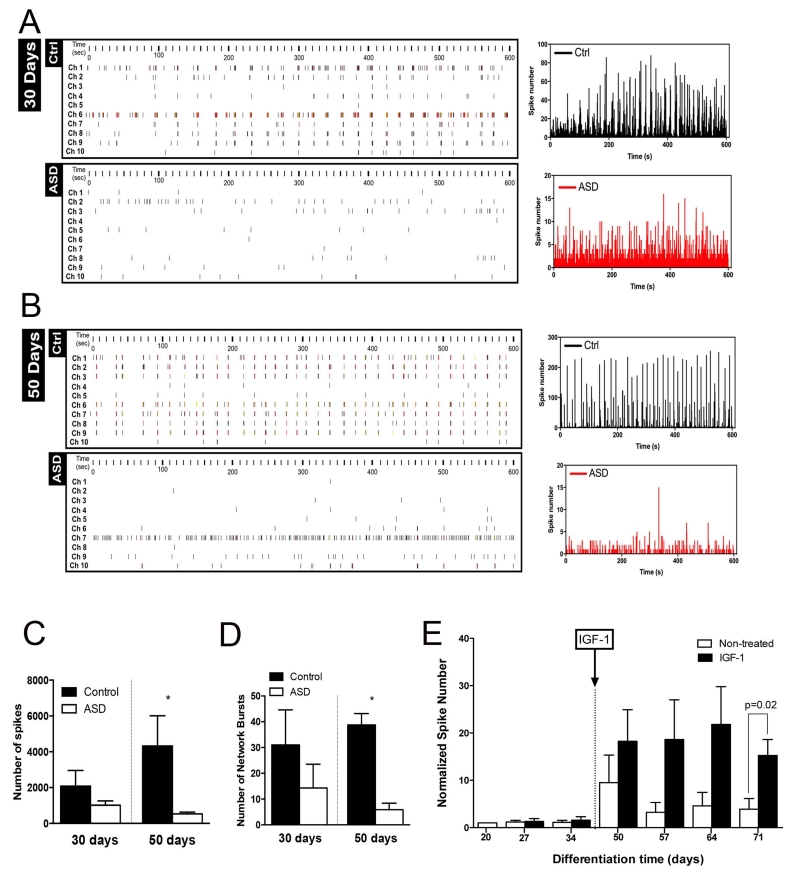
Autism spectrum disorders (ASD) are common, complex and heterogeneous neurodevelopmental disorders. Cellular and molecular mechanisms responsible for ASD pathogenesis have been proposed based on genetic studies, brain pathology and imaging, but a major impediment to testing ASD hypotheses is the lack of human cell models. Here, we reprogrammed fibroblasts to generate induced pluripotent stem cells, neural progenitor cells (NPCs) and neurons from ASD individuals with early brain overgrowth and non-ASD controls with normal brain size. ASD-derived NPCs display increased cell proliferation because of dysregulation of a β-catenin/BRN2 transcriptional cascade. ASD-derived neurons display abnormal neurogenesis and reduced synaptogenesis leading to functional defects in neuronal networks. Interestingly, defects in neuronal networks could be rescued by insulin growth factor 1 (IGF-1), a drug that is currently in clinical trials for ASD. This work demonstrates that selection of ASD subjects based on endophenotypes unraveled biologically relevant pathway disruption and revealed a potential cellular mechanism for the therapeutic effect of IGF-1.
自闭症谱系障碍(ASD)是常见、复杂且具有异质性的神经发育障碍。基于遗传学研究、脑病理学和影像学,人们提出了导致ASD发病机制的细胞和分子机制,但检验ASD假说的一个主要障碍是缺乏人类细胞模型。在此,我们将成纤维细胞重编程,从早期脑过度生长的ASD个体和脑大小正常的非ASD对照中生成诱导多能干细胞、神经祖细胞(NPC)和神经元。源自ASD的NPC由于β-连环蛋白/BRN2转录级联失调而表现出细胞增殖增加。源自ASD的神经元表现出异常的神经发生和突触形成减少,导致神经网络出现功能缺陷。有趣的是,神经网络中的缺陷可以通过胰岛素生长因子1(IGF-1)得到挽救,IGF-1是一种目前正在进行ASD临床试验的药物。这项工作表明,基于内表型选择ASD受试者揭示了生物学上相关的通路破坏,并揭示了IGF-1治疗效果的潜在细胞机制。