Winkle Sean M, Throop Andrea L, Herbst-Kralovetz Melissa M
Department of Basic Medical Sciences, College of Medicine-Phoenix, University of Arizona, Phoenix AZ, USA.
Front Microbiol. 2016 Jun 17;7:955. doi: 10.3389/fmicb.2016.00955. eCollection 2016.
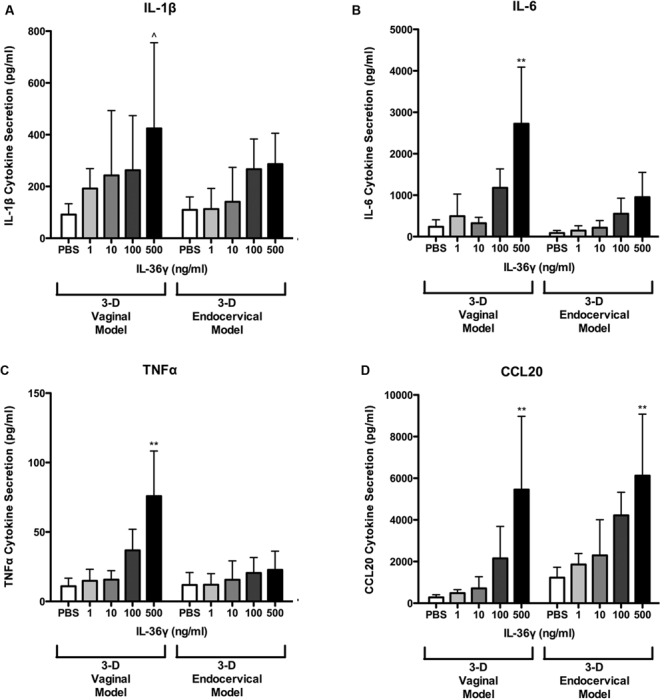
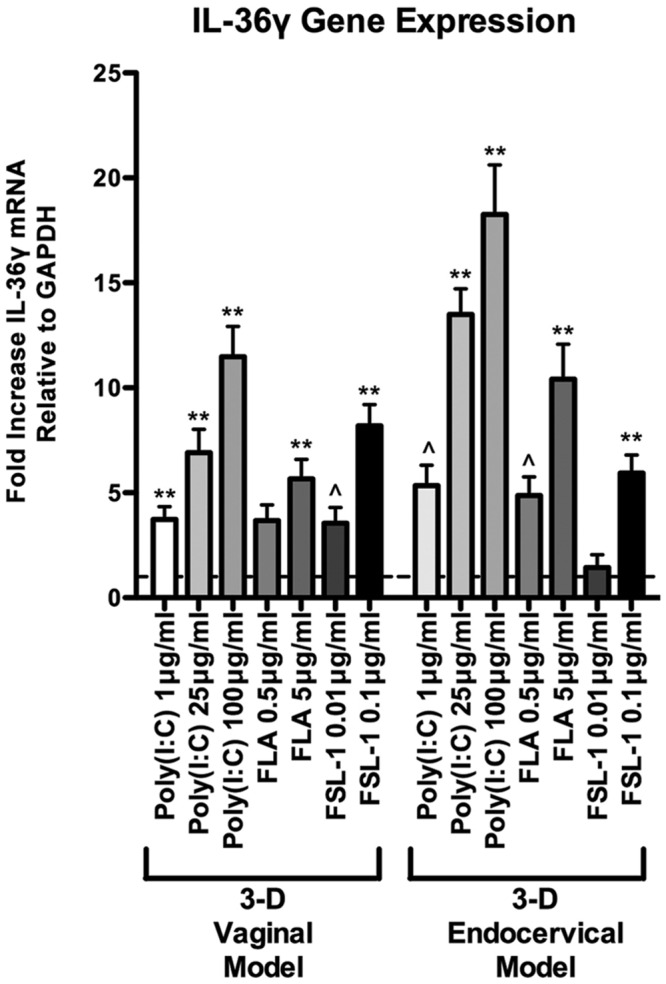
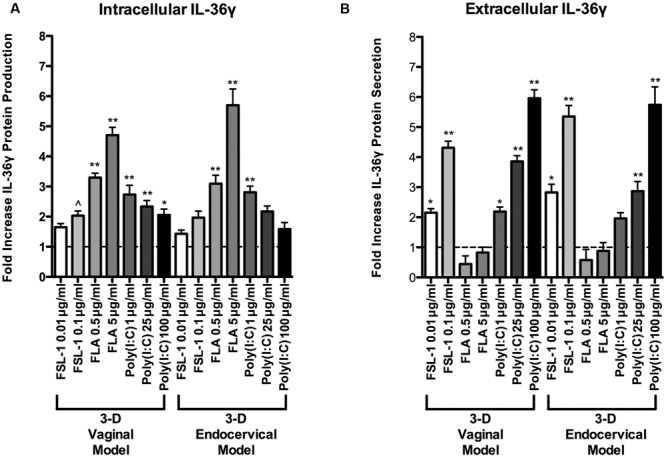
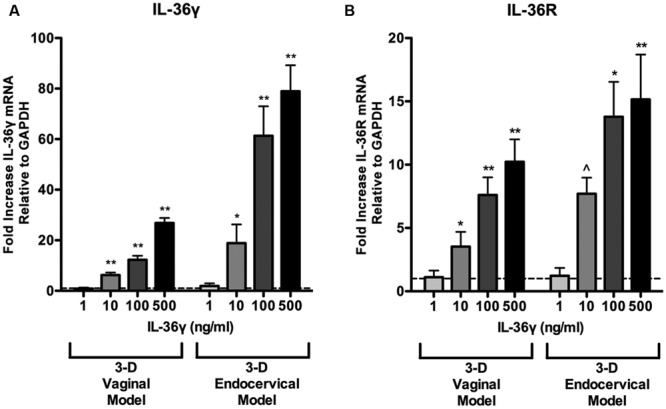
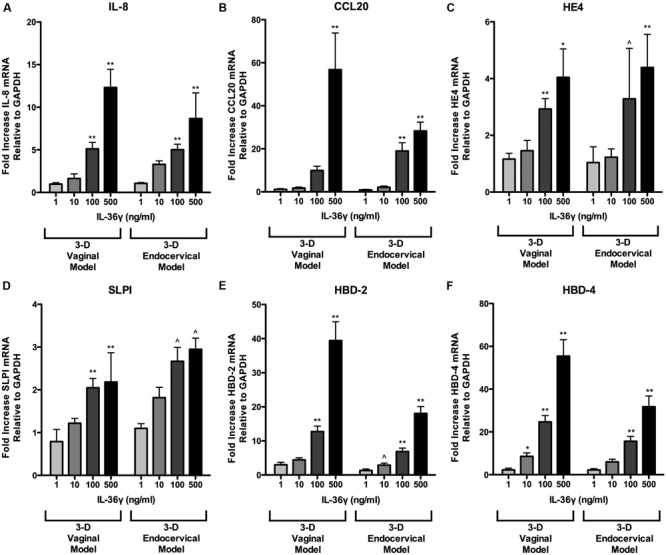
IL-36γ is a proinflamatory cytokine which belongs to the IL-1 family of cytokines. It is expressed in the skin and by epithelial cells (ECs) lining lung and gut tissue. We used human 3-D organotypic cells, that recapitulate either in vivo human vaginal or cervical tissue, to explore the possible role of IL-36γ in host defense against pathogens in the human female reproductive tract (FRT). EC were exposed to compounds derived from virus or bacterial sources and induction and regulation of IL-36γ and its receptor was determined. Polyinosinic-polycytidylic acid (poly I:C), flagellin, and synthetic lipoprotein (FSL-1) significantly induced expression of IL-36γ in a dose-dependent manner, and appeared to be TLR-dependent. Recombinant IL-36γ treatment resulted in self-amplification of IL-36γ and its receptor (IL-36R) via increased gene expression, and promoted other inflammatory signaling pathways. This is the first report to demonstrate that the IL-36 receptor and IL-36γ are present in the human FRT EC and that they are differentially induced by microbial products at this site. We conclude that IL-36γ is a driver for epithelial and immune activation following microbial insult and, as such, may play a critical role in host defense in the FRT.
白细胞介素-36γ(IL-36γ)是一种促炎细胞因子,属于白细胞介素-1细胞因子家族。它在皮肤以及肺和肠道组织的上皮细胞(ECs)中表达。我们使用能模拟体内人类阴道或宫颈组织的三维器官型细胞,来探究IL-36γ在人类女性生殖道(FRT)宿主抵御病原体过程中的可能作用。将上皮细胞暴露于源自病毒或细菌的化合物中,并测定IL-36γ及其受体的诱导和调节情况。聚肌苷酸-聚胞苷酸(poly I:C)、鞭毛蛋白和合成脂蛋白(FSL-1)以剂量依赖方式显著诱导IL-36γ的表达,且似乎依赖于Toll样受体(TLR)。重组IL-36γ处理通过增加基因表达导致IL-36γ及其受体(IL-36R)的自我扩增,并促进其他炎症信号通路。这是首份证明IL-36受体和IL-36γ存在于人类FRT上皮细胞中,且它们在此部位受到微生物产物差异诱导的报告。我们得出结论,IL-36γ是微生物侵袭后上皮和免疫激活的驱动因素,因此可能在FRT的宿主防御中发挥关键作用。