Alamo Ines G, Kannan Kolenkode B, Smith Michael A, Efron Philip A, Mohr Alicia M
From the Department of Surgery and Center for Sepsis and Critical Illness Research, University of Florida College of Medicine, (I.G.A, K.B.K., M.A.S., P.A.E., A.M.M.), Gainesville, Florida.
J Trauma Acute Care Surg. 2016 Oct;81(4):705-12. doi: 10.1097/TA.0000000000001163.
The cause of persistent injury-associated anemia is multifactorial and includes acute blood loss, an altered erythropoietin (EPO) response, dysregulation of iron homeostasis, and impaired erythropoiesis in the setting of chronic inflammation/stress. Hepcidin plays a key role in iron homeostasis and is regulated by anemia and inflammation. Erythropoietin is a main regulator of erythropoiesis induced by hypoxia. A unique rodent model of combined lung injury (LC)/hemorrhagic shock (HS) (LCHS)/chronic restraint stress (CS) was used to produce persistent injury-associated anemia to further investigate the roles of EPO, hepcidin, iron, ferritin, and the expression of EPO receptors (EPOr).
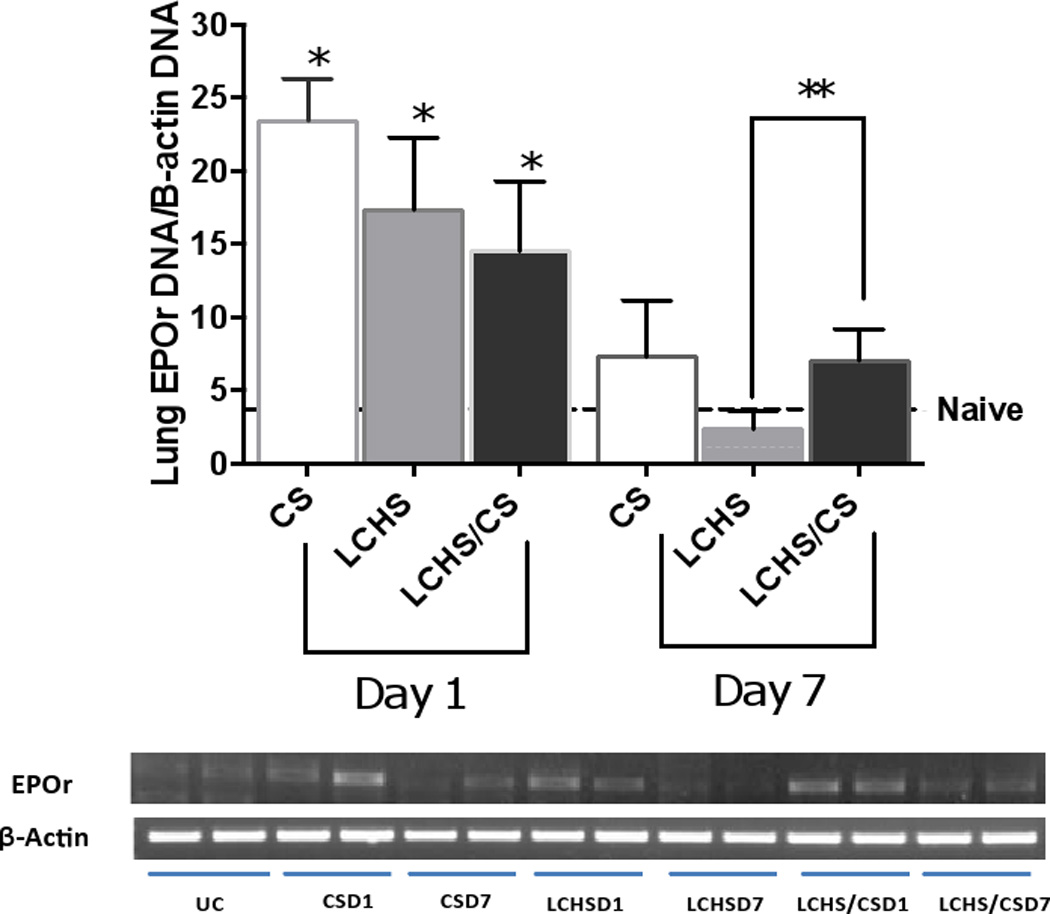
Male Sprague-Dawley rats were randomly assigned into one of the four groups of rodent models: naive, CS alone, combined LCHS, or LCHS/CS. Plasma was used to evaluate levels of EPO, hepcidin, iron, and ferritin. RNA was isolated from bone marrow and lung tissue to evaluate expression of EPOr. Comparisons between models were performed by t tests followed by one-way analysis of variance.
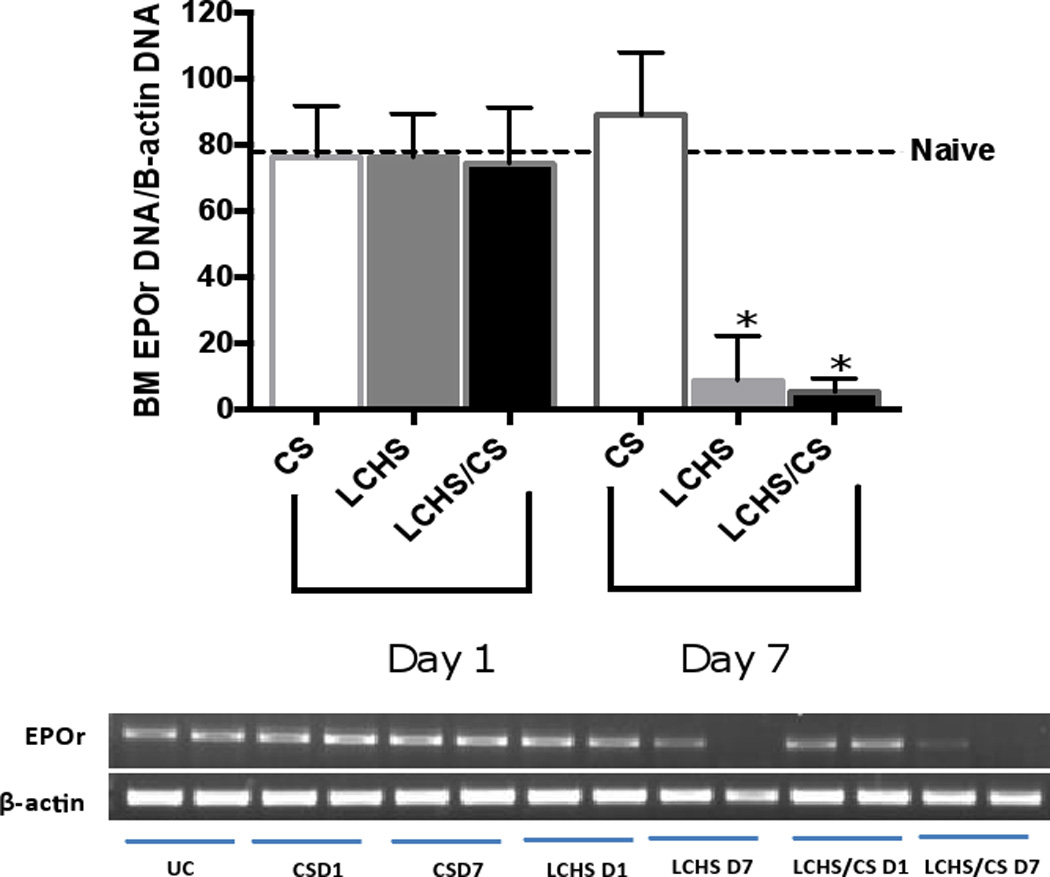
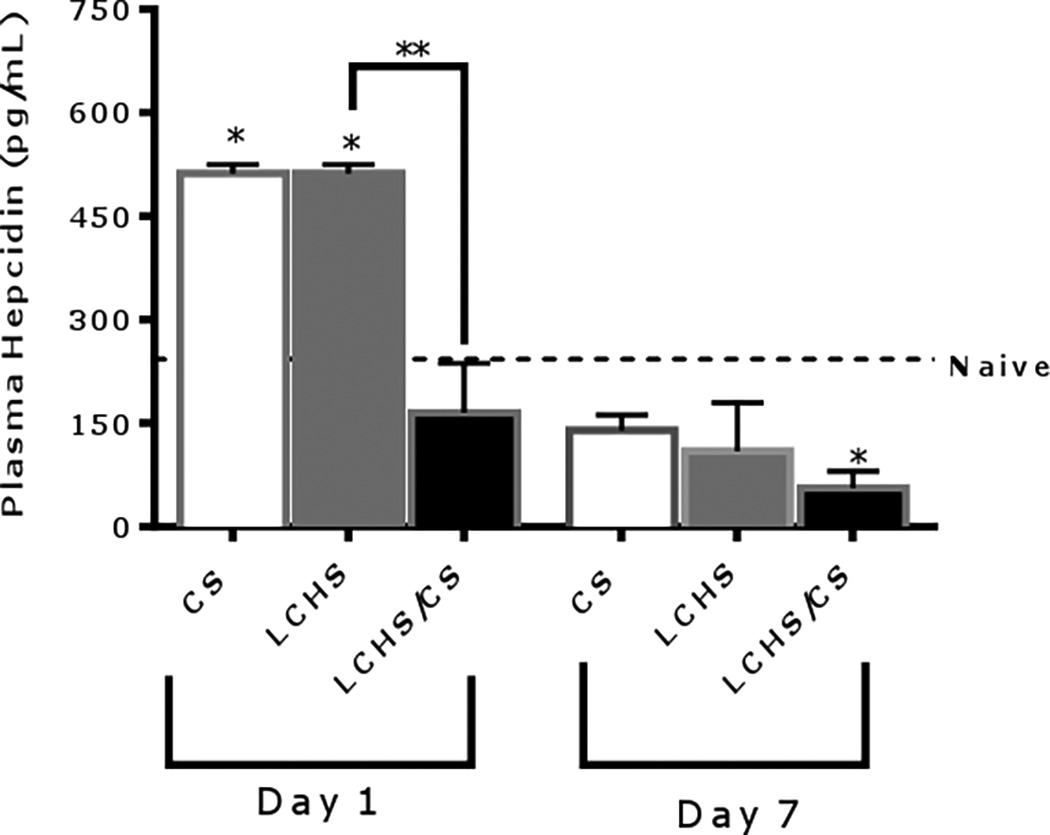
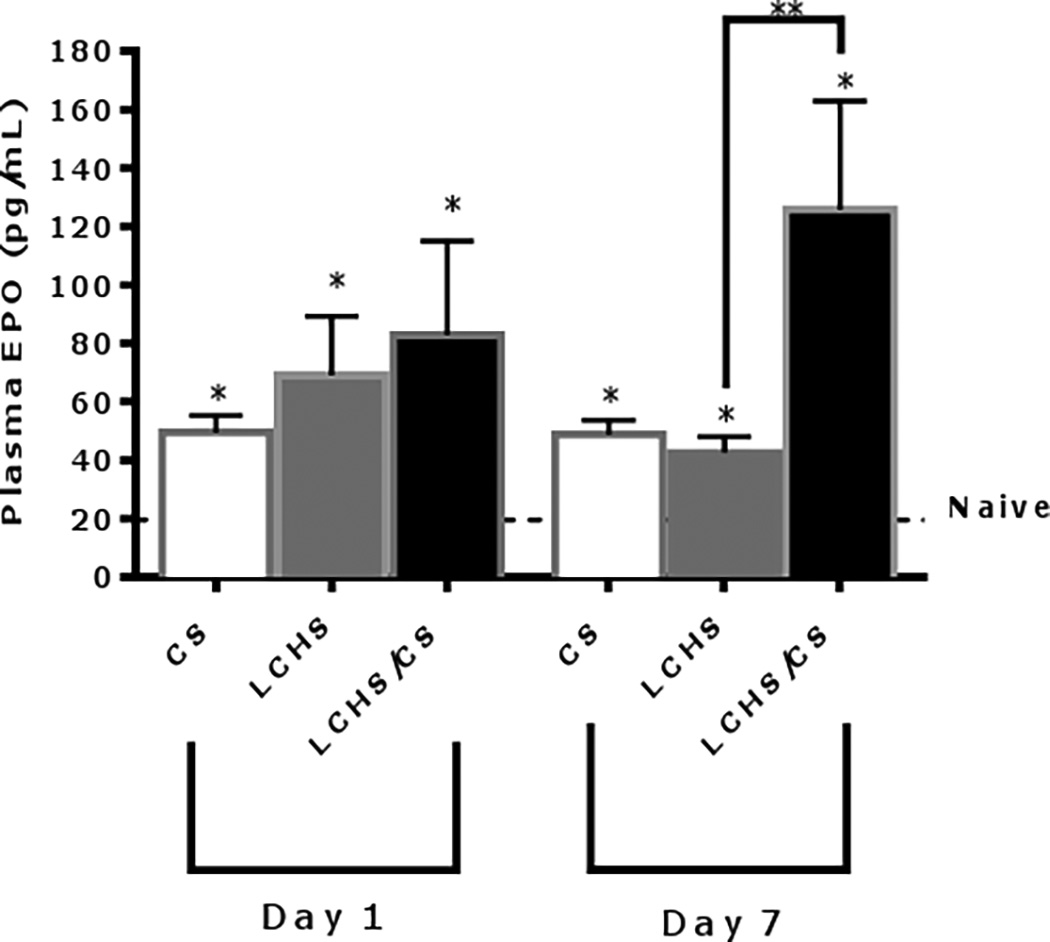
After 7 days, only LCHS/CS was associated with persistent anemia despite significant elevation of plasma EPO. Combined LCHS and LCHS/CS led to a persistent decrease in EPOr expression in bone marrow on Day 7. The LCHS/CS significantly decreased plasma hepcidin levels by 75% on Day 1 and 84% on Day 7 compared to LCHS alone. Hepcidin plasma levels are inversely proportional to EPO plasma levels (Pearson R = -0.362, p < 0.05).
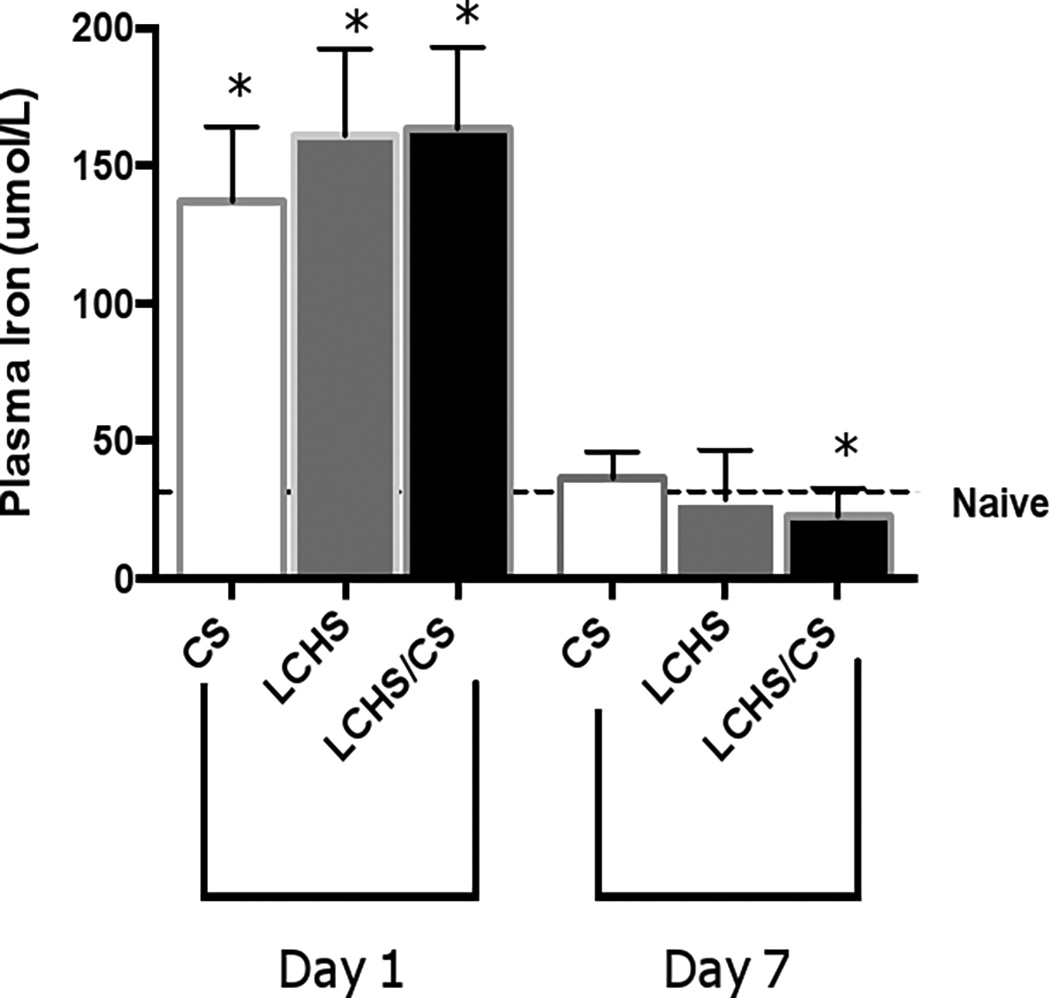
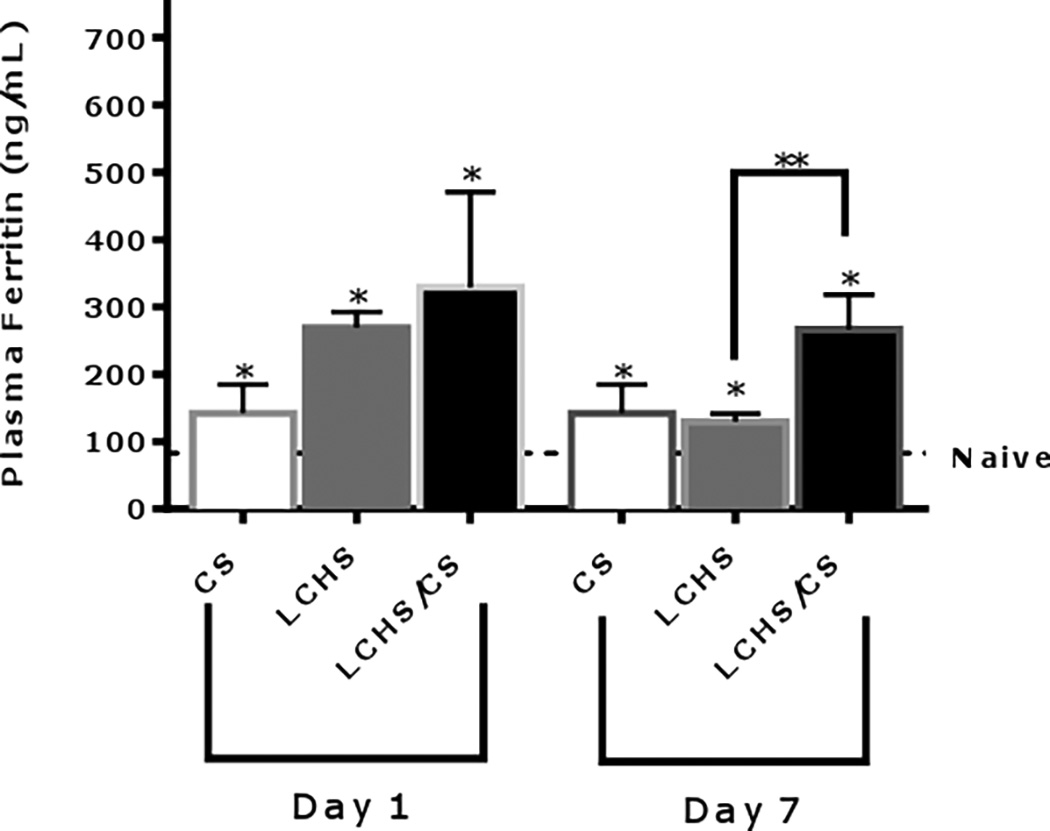
Tissue injury, hemorrhagic shock, and stress stimulate and maintain high levels of plasma EPO while hepcidin levels are decreased. In addition, bone marrow EPOr and plasma iron availability are significantly reduced following LCHS/CS. The combined deficit of reduced iron availability and reduced bone marrow EPOr expression may play a key role in the ineffective EPO response associated with persistent injury-associated anemia.
持续性损伤相关性贫血的病因是多因素的,包括急性失血、促红细胞生成素(EPO)反应改变、铁稳态失调以及慢性炎症/应激状态下的红细胞生成受损。铁调素在铁稳态中起关键作用,并受贫血和炎症调节。促红细胞生成素是缺氧诱导红细胞生成的主要调节因子。采用一种独特的联合肺损伤(LC)/失血性休克(HS)(LCHS)/慢性束缚应激(CS)啮齿动物模型来产生持续性损伤相关性贫血,以进一步研究EPO、铁调素、铁、铁蛋白以及EPO受体(EPOr)表达的作用。
将雄性Sprague-Dawley大鼠随机分为四组啮齿动物模型之一:未处理组、单纯CS组、联合LCHS组或LCHS/CS组。用血浆评估EPO、铁调素、铁和铁蛋白水平。从骨髓和肺组织中分离RNA以评估EPOr的表达。模型之间的比较采用t检验,随后进行单因素方差分析。
7天后,尽管血浆EPO显著升高,但仅LCHS/CS与持续性贫血相关。联合LCHS和LCHS/CS导致第7天骨髓中EPOr表达持续下降。与单独LCHS相比,LCHS/CS在第1天使血浆铁调素水平显著降低75%,在第7天降低84%。血浆铁调素水平与血浆EPO水平呈负相关(Pearson相关系数R = -0.362,p < 0.05)。
组织损伤、失血性休克和应激刺激并维持血浆EPO高水平,而铁调素水平降低。此外,LCHS/CS后骨髓EPOr和血浆铁利用率显著降低。铁利用率降低和骨髓EPOr表达降低的联合缺陷可能在与持续性损伤相关性贫血相关的无效EPO反应中起关键作用。