Ledbetter D H, Ledbetter S A, vanTuinen P, Summers K M, Robinson T J, Nakamura Y, Wolff R, White R, Barker D F, Wallace M R
Institute for Molecular Genetics, Baylor College of Medicine, Houston, TX 77030.
Proc Natl Acad Sci U S A. 1989 Jul;86(13):5136-40. doi: 10.1073/pnas.86.13.5136.
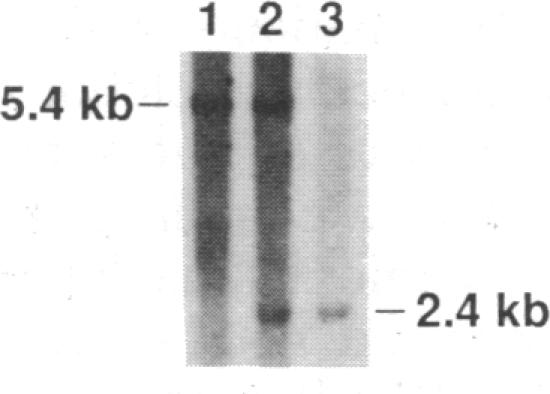
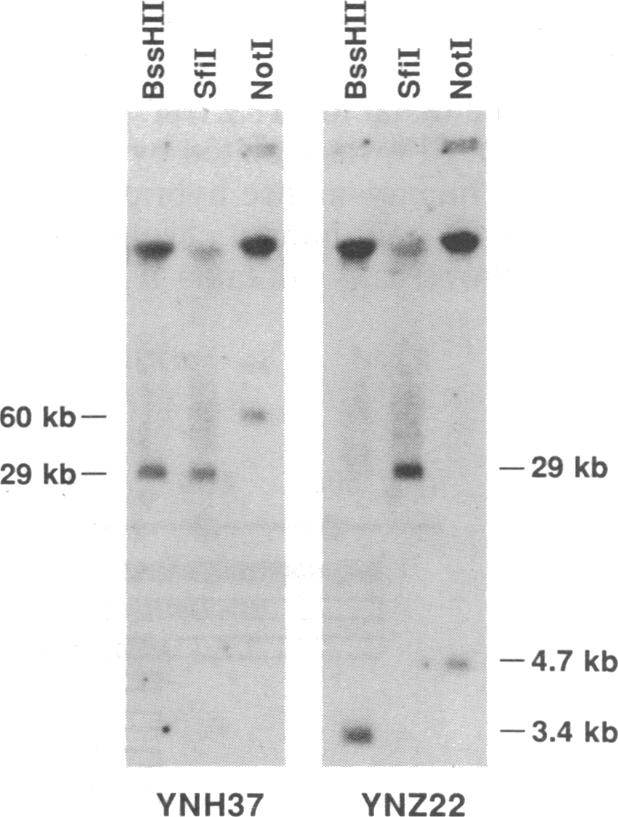
The Miller-Dieker syndrome (MDS), composed of characteristic facial abnormalities and a severe neuronal migration disorder affecting the cerebral cortex, is caused by visible or submicroscopic deletions of chromosome band 17p13. Twelve anonymous DNA markers were tested against a panel of somatic cell hybrids containing 17p deletions from seven MDS patients. All patients, including three with normal karyotypes, are deleted for a variable set of 5-12 markers. Two highly polymorphic VNTR (variable number of tandem repeats) probes, YNZ22 and YNH37, are codeleted in all patients tested and make molecular diagnosis for this disorder feasible. By pulsed-field gel electrophoresis, YNZ22 and YNH37 were shown to be within 30 kilobases (kb) of each other. Cosmid clones containing both VNTR sequences were identified, and restriction mapping showed them to be less than 15 kb apart. Three overlapping cosmids spanning greater than 100 kb were completely deleted in all patients, providing a minimum estimate of the size of the MDS critical region. A hypomethylated island and evolutionarily conserved sequences were identified within this 100-kb region, indications of the presence of one or more expressed sequences potentially involved in the pathophysiology of this disorder. The conserved sequences were mapped to mouse chromosome 11 by using mouse-rat somatic cell hybrids, extending the remarkable homology between human chromosome 17 and mouse chromosome 11 by 30 centimorgans, into the 17p telomere region.
米勒-迪克尔综合征(MDS)由特征性面部异常和影响大脑皮质的严重神经元迁移障碍组成,是由17号染色体17p13带的可见或亚显微缺失引起的。针对一组包含7例MDS患者17p缺失的体细胞杂种,检测了12个匿名DNA标记。所有患者,包括3例核型正常的患者,都缺失了一组数量可变的5至12个标记。在所有检测的患者中,两个高度多态的VNTR(可变串联重复序列)探针YNZ22和YNH37共同缺失,使得对该疾病进行分子诊断成为可能。通过脉冲场凝胶电泳,发现YNZ22和YNH37彼此之间的距离在30千碱基(kb)以内。鉴定出包含这两个VNTR序列的黏粒克隆,限制性图谱显示它们之间的距离小于15 kb。在所有患者中,三个跨度大于100 kb的重叠黏粒完全缺失,这为MDS关键区域的大小提供了一个最小估计。在这个100 kb区域内鉴定出一个低甲基化岛和进化保守序列,这表明存在一个或多个可能参与该疾病病理生理过程的表达序列。通过使用小鼠-大鼠体细胞杂种,将保守序列定位到小鼠11号染色体上,从而将人类17号染色体与小鼠11号染色体之间显著的同源性延伸了30厘摩,进入17p端粒区域。