DiGruccio Michael R, Mawla Alex M, Donaldson Cynthia J, Noguchi Glyn M, Vaughan Joan, Cowing-Zitron Christopher, van der Meulen Talitha, Huising Mark O
Department of Neurobiology, Physiology & Behavior, College of Biological Sciences, University of California, One Shields Avenue, 196 Briggs Hall, Davis, CA, USA.
Clayton Foundation Laboratories for Peptide Biology, The Salk Institute for Biological Studies, 10010 North Torrey Pines road, La Jolla, CA, USA.
Mol Metab. 2016 May 3;5(7):449-458. doi: 10.1016/j.molmet.2016.04.007. eCollection 2016 Jul.
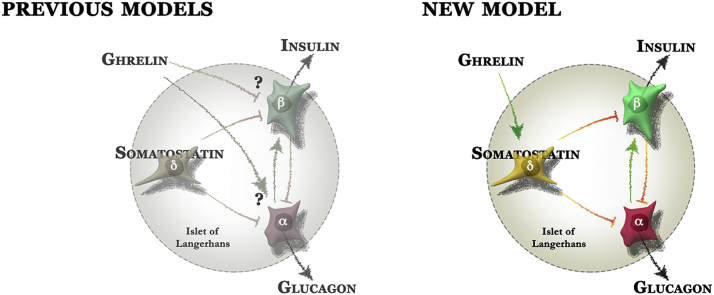
Complex local crosstalk amongst endocrine cells within the islet ensures tight coordination of their endocrine output. This is illustrated by the recent demonstration that the negative feedback control by delta cells within pancreatic islets determines the homeostatic set-point for plasma glucose during mouse postnatal development. However, the close association of islet endocrine cells that facilitates paracrine crosstalk also complicates the distinction between effects mediated directly on beta cells from indirect effects mediated via local intermediates, such as somatostatin from delta cells.
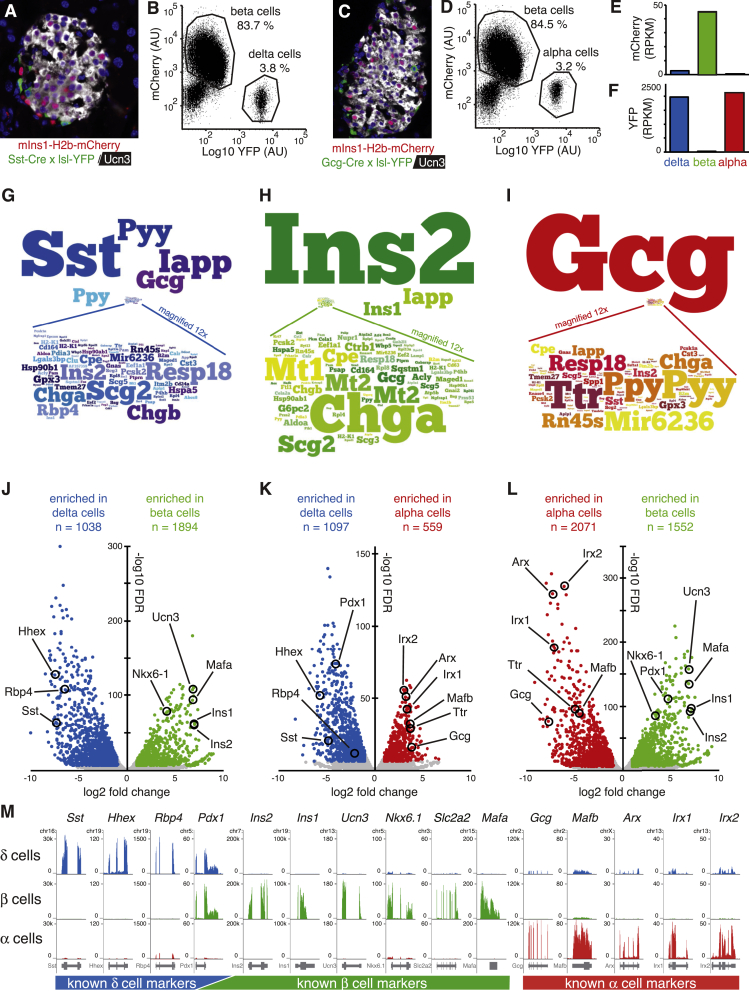
To resolve this problem, we generated reporter mice that allow collection of pure pancreatic delta cells along with alpha and beta cells from the same islets and generated comprehensive transcriptomes for each islet endocrine cell type. These transcriptomes afford an unparalleled view of the receptors expressed by delta, alpha and beta cells, and allow the prediction of which signal targets which endocrine cell type with great accuracy.
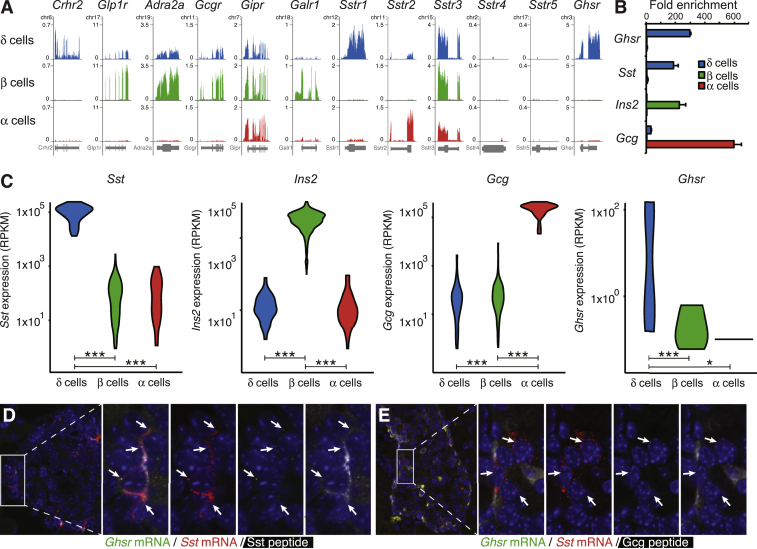
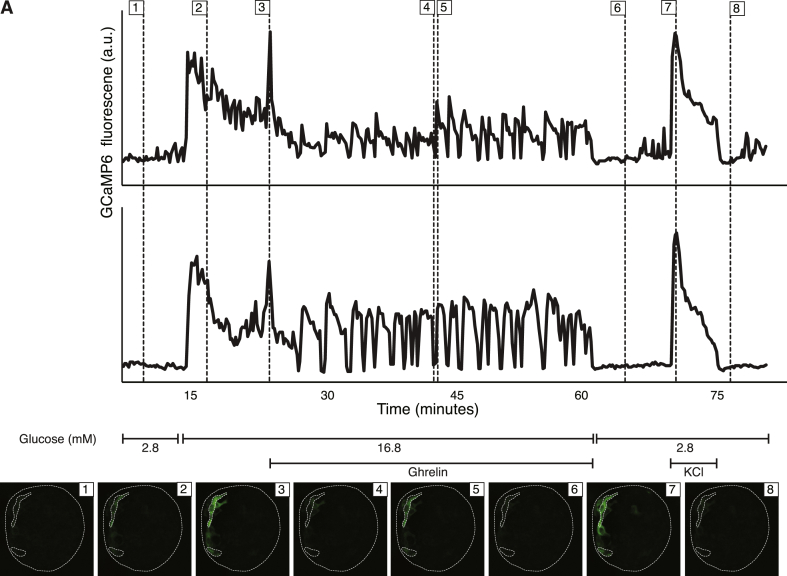
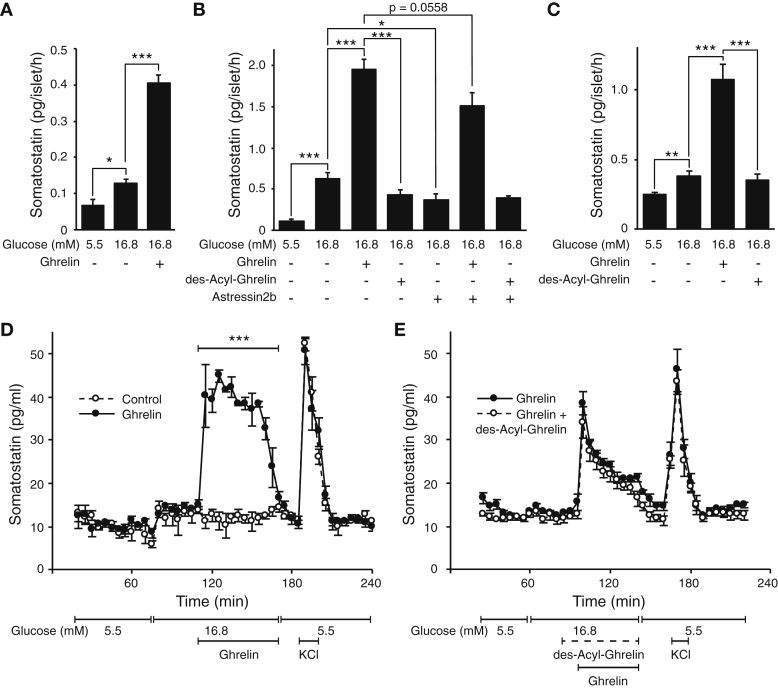
From these transcriptomes, we discovered that the ghrelin receptor is expressed exclusively by delta cells within the islet, which was confirmed by fluorescent in situ hybridization and qPCR. Indeed, ghrelin increases intracellular calcium in delta cells in intact mouse islets, measured by GCaMP6 and robustly potentiates glucose-stimulated somatostatin secretion on mouse and human islets in both static and perfusion assays. In contrast, des-acyl-ghrelin at the same dose had no effect on somatostatin secretion and did not block the actions of ghrelin.
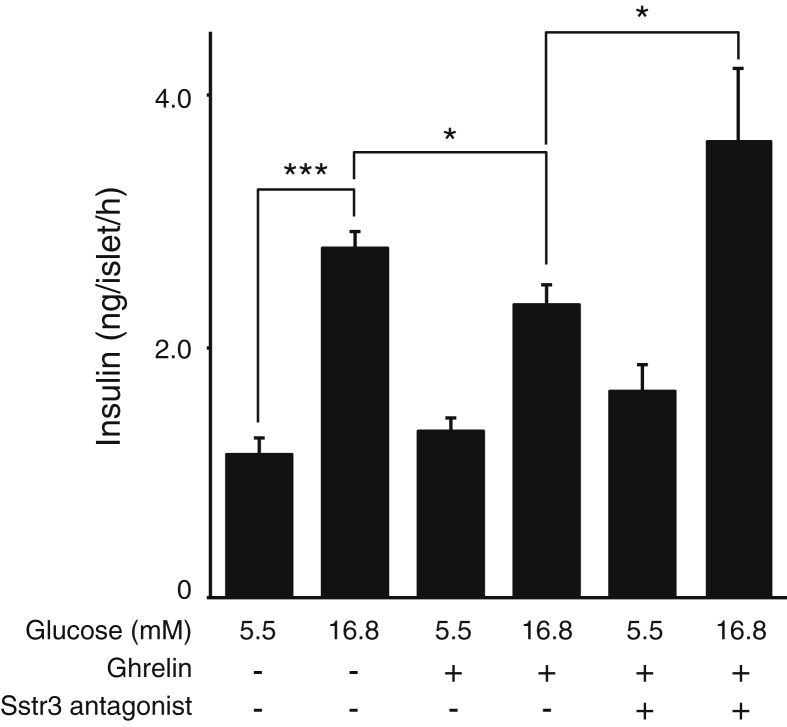
These results offer a straightforward explanation for the well-known insulinostatic actions of ghrelin. Rather than engaging beta cells directly, ghrelin engages delta cells to promote local inhibitory feedback that attenuates insulin release. These findings illustrate the power of our approach to resolve some of the long-standing conundrums with regard to the rich feedback that occurs within the islet that is integral to islet physiology and therefore highly relevant to diabetes.
胰岛内内分泌细胞之间复杂的局部串扰确保了它们内分泌输出的紧密协调。最近的一项研究表明,胰腺胰岛内的δ细胞的负反馈控制决定了小鼠出生后发育期间血浆葡萄糖的稳态设定点,这就说明了这一点。然而,促进旁分泌串扰的胰岛内分泌细胞的紧密关联也使得直接作用于β细胞的效应与通过局部中间介质(如来自δ细胞的生长抑素)介导的间接效应之间的区分变得复杂。
为了解决这个问题,我们构建了报告基因小鼠,能够从同一胰岛中收集纯的胰腺δ细胞以及α和β细胞,并为每种胰岛内分泌细胞类型生成全面的转录组。这些转录组提供了关于δ、α和β细胞表达的受体的无与伦比的视图,并能够非常准确地预测哪种信号靶向哪种内分泌细胞类型。
从这些转录组中,我们发现胃饥饿素受体仅在胰岛内的δ细胞中表达,这通过荧光原位杂交和定量聚合酶链反应得到了证实。事实上,通过GCaMP6测量,胃饥饿素增加了完整小鼠胰岛中δ细胞内的钙,并在静态和灌注实验中强烈增强了小鼠和人类胰岛上葡萄糖刺激的生长抑素分泌。相比之下,相同剂量的去酰基胃饥饿素对生长抑素分泌没有影响,也不阻断胃饥饿素的作用。
这些结果为胃饥饿素众所周知的胰岛素稳定作用提供了一个直接的解释。胃饥饿素不是直接作用于β细胞,而是作用于δ细胞以促进局部抑制性反馈,从而减弱胰岛素释放。这些发现说明了我们的方法在解决一些关于胰岛内丰富反馈的长期难题方面的力量,这种反馈是胰岛生理学所不可或缺的,因此与糖尿病高度相关。