Mavrikaki Maria, Girardet Clemence, Kern Andras, Faruzzi Brantley Alicia, Miller Courtney A, Macarthur Heather, Marks Daniel L, Butler Andrew A
Department of Metabolism and Aging, The Scripps Research Institute, Jupiter, FL 33458, USA; Department of Pharmacology & Physiology, Saint Louis University School of Medicine, St. Louis, MO 63104, USA.
Department of Metabolism and Aging, The Scripps Research Institute, Jupiter, FL 33458, USA.
Mol Metab. 2016 May 12;5(7):566-579. doi: 10.1016/j.molmet.2016.05.002. eCollection 2016 Jul.
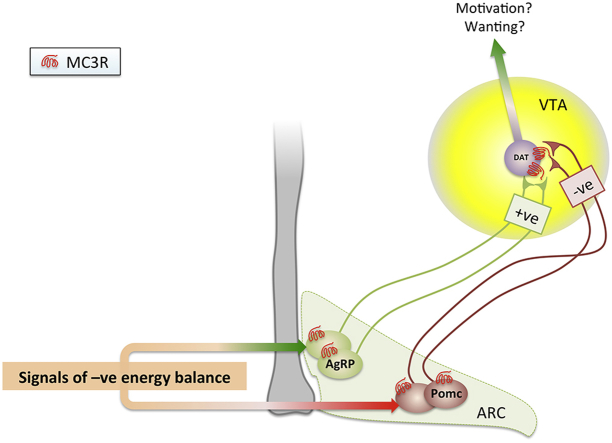
Appetitive responses to weight loss are mediated by a nutrient-sensing neural network comprised of melanocortin neurons. The role of neural melanocortin-3 receptors (MC3R) in mediating these responses is enigmatic. Mc3r knockout mice exhibit a paradoxical phenotype of obesity and reduced feeding-related behaviors in situations of nutrient scarcity. Here we examined whether MC3Rs expressed in mesolimbic neurons regulate feeding-related motivational responses.
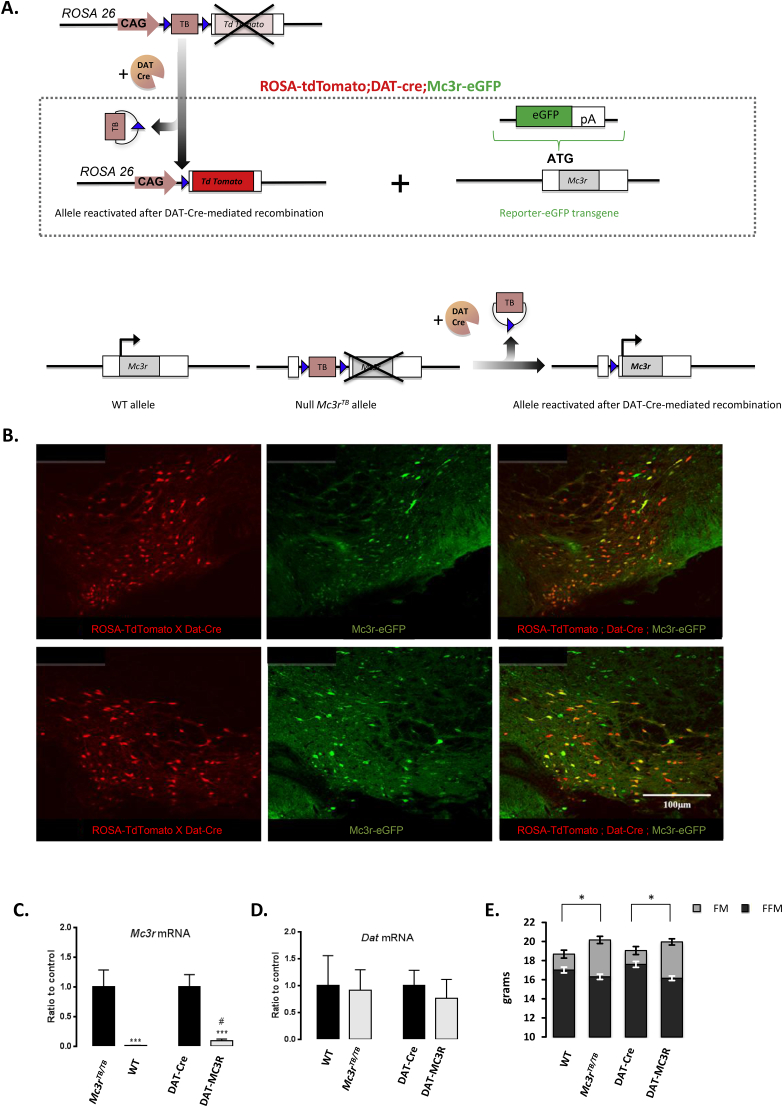
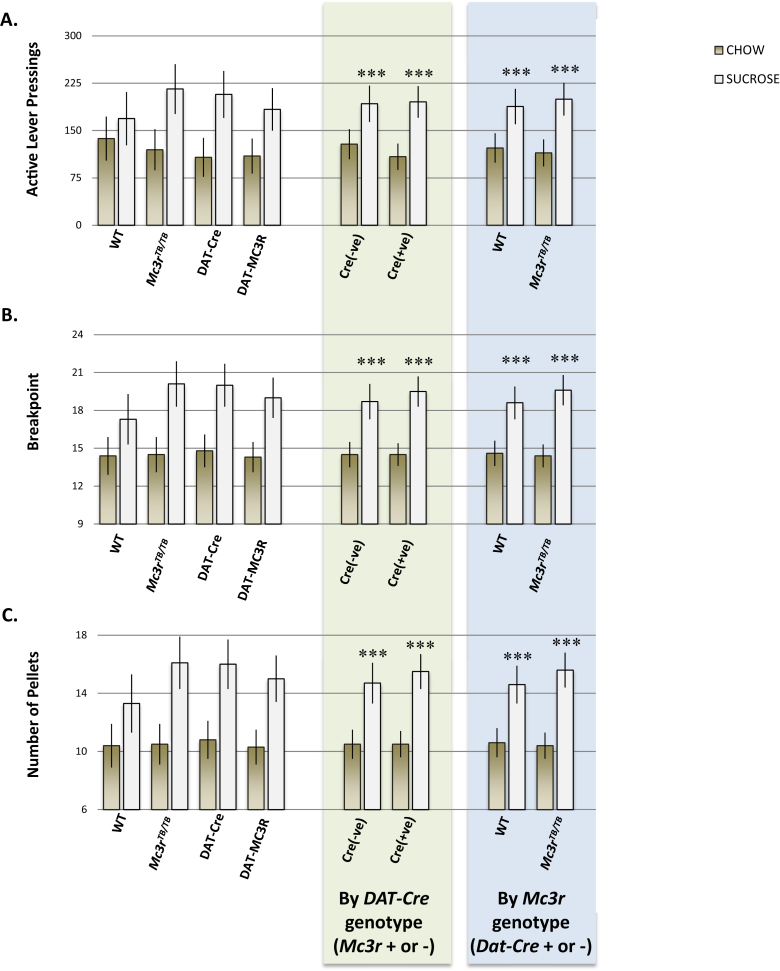
Interactions between Mc3r genotype, cognitive function and energy balance on food self-administration were assessed using operant conditioning with fixed- and progressive ratio (FR1/PR1) settings. Inhibition of Mc3r transcription by a loxP-flanked transcriptional blocker (TB) in C57BL/6JN mice (Mc3r (TB/TB) ) was reversed in mesolimbic neurons using DAT-Cre (DAT-MC3R).
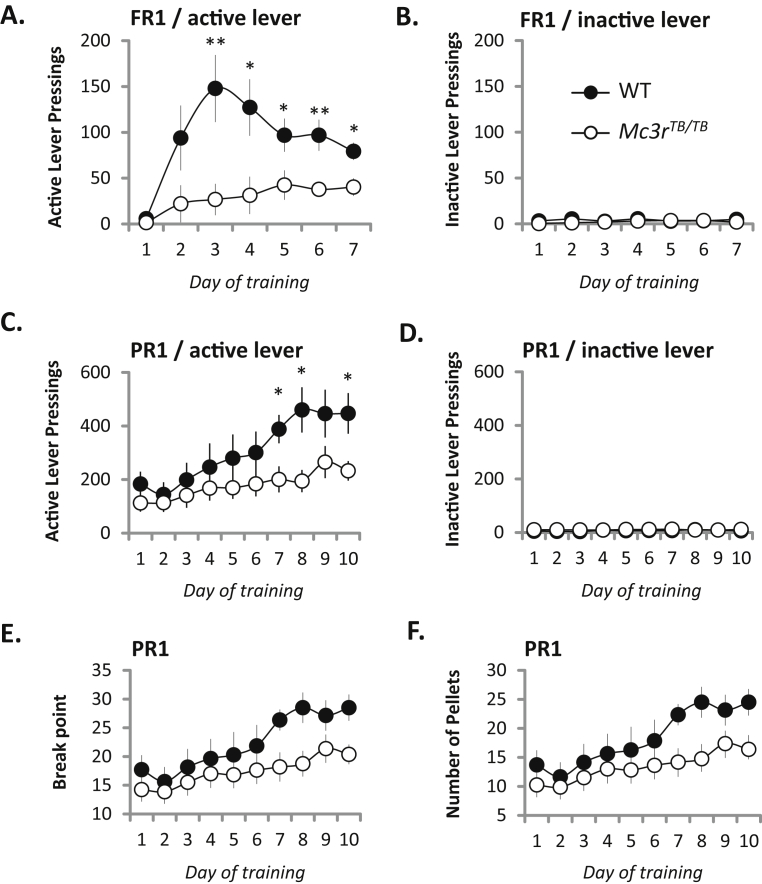
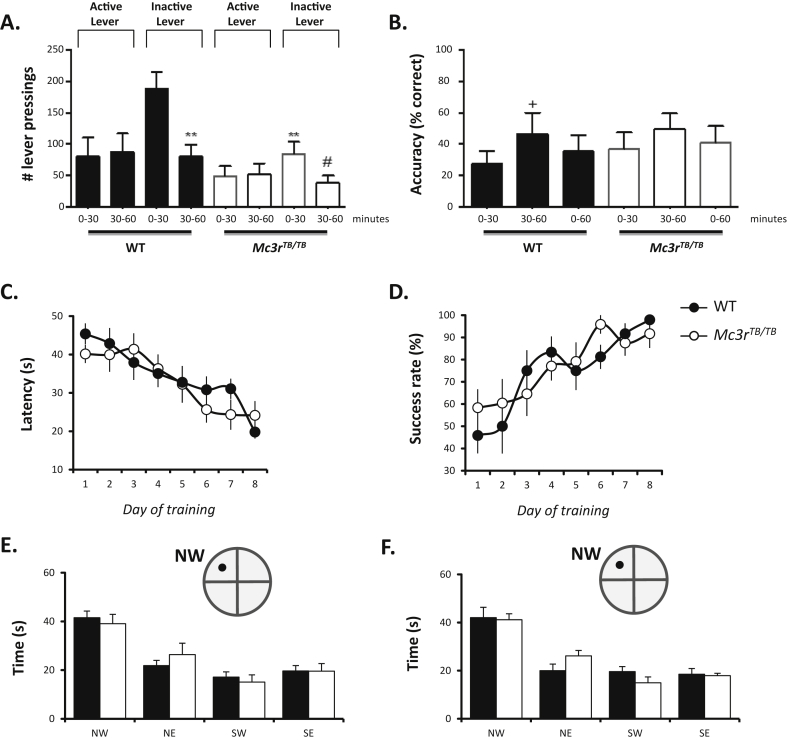
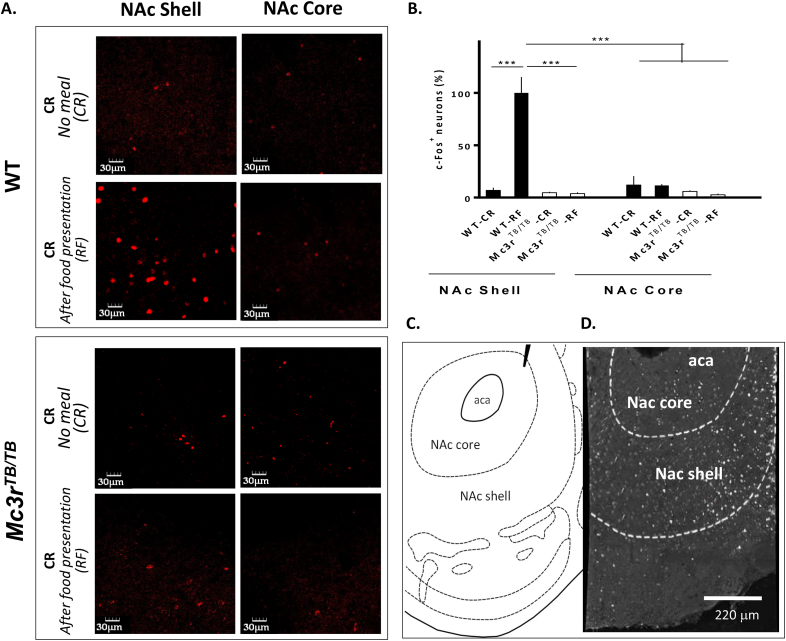
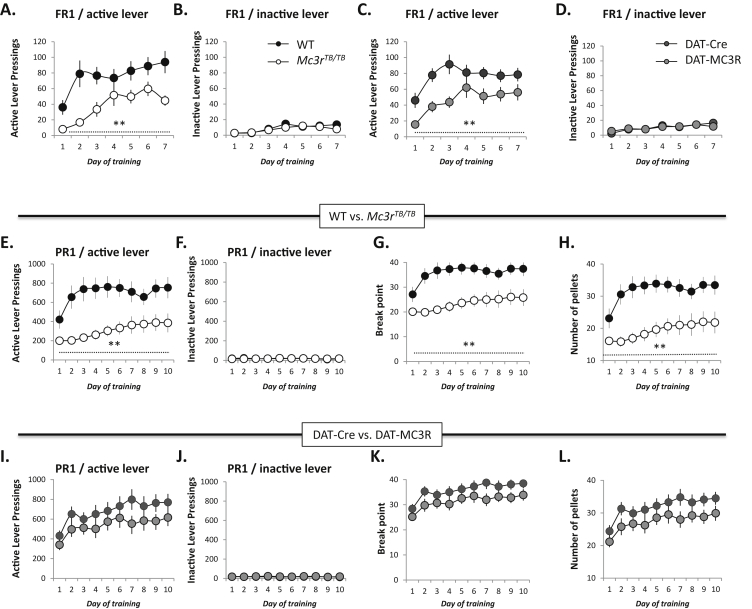
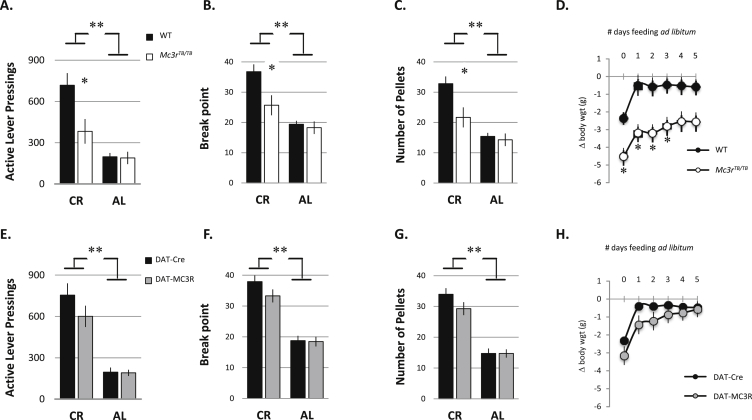
Caloric restriction (CR) caused 10-15% weight loss and increased motivation to acquire food rewards during training sessions. c-Fos-expression in the nucleus accumbens was increased 1 h following food presentation. While exhibiting weight loss, total food self-administration, enhanced motivation to self-administer food rewards in training sessions held during CR and c-Fos-activation in the nucleus accumbens following re-feeding were all markedly attenuated in Mc3r (TB/TB) mice. In contrast, cognitive abilities were normal in Mc3r (TB/TB) mice. Total food self-administration during FR1 sessions was not rescued in DAT-MC3R mice, however enhanced motivational responses to self-administer food rewards in PR1 conditions were restored. The nutrient-partitioning phenotype observed with Mc3r-deficiency was not rescued in DAT-MC3R mice.
Mesolimbic MC3Rs mediate enhanced motivational responses during CR. However, they are insufficient to restore normal caloric loading when food is presented during CR and do not affect metabolic conditions altering nutrient partitioning.
对体重减轻的食欲反应由一个由黑皮质素神经元组成的营养感知神经网络介导。神经黑皮质素-3受体(MC3R)在介导这些反应中的作用尚不清楚。Mc3r基因敲除小鼠在营养缺乏的情况下表现出肥胖和进食相关行为减少的矛盾表型。在这里,我们研究了中脑边缘神经元中表达的MC3R是否调节进食相关的动机反应。
使用固定比率和渐进比率(FR1/PR1)设置的操作性条件反射评估Mc3r基因型、认知功能和能量平衡对食物自我给药的相互作用。在C57BL/6JN小鼠(Mc3r(TB/TB))中,loxP侧翼转录阻断剂(TB)对Mc3r转录的抑制在中脑边缘神经元中使用DAT-Cre(DAT-MC3R)得以逆转。
热量限制(CR)导致体重减轻10-15%,并增加了训练期间获取食物奖励的动机。食物呈现后1小时,伏隔核中的c-Fos表达增加。虽然体重减轻,但在CR期间进行的训练中,总食物自我给药、自我给药食物奖励的动机增强以及重新进食后伏隔核中的c-Fos激活在Mc3r(TB/TB)小鼠中均明显减弱。相比之下,Mc3r(TB/TB)小鼠的认知能力正常。在DAT-MC3R小鼠中,FR1期间的总食物自我给药未得到恢复,然而在PR1条件下对自我给药食物奖励的动机反应增强得以恢复。在DAT-MC3R小鼠中,未挽救观察到的Mc3r缺乏导致的营养分配表型。
中脑边缘MC3R在CR期间介导增强的动机反应。然而,当在CR期间提供食物时,它们不足以恢复正常的热量摄入,并且不影响改变营养分配的代谢状况。