Winston Charisse N, Goetzl Edward J, Akers Johnny C, Carter Bob S, Rockenstein Edward M, Galasko Douglas, Masliah Eliezer, Rissman Robert A
Department of Neurosciences, University of California, San Diego, La Jolla, CA, USA.
Jewish Home of San Francisco, University of California, San Francisco, San Francisco, CA, USA; Department of Medicine, University of California, San Francisco, San Francisco, CA, USA.
Alzheimers Dement (Amst). 2016 May 7;3:63-72. doi: 10.1016/j.dadm.2016.04.001. eCollection 2016.
Levels of Alzheimer's disease (AD)-related proteins in plasma neuronal derived exosomes (NDEs) were quantified to identify biomarkers for prediction and staging of mild cognitive impairment (MCI) and AD.
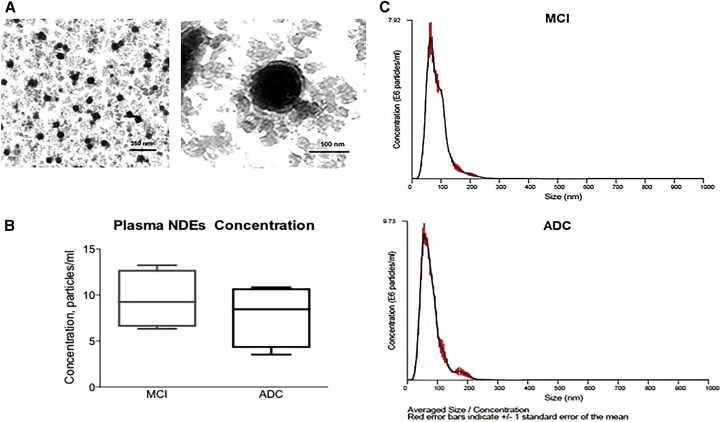
Plasma exosomes were extracted, precipitated, and enriched for neuronal source by anti-L1CAM antibody absorption. NDEs were characterized by size (Nanosight) and shape (TEM) and extracted NDE protein biomarkers were quantified by ELISAs. Plasma NDE cargo was injected into normal mice, and results were characterized by immunohistochemistry to determine pathogenic potential.
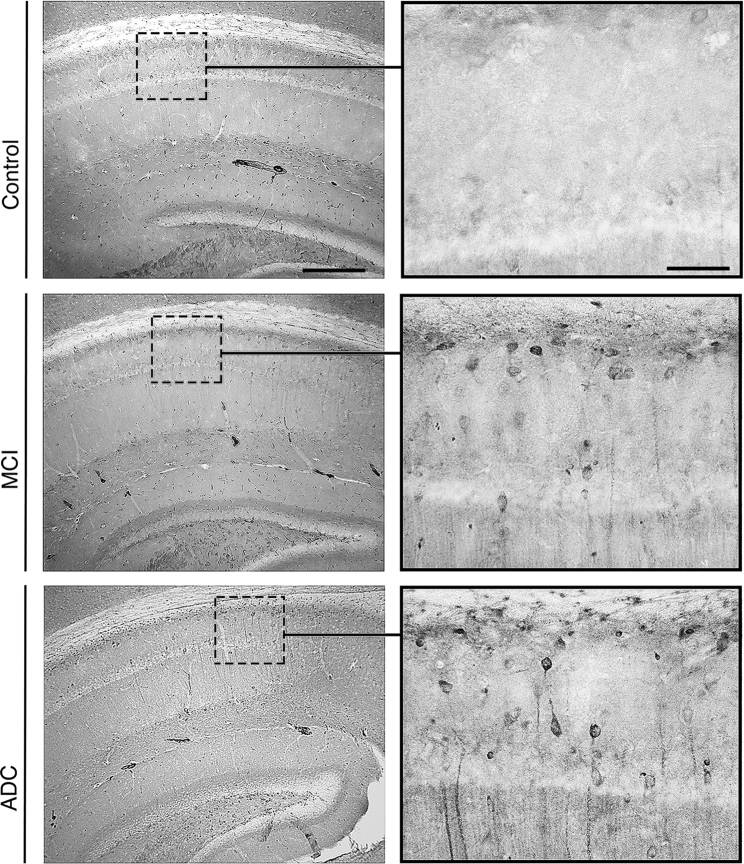
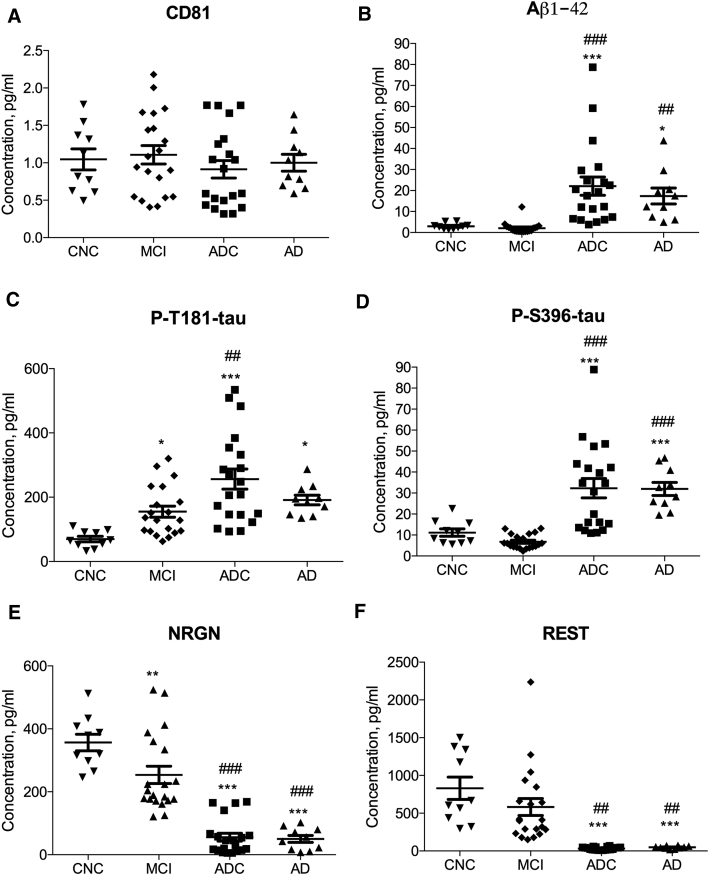
Plasma NDE levels of P-T181-tau, P-S396-tau, and Aβ1-42 were significantly higher, whereas those of neurogranin (NRGN) and the repressor element 1-silencing transcription factor (REST) were significantly lower in AD and MCI converting to AD (ADC) patients compared to cognitively normal controls (CNC) subjects and stable MCI patients. Mice injected with plasma NDEs from ADC patients displayed increased P-tau (PHF-1 antibody)-positive cells in the CA1 region of the hippocampus compared to plasma NDEs from CNC and stable MCI patients.
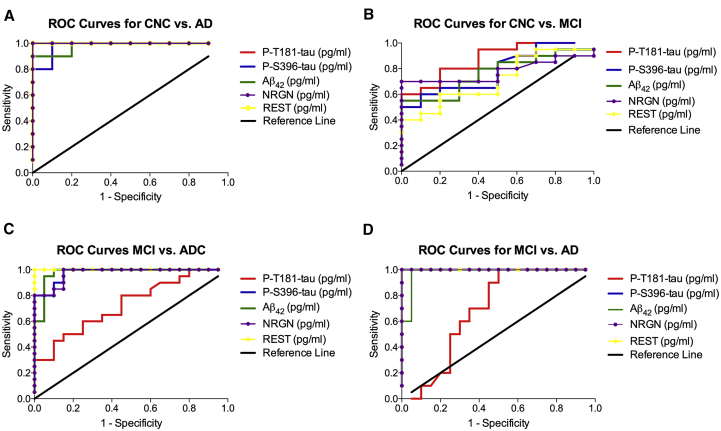
Abnormal plasma NDE levels of P-tau, Aβ1-42, NRGN, and REST accurately predict conversion of MCI to AD dementia. Plasma NDEs from demented patients seeded tau aggregation and induced AD-like neuropathology in normal mouse CNS.
对血浆神经元衍生外泌体(NDEs)中阿尔茨海默病(AD)相关蛋白水平进行定量,以鉴定用于预测和分期轻度认知障碍(MCI)及AD的生物标志物。
提取血浆外泌体,通过抗L1CAM抗体吸附进行沉淀和神经元来源富集。通过纳米粒度分析仪(Nanosight)和透射电子显微镜(TEM)对NDEs进行大小和形状表征,并用酶联免疫吸附测定法(ELISAs)对提取的NDE蛋白生物标志物进行定量。将血浆NDE货物注射到正常小鼠体内,通过免疫组织化学对结果进行表征以确定致病潜力。
与认知正常对照(CNC)受试者和稳定MCI患者相比,AD及转化为AD的MCI(ADC)患者血浆中P-T181- tau、P-S396- tau和Aβ1- 42的NDE水平显著升高,而神经颗粒素(NRGN)和阻遏元件1沉默转录因子(REST)的水平显著降低。与注射来自CNC和稳定MCI患者血浆NDEs的小鼠相比,注射来自ADC患者血浆NDEs的小鼠海马CA1区P-tau(PHF-1抗体)阳性细胞增多。
P-tau、Aβ1- 42、NRGN和REST的血浆NDE水平异常可准确预测MCI向AD痴呆的转化。痴呆患者的血浆NDEs在正常小鼠中枢神经系统中引发tau聚集并诱导AD样神经病理学改变。