Kim Young-Hee, Tran Thi-Anh-Thuy, Lee Hyun-Ju, Jung Sook-In, Lee Je-Jung, Jang Wool-Youl, Moon Kyung-Sub, Kim In-Young, Jung Shin, Jung Tae-Young
Brain Tumor Research Laboratory, Chonnam National University Hwasun Hospital, Chonnam, Republic of Korea.
Research Center for Cancer Immunotherapy, Chonnam National University Hwasun Hospital, Chonnam, Republic of Korea.
Oncotarget. 2016 Aug 2;7(31):50535-50547. doi: 10.18632/oncotarget.10495.
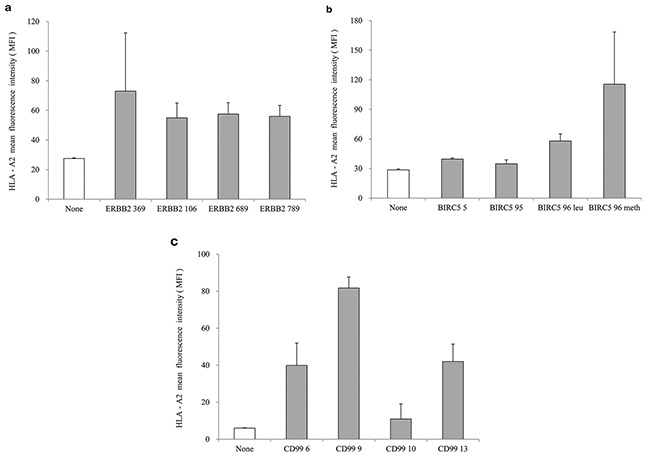
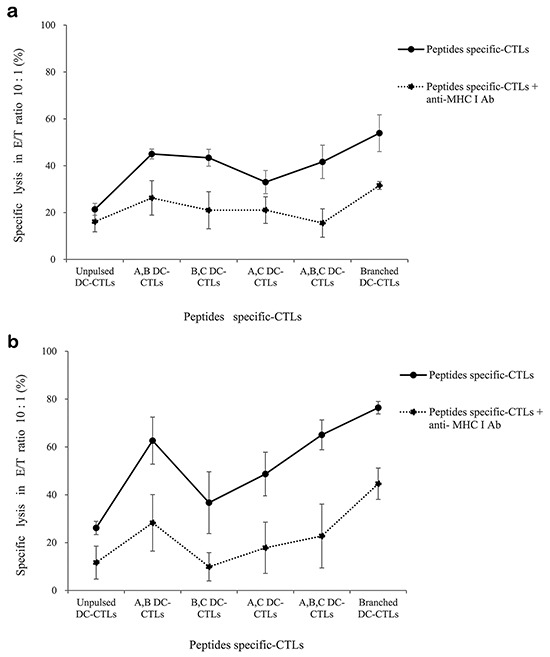
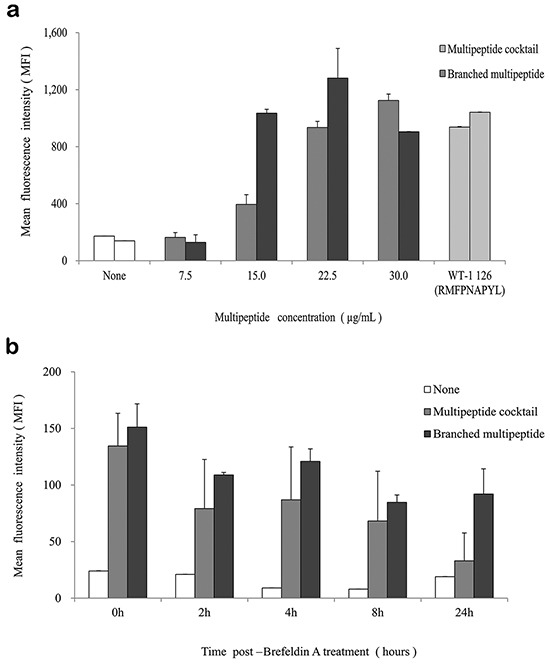
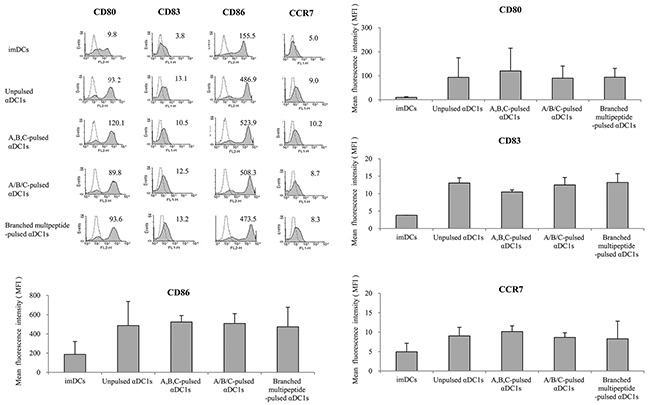
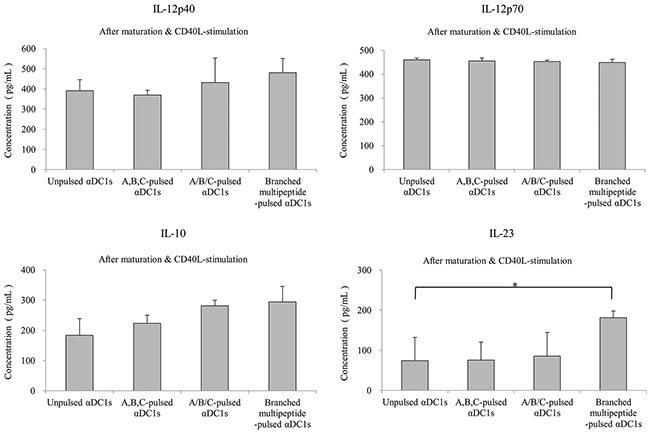
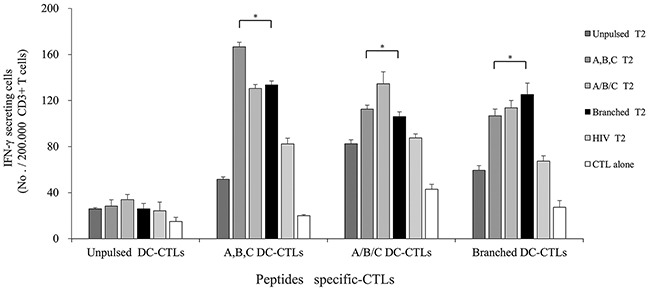
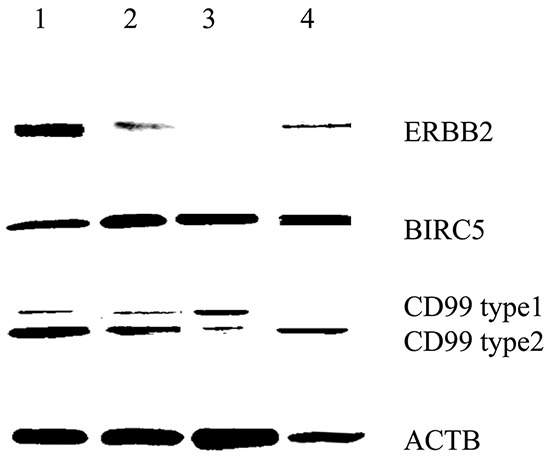
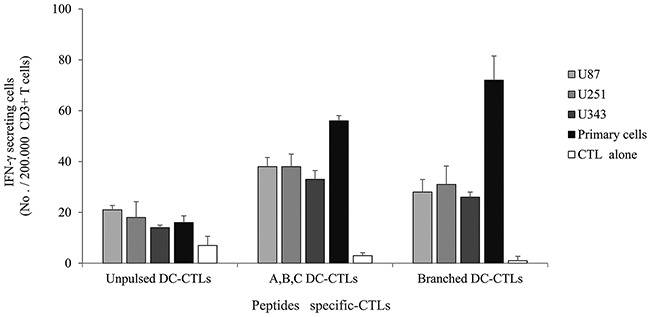
We investigated the use of cytotoxic T-lymphocyte (CTL) epitopes in peptide immunotherapy for glioblastoma. Three peptides (ERBB2, BIRC5 and CD99) were selected based on their peptide-T2 cell binding affinities and combined in a multipeptide cocktail or a branched multipeptide synthesized with mini-polyethylene glycol spacers. Dendritic cells (DCs) pulsed with the multipeptide cocktail or branched multipeptide were compared based on their immunophenotype and cytokine secretion. FACS analysis of alpha-type 1 polarized dendritic cells (αDC1s) revealed that both groups highly expressed CD80, CD83 and CD86, indicating that both treatments efficiently generated mature αDC1s with the expected phenotype. Production of IL-12p70, IL-12p40 and IL-10 also increased upon αDC1 maturation in both groups. CTLs stimulated by either αDC1 group ("DC-CTLs") included numerous IFN-γ-secreting cells against T2 cells loaded with the corresponding multipeptides. Large numbers of IFN-γ-secreting cells were observed when human glioblastoma cell lines and primary cells were treated with multipeptide-pulsed DC-CTLs. Both multipeptide-pulsed DC-CTL groups exhibited cytotoxic activity of 40-60% against the U251 cell line and 60-80% against primary cells. Branched multipeptide from ERBB2, BIRC5 and CD99 stably bound with T2 cells, and its cytotoxicity toward target cells was similar to that of the multipeptide cocktail. Thus, branched multipeptides could be promising candidates for immunotherapeutic glioblastoma treatment.
我们研究了细胞毒性T淋巴细胞(CTL)表位在胶质母细胞瘤肽免疫治疗中的应用。根据三种肽(ERBB2、BIRC5和CD99)与T2细胞的肽结合亲和力进行选择,并将它们组合成一种多聚肽混合物或用微型聚乙二醇间隔物合成的分支多聚肽。对用多聚肽混合物或分支多聚肽脉冲处理的树突状细胞(DC)的免疫表型和细胞因子分泌进行了比较。对α1型极化树突状细胞(αDC1)的流式细胞术分析显示,两组均高表达CD80、CD83和CD86,表明两种处理均能有效地产生具有预期表型的成熟αDC1。两组中αDC1成熟后,IL-12p70、IL-12p40和IL-10的产生也增加。任一αDC1组刺激的CTL(“DC-CTL”)包括大量针对负载相应多聚肽的T2细胞分泌IFN-γ的细胞。当用人胶质母细胞瘤细胞系和原代细胞用多聚肽脉冲处理的DC-CTL处理时,观察到大量分泌IFN-γ的细胞。两个多聚肽脉冲DC-CTL组对U251细胞系的细胞毒性活性为40-60%,对原代细胞的细胞毒性活性为60-80%。来自ERBB2、BIRC5和CD99的分支多聚肽与T2细胞稳定结合,其对靶细胞的细胞毒性与多聚肽混合物相似。因此,分支多聚肽可能是胶质母细胞瘤免疫治疗的有前途的候选物。