Noor Zaswiza Mohamad, Smith Alesha J, Smith Simon S, Nissen Lisa M
Department of Pharmacy Practice, Kulliyyah of Pharmacy, International Islamic University Malaysia, Kuantan, Pahang, Malaysia; School of Pharmacy, University of Queensland, Woolloongabba, Queensland, Australia.
School of Pharmacy, University of Otago, Dunedin, New Zealand.
J Pharm Bioallied Sci. 2016 Jul-Sep;8(3):173-80. doi: 10.4103/0975-7406.171739.
Community pharmacists are in a suitable position to give advice and provide appropriate services related to sleep disorders to individuals who are unable to easily access sleep clinics. An intervention with proper objective measure can be used by the pharmacist to assist in consultation.
The study objectives are to evaluate: (1) The effectiveness of a community pharmacy-based intervention in managing sleep disorders and (2) the role of actigraph as an objective measure to monitor and follow-up individuals with sleeping disorders.
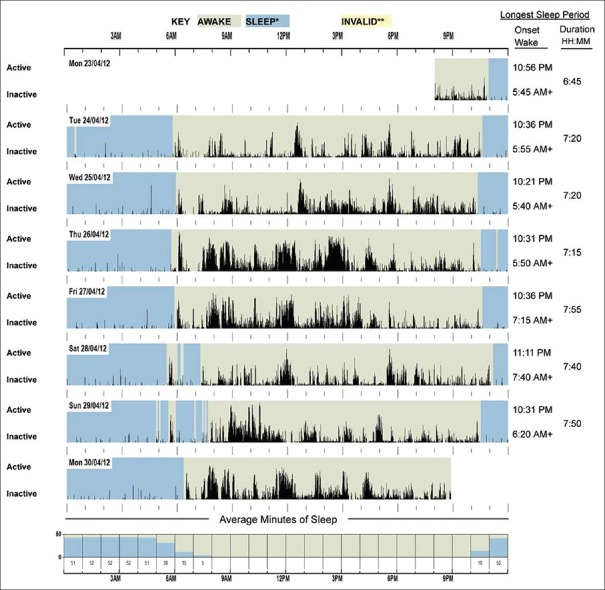
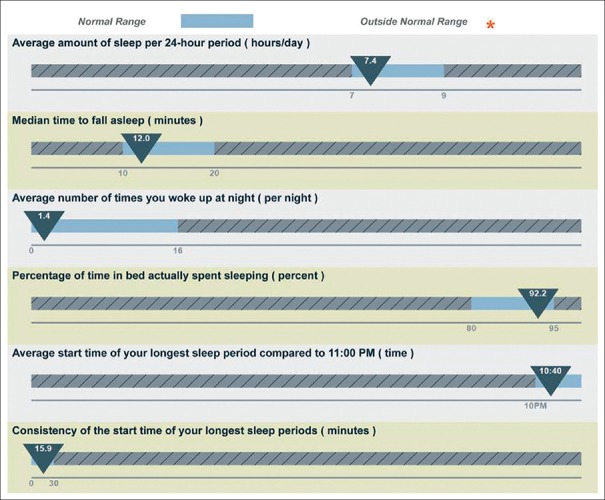
The intervention care group (ICG) completed questionnaires to assess sleep scale scores (Epworth Sleepiness Scale [ESS] and Insomnia Severity Index [ISI]), wore a wrist actigraph, and completed a sleep diary. Sleep parameters (sleep efficiency in percentage [SE%], total sleep time, sleep onset latency, and number of nocturnal awakenings) from actigraphy sleep report were used for consultation and to validate sleep diary. The usual care group (UCG) completed similar questionnaires but received standard care.
Pre- and post-mean scores for sleep scales and sleep parameters were compared between and within groups. A significant difference was observed when comparing pre- and post-mean scores for ISI in the ICG, but not for ESS. For SE%, an increase was found in the number of subjects rated as "good sleepers" at post-assessment in the ICG.
ISI scores offer insights into the development of a community pharmacy-based intervention for sleeping disorders, particularly in those with symptoms of insomnia. It also demonstrates that actigraph could provide objective sleep/wake data to assist community pharmacists during the consultation.
社区药剂师处于合适的位置,能够为那些难以轻松前往睡眠诊所的个人提供有关睡眠障碍的建议并提供适当服务。药剂师可以采用具有适当客观测量方法的干预措施来协助进行咨询。
本研究的目的是评估:(1)基于社区药房的干预措施在管理睡眠障碍方面的有效性,以及(2)活动记录仪作为监测和随访睡眠障碍患者的客观测量方法的作用。
干预护理组(ICG)完成问卷以评估睡眠量表评分(爱泼华嗜睡量表[ESS]和失眠严重程度指数[ISI]),佩戴手腕活动记录仪,并完成睡眠日记。活动记录仪睡眠报告中的睡眠参数(以百分比表示的睡眠效率[SE%]、总睡眠时间、入睡潜伏期和夜间觉醒次数)用于咨询并验证睡眠日记。常规护理组(UCG)完成类似问卷,但接受标准护理。
比较了组间和组内睡眠量表和睡眠参数的前后平均得分。ICG中ISI的前后平均得分比较时观察到显著差异,但ESS没有。对于SE%,ICG中在评估后被评为“睡眠良好者”的受试者数量有所增加。
ISI评分有助于了解基于社区药房的睡眠障碍干预措施的发展,特别是对于有失眠症状的患者。这也表明活动记录仪可以提供客观的睡眠/觉醒数据,以协助社区药剂师进行咨询。