Geary Thomas W, Burns Gregory W, Moraes Joao G N, Moss James I, Denicol Anna C, Dobbs Kyle B, Ortega M Sofia, Hansen Peter J, Wehrman Michael E, Neibergs Holly, O'Neil Eleanore, Behura Susanta, Spencer Thomas E
USDA-ARS, Fort Keogh Livestock and Range Research Laboratory, Miles City, Montana
Division of Animal Sciences, University of Missouri, Columbia, Missouri.
Biol Reprod. 2016 Aug;95(2):47. doi: 10.1095/biolreprod.116.141390. Epub 2016 Jul 14.
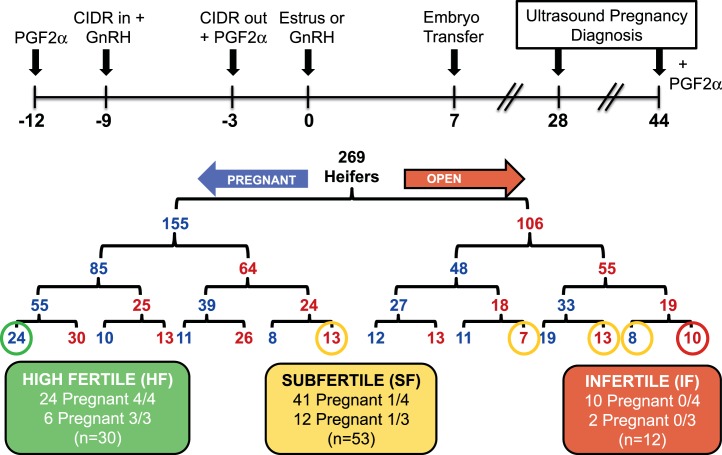
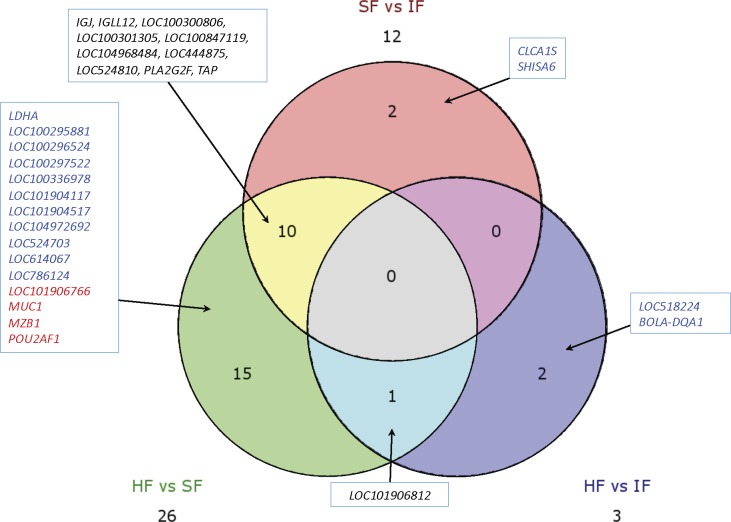
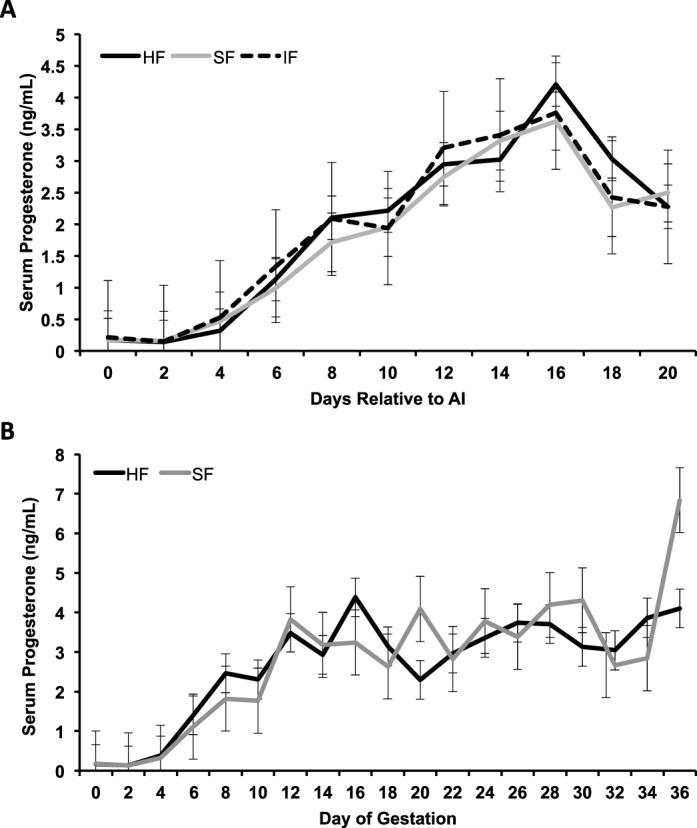
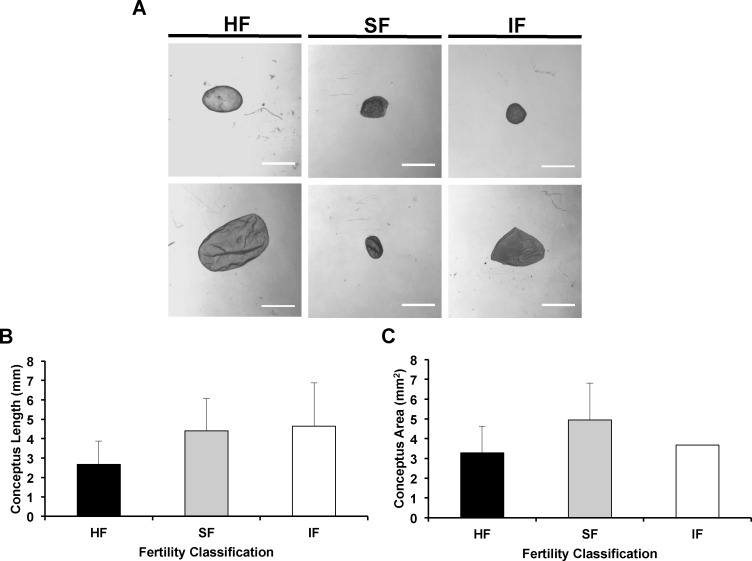
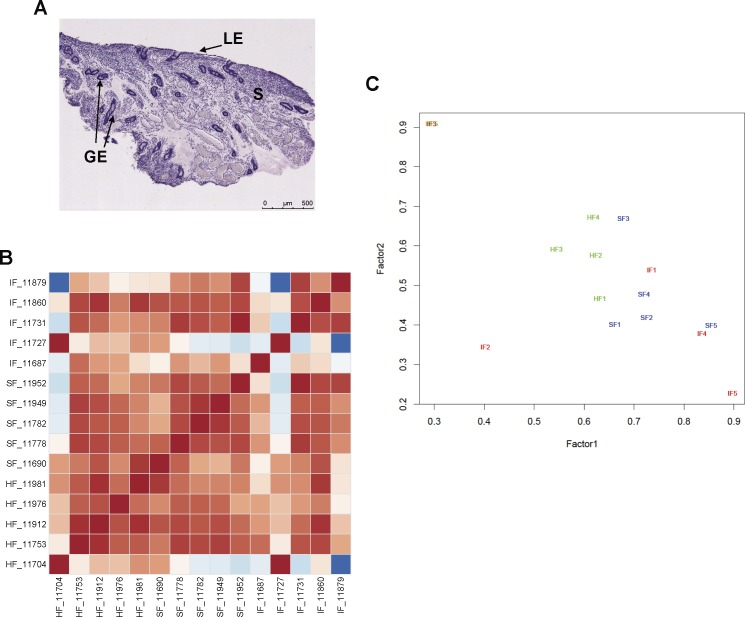
Infertility and subfertility represent major problems in domestic animals and humans, and the majority of embryonic loss occurs during the first month of gestation that involves pregnancy recognition and conceptus implantation. The critical genes and physiological pathways in the endometrium that mediate pregnancy establishment and success are not well understood. In study one, predominantly Angus heifers were classified based on fertility using serial embryo transfer to select animals with intrinsic differences in pregnancy loss. In each of the four rounds, a single in vitro-produced, high-quality embryo was transferred into heifers on Day 7 postestrus and pregnancy was determined on Days 28 and 42 by ultrasound and then terminated. Heifers were classified based on pregnancy success as high fertile (HF), subfertile (SF), or infertile (IF). In study two, fertility-classified heifers were resynchronized and bred with semen from a single high-fertility bull. Blood samples were collected every other day from Days 0 to 36 postmating. Pregnancy rate was determined on Day 28 by ultrasound and was higher in HF (70.4%) than in heifers with low fertility (36.8%; SF and IF). Progesterone concentrations in serum during the first 20 days postestrus were not different in nonpregnant heifers and also not different in pregnant heifers among fertility groups. In study three, a single in vivo-produced embryo was transferred into fertility-classified heifers on Day 7 postestrus. The uteri were flushed on Day 14 to recover embryos, and endometrial biopsies were obtained from the ipsilateral uterine horn. Embryo recovery rate and conceptus length and area were not different among the heifer groups. RNA was sequenced from the Day 14 endometrial biopsies of pregnant HF, SF, and IF heifers (n = 5 per group) and analyzed by edgeR-robust analysis. There were 26 differentially expressed genes (DEGs) in the HF compared to SF endometrium, 12 DEGs for SF compared to IF endometrium, and three DEGs between the HF and IF endometrium. Several of the DEG-encoded proteins are involved in immune responses and are expressed in B cells. Results indicate that preimplantation conceptus survival and growth to Day 14 is not compromised in SF and IF heifers. Thus, the observed difference in capacity for pregnancy success in these fertility-classified heifers is manifest between Days 14 and 28 when pregnancy recognition signaling and conceptus elongation and implantation must occur for the establishment of pregnancy.
不孕和亚生育能力是家畜和人类面临的主要问题,并且大多数胚胎损失发生在妊娠的第一个月,这涉及到妊娠识别和孕体着床。子宫内膜中介导妊娠建立和成功的关键基因和生理途径尚未完全了解。在研究一中,主要通过连续胚胎移植根据生育能力对安格斯小母牛进行分类,以选择妊娠损失存在内在差异的动物。在四轮中的每一轮,在发情后第7天将单个体外生产的高质量胚胎移植到小母牛体内,并在第28天和第42天通过超声确定妊娠情况,然后终止妊娠。根据妊娠成功情况将小母牛分为高生育力(HF)、亚生育力(SF)或不育(IF)。在研究二中,对根据生育能力分类的小母牛进行重新同步发情处理,并与来自一头高生育力公牛的精液进行配种。在配种后第0天至第36天每隔一天采集血样。在第28天通过超声确定妊娠率,HF组(70.4%)高于低生育力小母牛(36.8%;SF和IF)。发情后前20天血清中的孕酮浓度在未妊娠的小母牛中没有差异,在不同生育力组的妊娠小母牛中也没有差异。在研究三中,在发情后第7天将单个体内生产的胚胎移植到根据生育能力分类的小母牛体内。在第14天冲洗子宫以回收胚胎,并从同侧子宫角获取子宫内膜活检样本。小母牛组之间的胚胎回收率、孕体长度和面积没有差异。对妊娠的HF、SF和IF小母牛(每组n = 5)第14天的子宫内膜活检样本进行RNA测序,并通过edgeR稳健分析进行分析。与SF子宫内膜相比,HF子宫内膜中有26个差异表达基因(DEG),与IF子宫内膜相比,SF有12个DEG,HF和IF子宫内膜之间有3个DEG。一些DEG编码的蛋白质参与免疫反应,并在B细胞中表达。结果表明,SF和IF小母牛中植入前孕体存活至第14天以及生长并未受到影响。因此,在这些根据生育能力分类的小母牛中观察到的妊娠成功能力差异表现在第14天至第28天之间,此时必须发生妊娠识别信号传递以及孕体伸长和着床才能建立妊娠。