Pourkhalili Khalil, Hajizadeh Sohrab, Akbari Zahra, Dehaj Mansour Esmaili, Akbarzadeh Samad, Alizadeh Alimohammad
Physiology Department, Faculty of Medicine, Bushehr University of Medical Sciences, Bushehr, Iran.
Physiology Department, School of Medical Sciences, TarbiatModares University, Tehran, Iran.
EXCLI J. 2012 Jun 11;11:263-73. eCollection 2012.
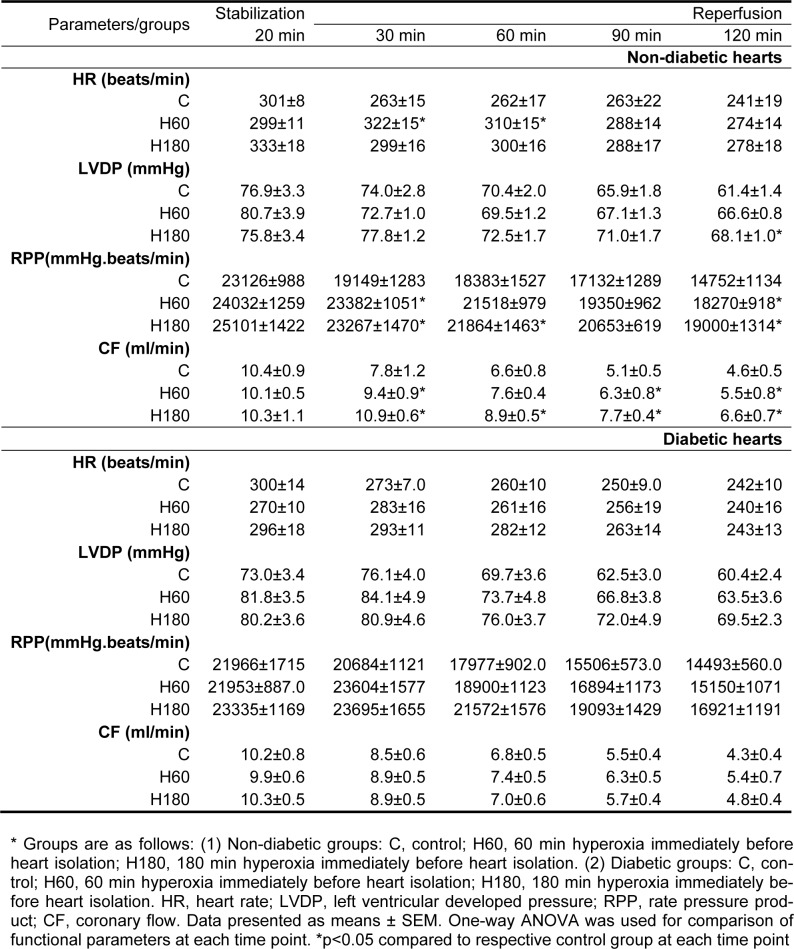
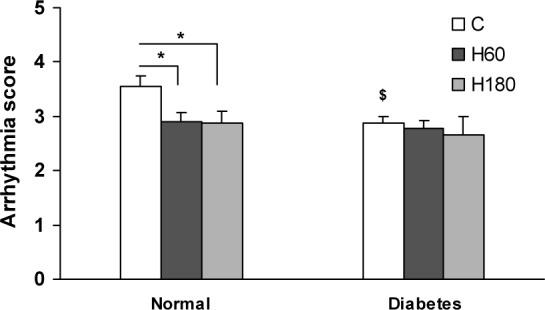
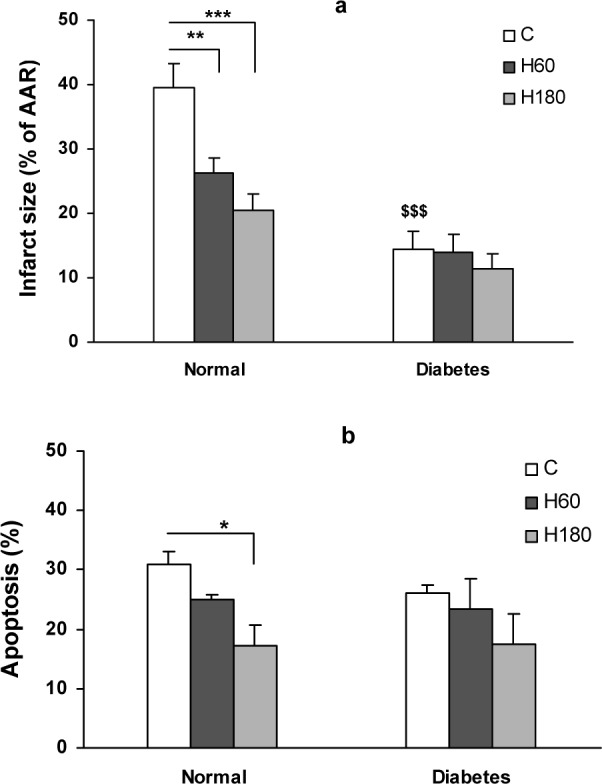
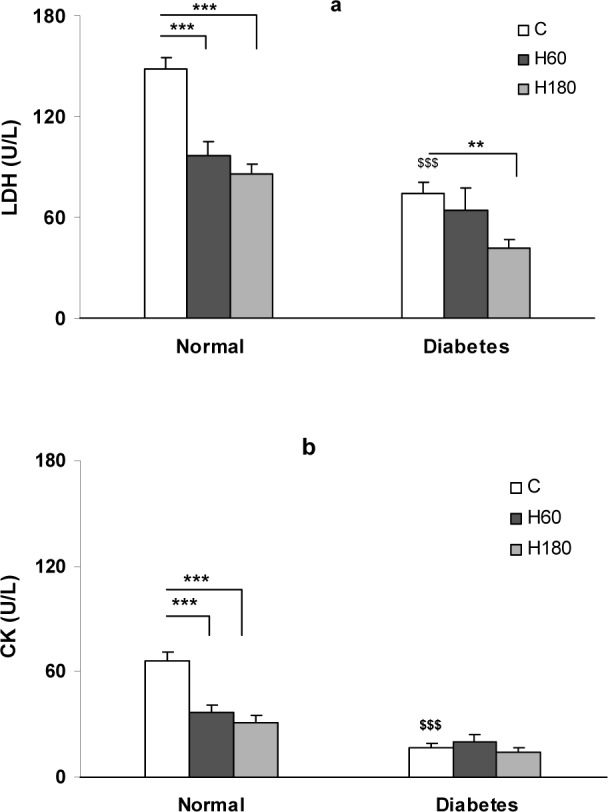
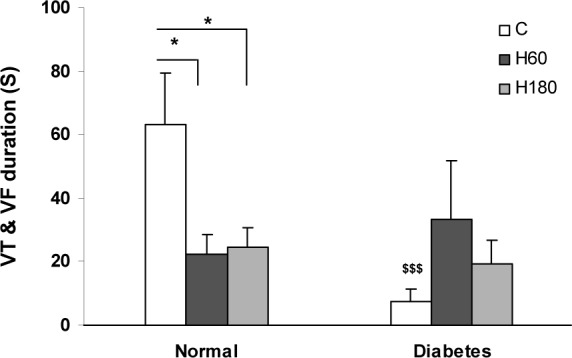
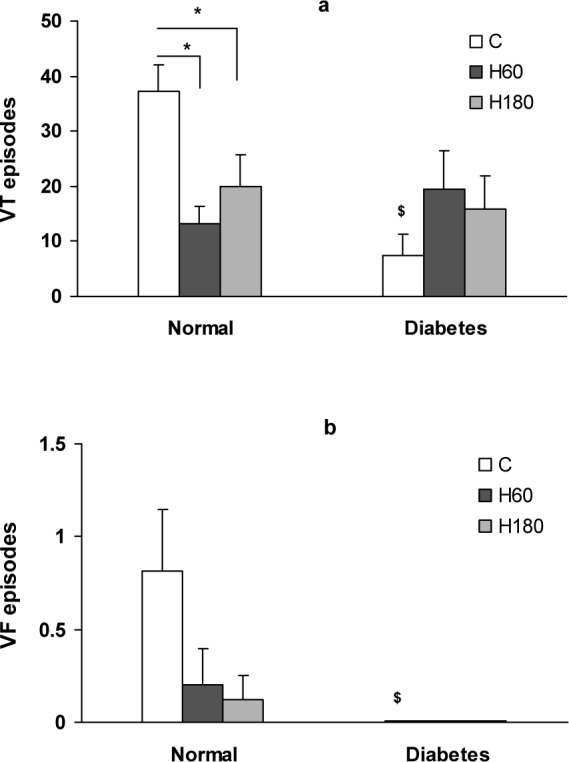
Experimental studies show that detrimental effects of ischemia-reperfusion (I/R) injury can be attenuated by hyperoxic preconditioning in normal hearts, however, there are few studies about hyperoxia effects in diseased myocardium. The present study was designed to assess the cardioprotective effects of hyperoxia pretreatment (≥ 95 % O2) in acute diabetic rat hearts. Normal and one week acute diabetic rats were either exposed to 60 (H60) and 180 (H180) min of hyperoxia or exposed to normal atmospheric air (21 % O2). Then hearts were isolated immediately and subjected to 30 min of regional ischemia followed by 120 min of reperfusion. Infarct size, cardiomyocyte apoptosis, enzymes release and ischemia induced arrhythmias were determined. Heart of diabetic control rats had less infarct size and decreased LDH and CK-MB release compared to normal hearts. 60 and 180 min of hyperoxia reduced myocardial infarct size and enzymes release in normal hearts. 180 min of hyperoxia also decreased cardiomyocytes apoptosis in normal state. On the other hand, protective values of hyperoxia were not significantly different in diabetic hearts. Moreover, hyperoxia reduced severity of ventricular arrhythmias in normal rat hearts whereas; it did not confer any additional antiarrhythmic protection in diabetic hearts. These findings suggest that diabetic hearts are less susceptible to ischemia-induced arrhythmias and infarction. Hyperoxia greatly protects rat hearts against I/R injury in normal hearts, however, it could not provide added cardioprotective effects in acute phase of diabetes.
实验研究表明,在正常心脏中,缺血再灌注(I/R)损伤的有害影响可通过高氧预处理减轻,然而,关于高氧对患病心肌影响的研究较少。本研究旨在评估高氧预处理(≥95%氧气)对急性糖尿病大鼠心脏的心脏保护作用。将正常大鼠和一周龄急性糖尿病大鼠分别暴露于60分钟(H60)和180分钟(H180)的高氧环境或正常大气环境(21%氧气)中。然后立即取出心脏,进行30分钟的局部缺血,随后再灌注120分钟。测定梗死面积、心肌细胞凋亡、酶释放以及缺血诱导的心律失常情况。与正常心脏相比,糖尿病对照大鼠的心脏梗死面积较小,乳酸脱氢酶(LDH)和肌酸激酶同工酶(CK-MB)释放减少。60分钟和180分钟的高氧预处理可减少正常心脏的心肌梗死面积和酶释放。180分钟的高氧预处理还可减少正常状态下的心肌细胞凋亡。另一方面,高氧在糖尿病心脏中的保护作用无显著差异。此外,高氧可降低正常大鼠心脏室性心律失常的严重程度,而在糖尿病心脏中,它并未提供额外的抗心律失常保护作用。这些发现表明,糖尿病心脏对缺血诱导的心律失常和梗死不太敏感。高氧可极大地保护正常大鼠心脏免受I/R损伤,然而,在糖尿病急性期,它无法提供额外的心脏保护作用。