Lee Simon, Kivimäe Saul, Dolor Aaron, Szoka Francis C
The UC-Berkeley-UCSF Graduate Program in Bioengineering, University of California Berkeley, Berkeley 94720, USA.
Department of Bioengineering, Therapeutic Sciences and Pharmaceutical Chemistry, University of California San Francisco, San Francisco 94143, USA.
J Control Release. 2016 Oct 28;240:527-540. doi: 10.1016/j.jconrel.2016.07.018. Epub 2016 Jul 12.
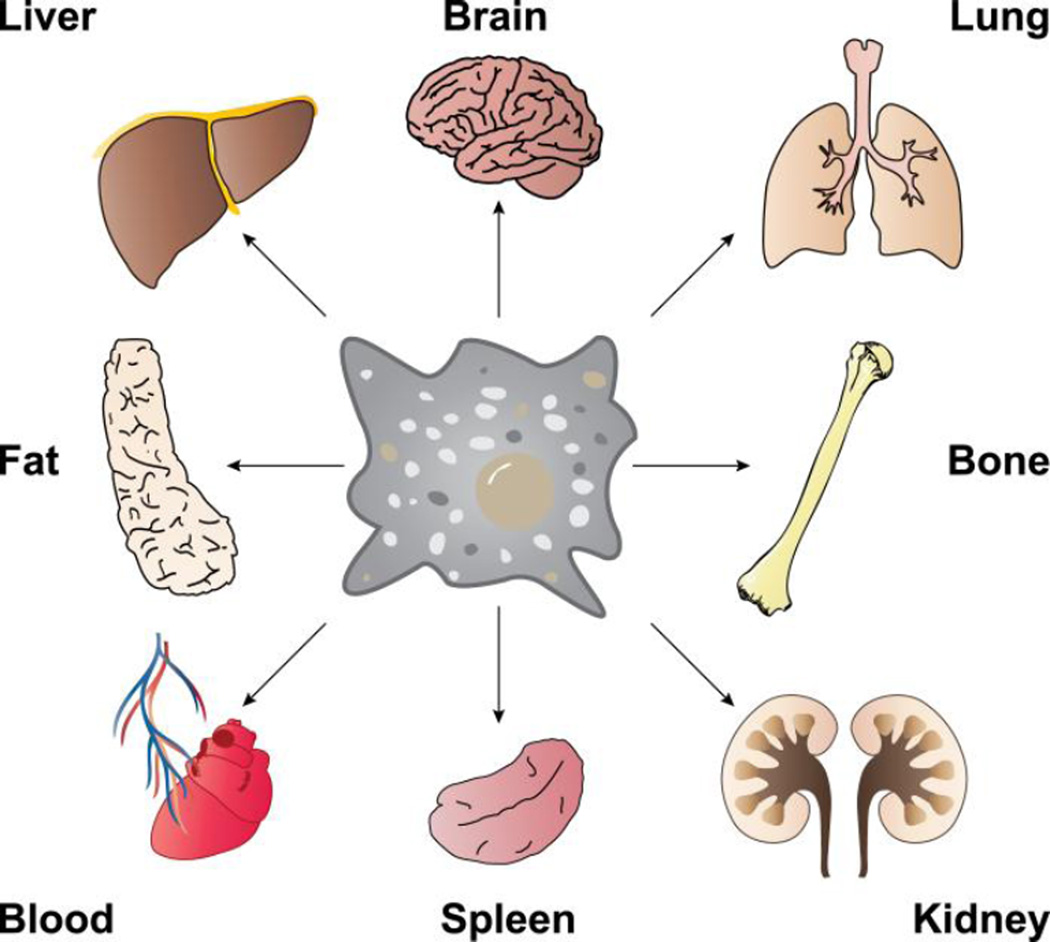
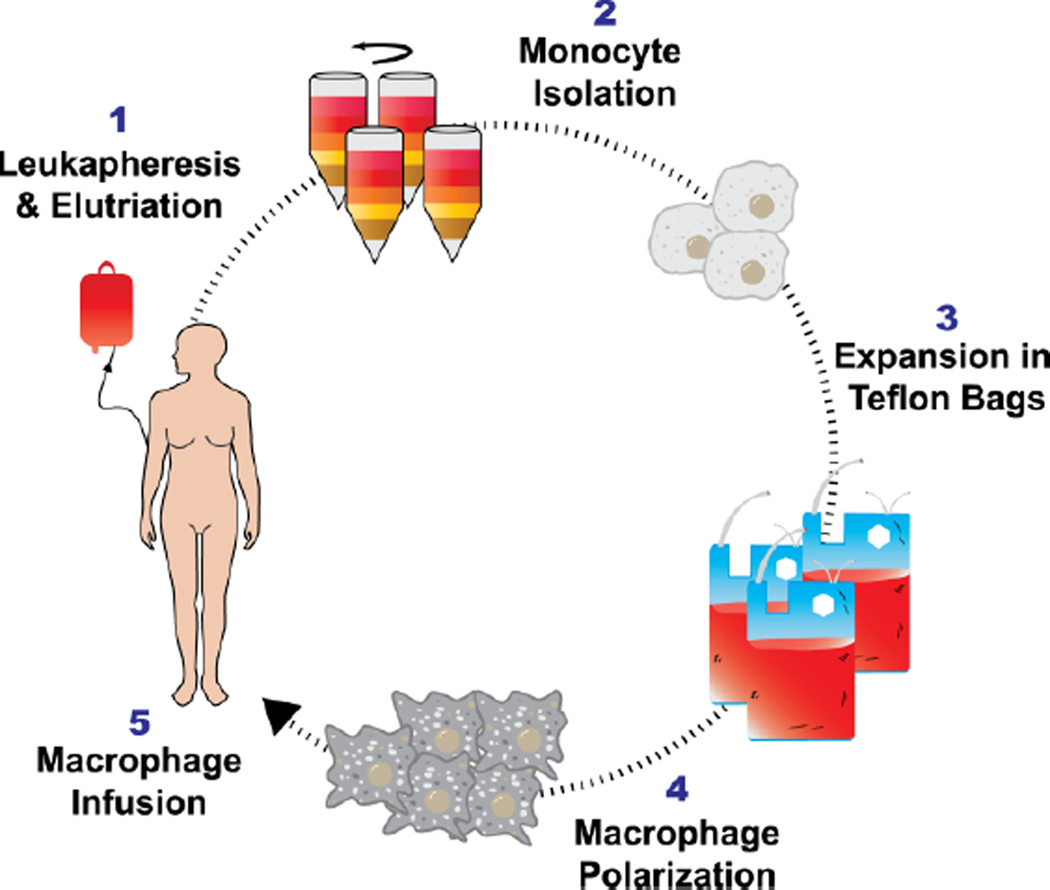
In the quest for better medicines, attention is increasingly turning to cell-based therapies. The rationale is that infused cells can provide a targeted therapy to precisely correct a complex disease phenotype. Between 1987 and 2010, autologous macrophages (MΦs) were used in clinical trials to treat a variety of human tumors; this approach provided a modest therapeutic benefit in some patients but no lasting remissions. These trials were initiated prior to an understanding of: the complexity of MΦ phenotypes, their ability to alter their phenotype in response to various cytokines and/or the environment, and the extent of survival of the re-infused MΦs. It is now known that while inflammatory MΦs can kill tumor cells, the tumor environment is able to reprogram MΦs into a tumorigenic phenotype; inducing blood vessel formation and contributing to a cancer cell growth-promoting milieu. We review how new information enables the development of large numbers of ex vivo generated MΦs, and how conditioning and gene engineering strategies are used to restrict the MΦ to an appropriate phenotype or to enable production of therapeutic proteins. We survey applications in which the MΦ is loaded with nanomedicines, such as liposomes ex vivo, so when the drug-loaded MΦs are infused into an animal, the drug is released at the disease site. Finally, we also review the current status of MΦ biodistribution and survival after transplantation into an animal. The combination of these recent advances opens the way for improved MΦ cell therapies.
在寻求更好药物的过程中,人们越来越关注基于细胞的疗法。其基本原理是,注入的细胞可以提供一种靶向治疗,精确纠正复杂的疾病表型。1987年至2010年间,自体巨噬细胞(MΦs)被用于治疗多种人类肿瘤的临床试验;这种方法在一些患者中提供了一定的治疗益处,但没有持久的缓解。这些试验是在尚未了解以下情况之前启动的:MΦ表型的复杂性、它们响应各种细胞因子和/或环境改变其表型的能力,以及重新注入的MΦs的存活程度。现在已知,虽然炎性MΦs可以杀死肿瘤细胞,但肿瘤环境能够将MΦs重编程为致瘤表型;诱导血管形成并促成促进癌细胞生长的环境。我们回顾了新信息如何推动大量体外生成的MΦs的开发,以及如何使用预处理和基因工程策略将MΦ限制为适当的表型或使其能够产生治疗性蛋白质。我们调查了MΦ负载纳米药物的应用,例如体外脂质体,因此当将负载药物的MΦs注入动物体内时,药物会在疾病部位释放。最后,我们还回顾了MΦ移植到动物体内后的生物分布和存活现状。这些最新进展的结合为改进MΦ细胞疗法开辟了道路。