Laidlaw Kamilla M E, Berhan Samuel, Liu Suhu, Silvestri Giovannino, Holyoake Tessa L, Frank David A, Aggarwal Bharat, Bonner Michael Y, Perrotti Danilo, Jørgensen Heather G, Arbiser Jack L
Paul O'Gorman Leukemia Research Centre, Institute of Cancer Sciences, College of Medical, Veterinary and Life Sciences, University of Glasgow, Gartnavel General Hospital, Glasgow, G12 0ZD, United Kingdom.
Department of Medical Oncology, Dana Farber Cancer Institute, Harvard Medical School, Boston, MA 02215, USA.
Oncotarget. 2016 Aug 9;7(32):51651-51664. doi: 10.18632/oncotarget.10541.
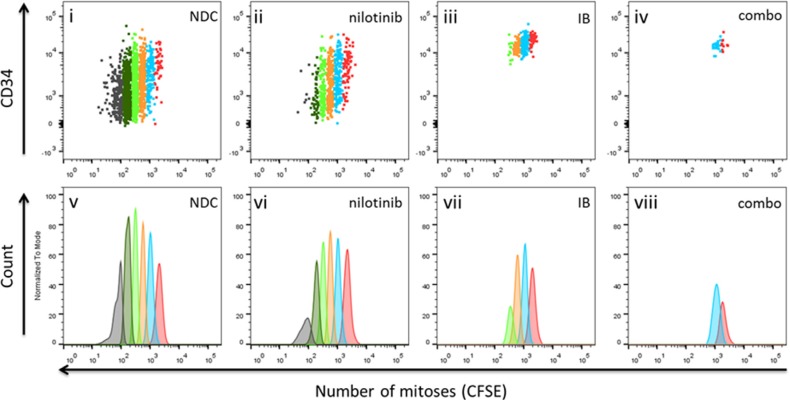
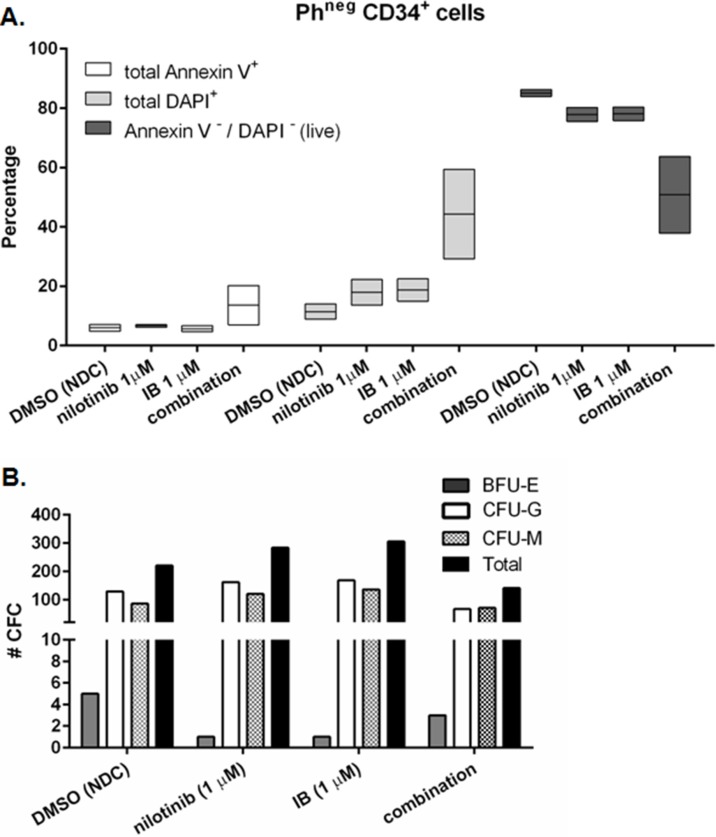
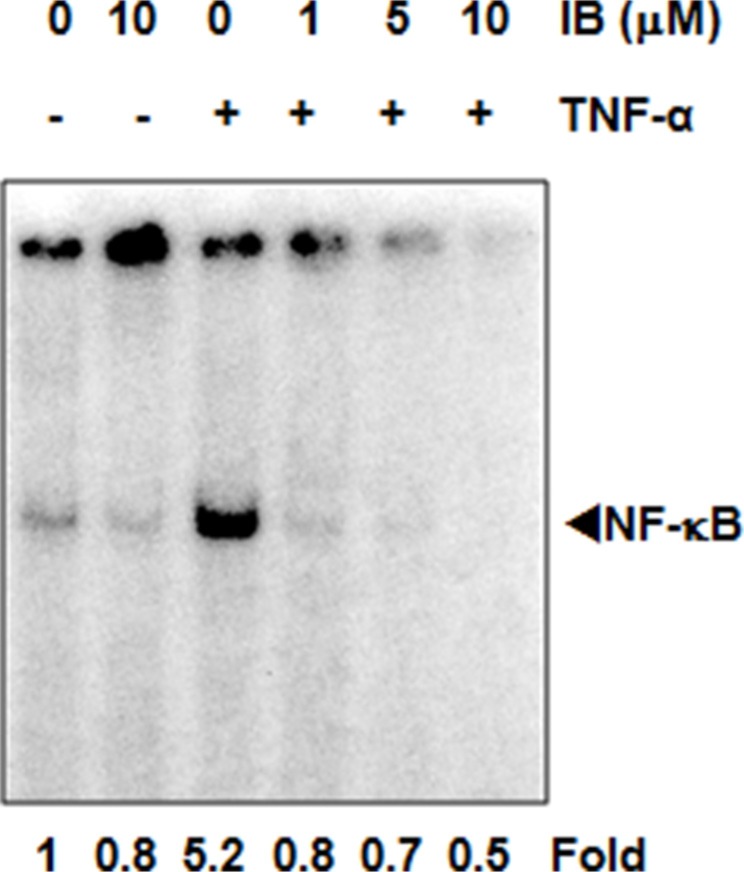
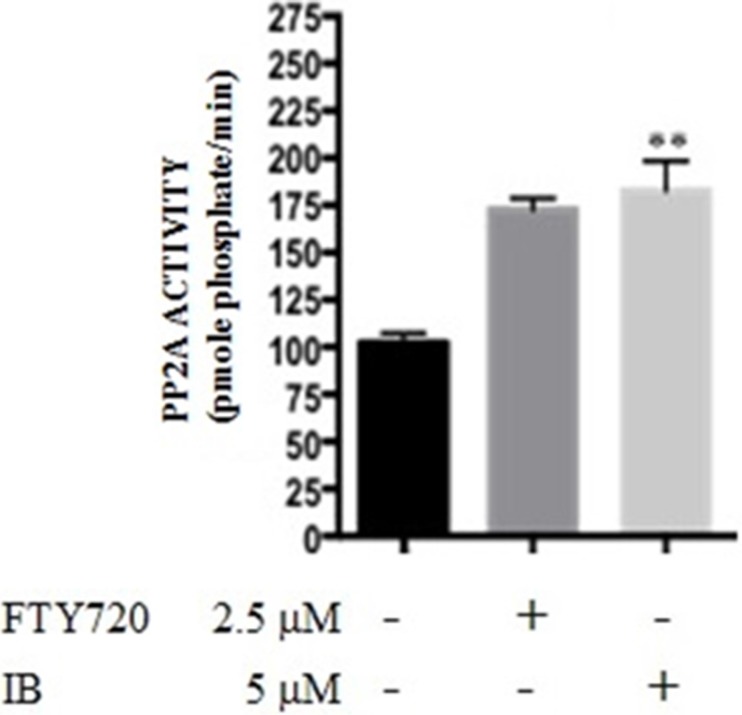
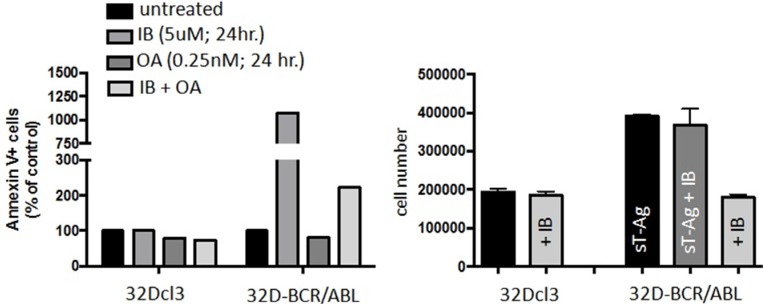
The use of tyrosine kinase inhibitors (TKI), including nilotinib, has revolutionized the treatment of chronic myeloid leukemia (CML). However current unmet clinical needs include combating activation of additional survival signaling pathways in persistent leukemia stem cells after long-term TKI therapy. A ubiquitous signaling alteration in cancer, including CML, is activation of reactive oxygen species (ROS) signaling, which may potentiate stem cell activity and mediate resistance to both conventional chemotherapy and targeted inhibitors. We have developed a novel nicotinamide adenine dinucleotide phosphate (NADPH) oxidase inhibitor, imipramine blue (IB) that targets ROS generation. ROS levels are known to be elevated in CML with respect to normal hematopoietic stem/progenitor cells and not corrected by TKI. We demonstrate that IB has additive benefit with nilotinib in inhibiting proliferation, viability, and clonogenic function of TKI-insensitive quiescent CD34+ CML chronic phase (CP) cells while normal CD34+ cells retained their clonogenic capacity in response to this combination therapy in vitro. Mechanistically, the pro-apoptotic activity of IB likely resides in part through its dual ability to block NF-κB and re-activate the tumor suppressor protein phosphatase 2A (PP2A). Combining BCR-ABL1 kinase inhibition with NADPH oxidase blockade may be beneficial in eradication of CML and worthy of further investigation.
包括尼洛替尼在内的酪氨酸激酶抑制剂(TKI)的使用彻底改变了慢性髓性白血病(CML)的治疗方式。然而,目前尚未满足的临床需求包括在长期TKI治疗后对抗持续性白血病干细胞中其他生存信号通路的激活。癌症(包括CML)中一种普遍存在的信号改变是活性氧(ROS)信号的激活,这可能会增强干细胞活性并介导对传统化疗和靶向抑制剂的耐药性。我们开发了一种新型的烟酰胺腺嘌呤二核苷酸磷酸(NADPH)氧化酶抑制剂——丙咪嗪蓝(IB),其作用靶点是ROS的产生。已知CML中的ROS水平相对于正常造血干细胞/祖细胞升高,且TKI无法纠正这一情况。我们证明,在体外,IB与尼洛替尼联合使用对抑制TKI不敏感的静止期CD34+CML慢性期(CP)细胞的增殖、活力和克隆形成功能具有累加益处,而正常CD34+细胞在这种联合治疗下仍保留其克隆形成能力。从机制上讲,IB的促凋亡活性可能部分源于其阻断NF-κB和重新激活肿瘤抑制蛋白磷酸酶2A(PP2A)的双重能力。将BCR-ABL激酶抑制与NADPH氧化酶阻断相结合可能对根除CML有益,值得进一步研究。