Department of Medicine Solna, Karolinska Institute, Stockholm, Sweden.
Department of Women's and Children's Health, Karolinska Institute, Stockholm, Sweden.
Cell Death Dis. 2021 Sep 25;12(10):875. doi: 10.1038/s41419-021-04154-0.
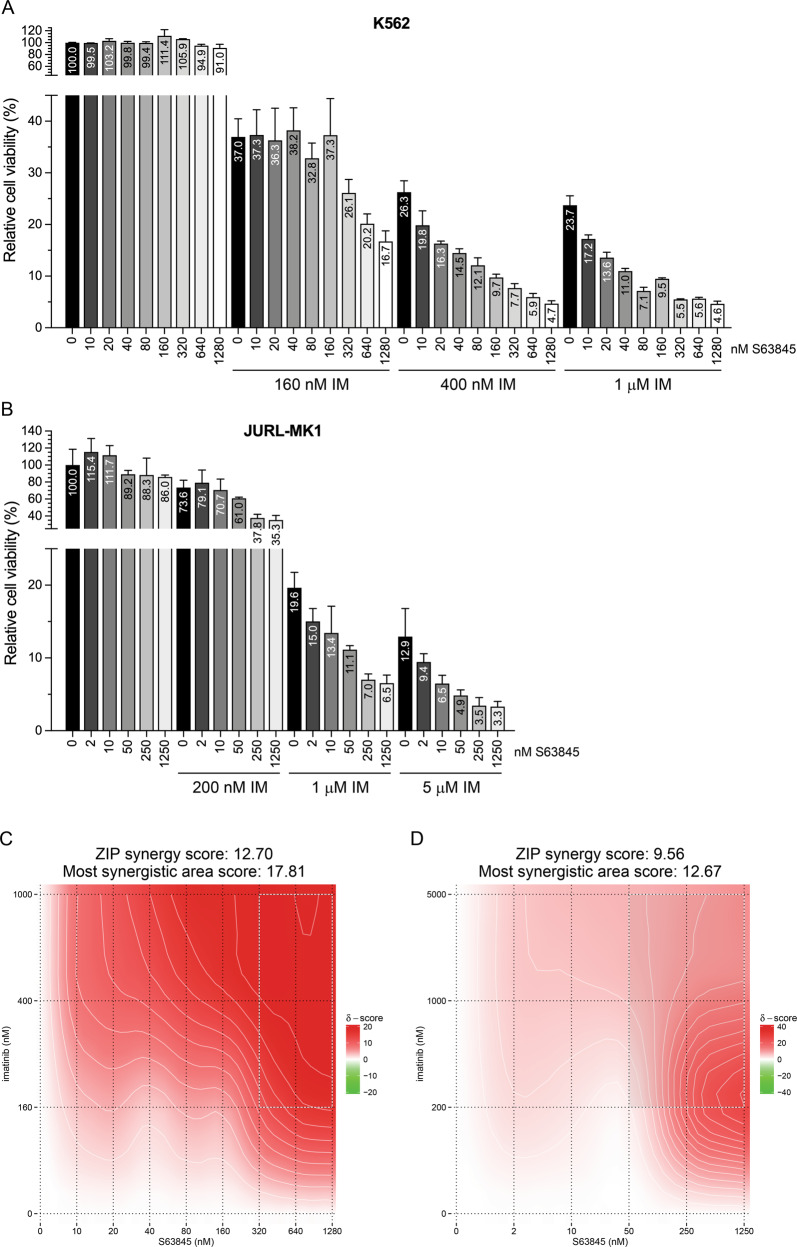
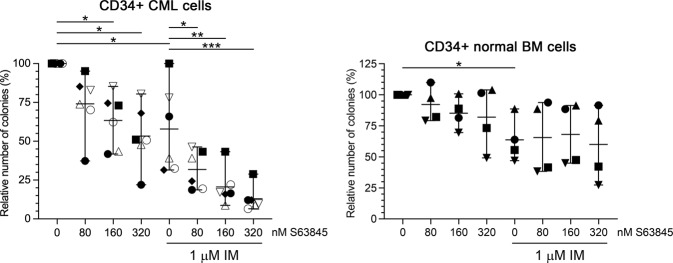
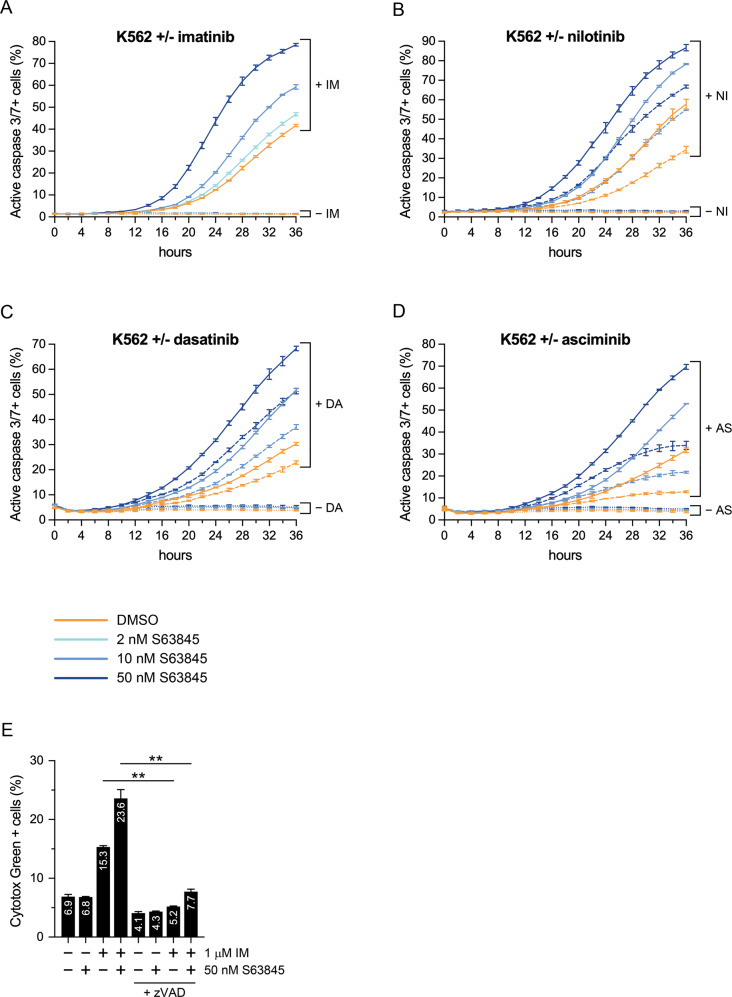
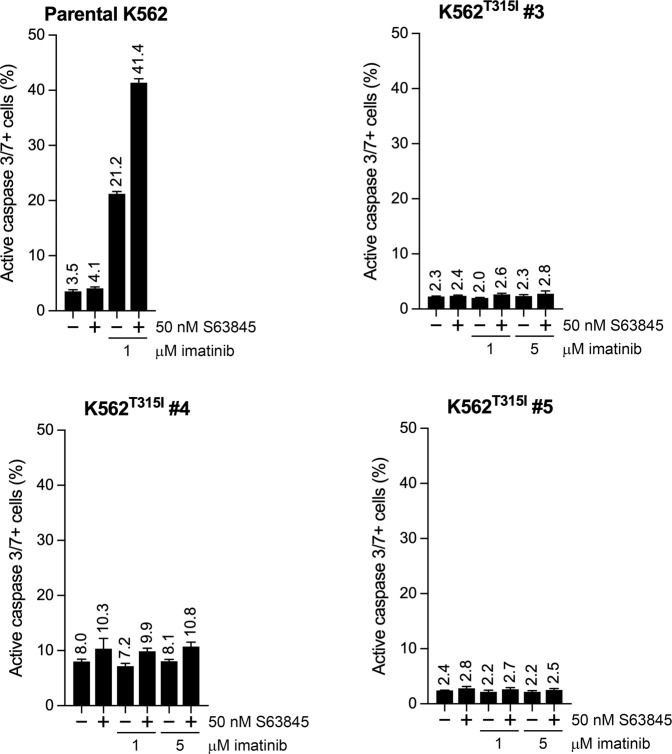
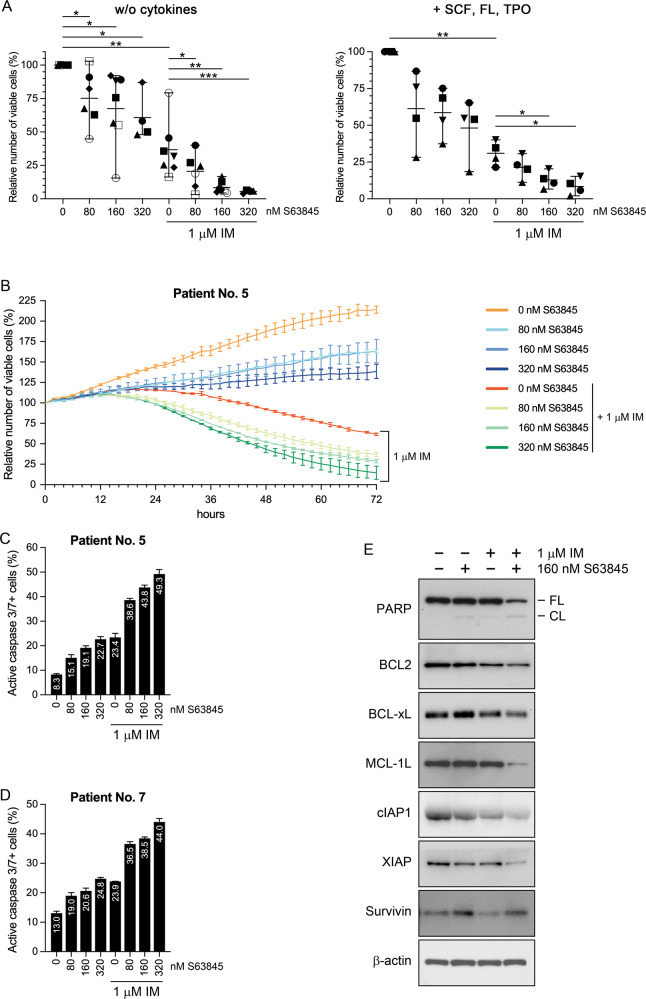
Tyrosine kinase inhibitor (TKI) treatment has dramatically improved the survival of chronic myeloid leukemia (CML) patients, but measurable residual disease typically persists. To more effectively eradicate leukemia cells, simultaneous targeting of BCR-ABL1 and additional CML-related survival proteins has been proposed. Notably, several highly specific myeloid cell leukemia 1 (MCL1) inhibitors have recently entered clinical trials for various hematologic malignancies, although not for CML, reflecting the insensitivity of CML cell lines to single MCL1 inhibition. Here, we show that combining TKI (imatinib, nilotinib, dasatinib, or asciminib) treatment with the small-molecule MCL1 inhibitor S63845 exerted strong synergistic antiviability and proapoptotic effects on CML lines and CD34+ stem/progenitor cells isolated from untreated CML patients in chronic phase. Using wild-type BCR-ABL1-harboring CML lines and their T315I-mutated sublines (generated by CRISPR/Cas9-mediated homologous recombination), we prove that the synergistic proapoptotic effect of the drug combination depended on TKI-mediated BCR-ABL1 inhibition, but not on TKI-related off-target mechanisms. Moreover, we demonstrate that colony formation of CML but not normal hematopoietic stem/progenitor cells became markedly reduced upon combination treatment compared to imatinib monotherapy. Our results suggest that dual targeting of MCL1 and BCR-ABL1 activity may efficiently eradicate residual CML cells without affecting normal hematopoietic stem/progenitors.
酪氨酸激酶抑制剂(TKI)治疗显著改善了慢性髓性白血病(CML)患者的生存,但通常仍存在可测量的残留疾病。为了更有效地消除白血病细胞,已经提出了同时针对 BCR-ABL1 和其他 CML 相关生存蛋白的靶向治疗。值得注意的是,最近几种高度特异性髓样细胞白血病 1(MCL1)抑制剂已进入各种血液恶性肿瘤的临床试验,尽管尚未用于 CML,这反映了 CML 细胞系对单一 MCL1 抑制的不敏感性。在这里,我们表明,将 TKI(伊马替尼、尼罗替尼、达沙替尼或 ASCiminib)治疗与小分子 MCL1 抑制剂 S63845 联合使用,对 CML 系和从未经治疗的 CML 慢性期患者中分离出的 CD34+干细胞/祖细胞具有强大的协同抗生存和促凋亡作用。使用野生型 BCR-ABL1 携带的 CML 系及其 T315I 突变亚系(通过 CRISPR/Cas9 介导的同源重组产生),我们证明药物组合的协同促凋亡作用取决于 TKI 介导的 BCR-ABL1 抑制,而不依赖于 TKI 相关的脱靶机制。此外,我们证明与伊马替尼单药治疗相比,CML 的集落形成而不是正常造血干细胞/祖细胞的集落形成明显减少。我们的结果表明,MCL1 和 BCR-ABL1 活性的双重靶向可能有效地消除残留的 CML 细胞,而不影响正常造血干细胞/祖细胞。