Vaughan Lynsey, Clarke Paul A, Barker Karen, Chanthery Yvan, Gustafson Clay W, Tucker Elizabeth, Renshaw Jane, Raynaud Florence, Li Xiaodun, Burke Rosemary, Jamin Yann, Robinson Simon P, Pearson Andrew, Maira Michel, Weiss William A, Workman Paul, Chesler Louis
Division of Clinical Studies, The Institute of Cancer Research, Sutton, Surrey, UK.
Present address: Cell Signalling Group, Cancer Research UK Manchester Institute, The University of Manchester, Manchester, UK.
Oncotarget. 2016 Sep 6;7(36):57525-57544. doi: 10.18632/oncotarget.10544.
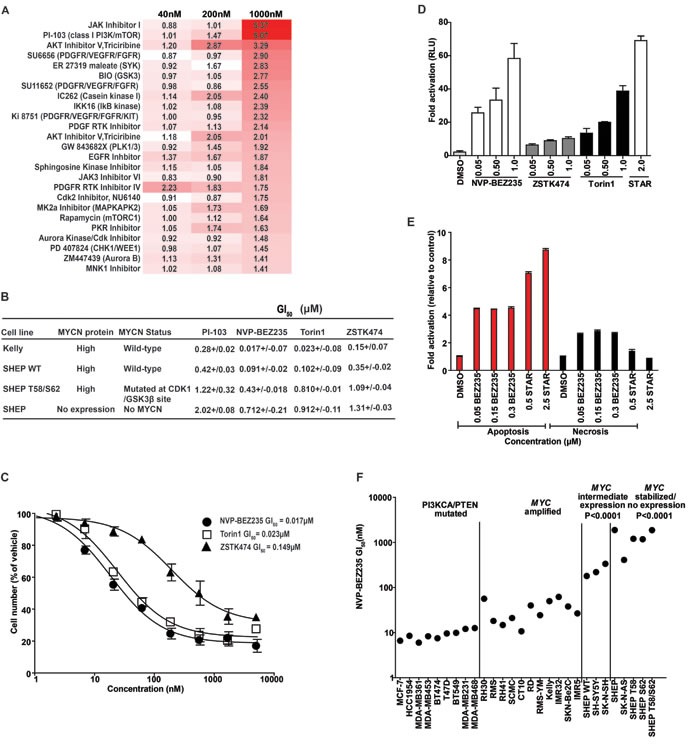
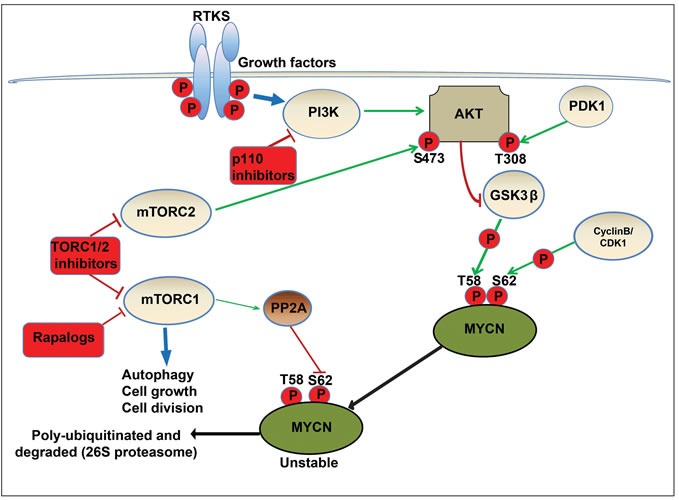
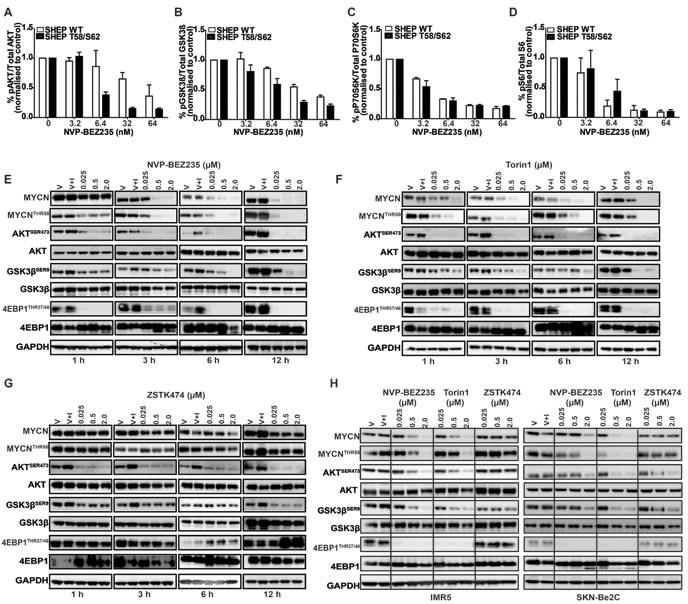
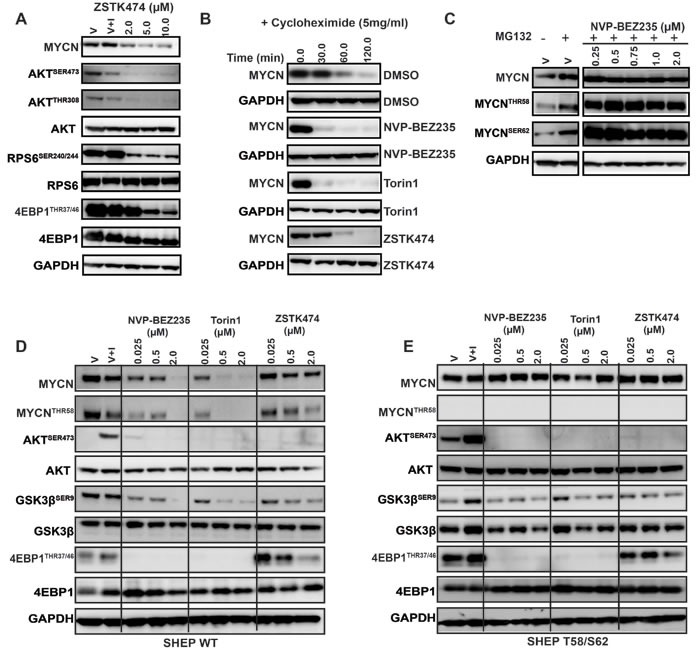
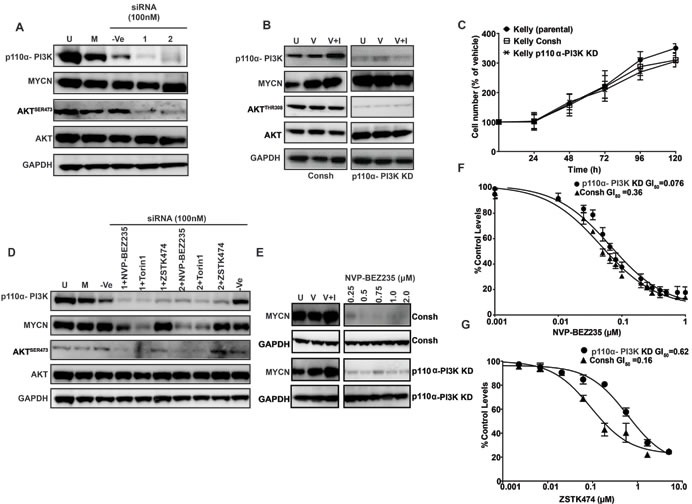
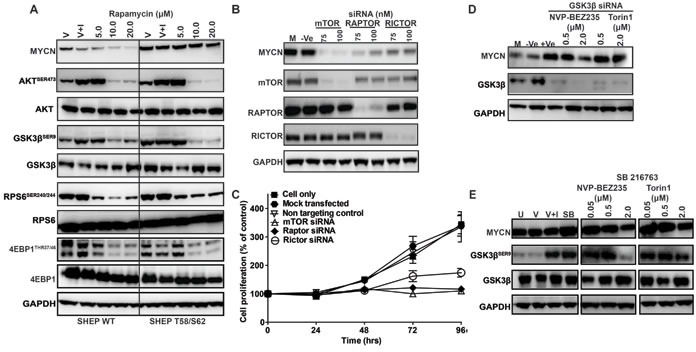
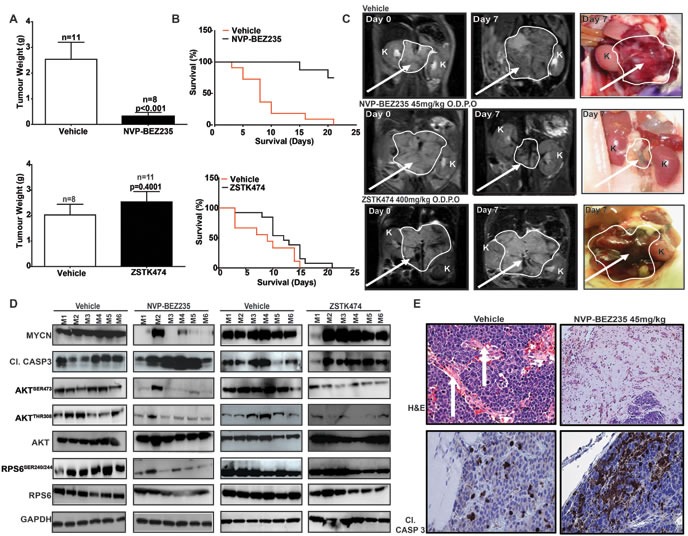
MYC oncoproteins deliver a potent oncogenic stimulus in several human cancers, making them major targets for drug development, but efforts to deliver clinically practical therapeutics have not yet been realized. In childhood cancer, aberrant expression of MYC and MYCN genes delineates a group of aggressive tumours responsible for a major proportion of pediatric cancer deaths. We designed a chemical-genetic screen that identifies compounds capable of enhancing proteasomal elimination of MYCN oncoprotein. We isolated several classes of compound that selectively kill MYCN expressing cells and we focus on inhibitors of PI3K/mTOR pathway in this study. We show that PI3K/mTOR inhibitors selectively killed MYCN-expressing neuroblastoma tumor cells, and induced significant apoptosis of transgenic MYCN-driven neuroblastoma tumors concomitant with elimination of MYCN protein in vivo. Mechanistically, the ability of these compounds to degrade MYCN requires complete blockade of mTOR but not PI3 kinase activity and we highlight NVP-BEZ235 as a PI3K/mTOR inhibitor with an ideal activity profile. These data establish that MYCN expression is a marker indicative of likely clinical sensitivity to mTOR inhibition, and provide a rationale for the selection of clinical candidate MYCN-destabilizers likely to be useful for the treatment of MYCN-driven cancers.
MYC癌蛋白在多种人类癌症中引发强大的致癌刺激,使其成为药物开发的主要靶点,但实现临床实用疗法的努力尚未成功。在儿童癌症中,MYC和MYCN基因的异常表达界定了一组侵袭性肿瘤,这些肿瘤导致了很大一部分儿童癌症死亡。我们设计了一种化学遗传学筛选方法,以鉴定能够增强蛋白酶体对MYCN癌蛋白清除作用的化合物。我们分离出几类能选择性杀死表达MYCN的细胞的化合物,在本研究中我们重点关注PI3K/mTOR通路的抑制剂。我们发现PI3K/mTOR抑制剂能选择性杀死表达MYCN的神经母细胞瘤肿瘤细胞,并在体内诱导转基因MYCN驱动的神经母细胞瘤肿瘤发生显著凋亡,同时消除MYCN蛋白。从机制上讲,这些化合物降解MYCN的能力需要完全阻断mTOR,但不需要PI3激酶活性,我们强调NVP - BEZ235是一种具有理想活性谱的PI3K/mTOR抑制剂。这些数据表明,MYCN表达是对mTOR抑制可能具有临床敏感性的一个指标,并为选择可能对治疗MYCN驱动的癌症有用的临床候选MYCN稳定剂提供了理论依据。