Tol Samantha J, Coles Rob G, Congdon Bradley C
Centre for Tropical Water and Aquatic Ecosystem Research, James Cook University,Cairns,Queensland, Australia; College of Marine and Environmental Sciences, James Cook University,Cairns,Queensland,Australia.
Centre for Tropical Water and Aquatic Ecosystem Research, James Cook University, Cairns, Queensland, Australia.
PeerJ. 2016 Jul 7;4:e2194. doi: 10.7717/peerj.2194. eCollection 2016.
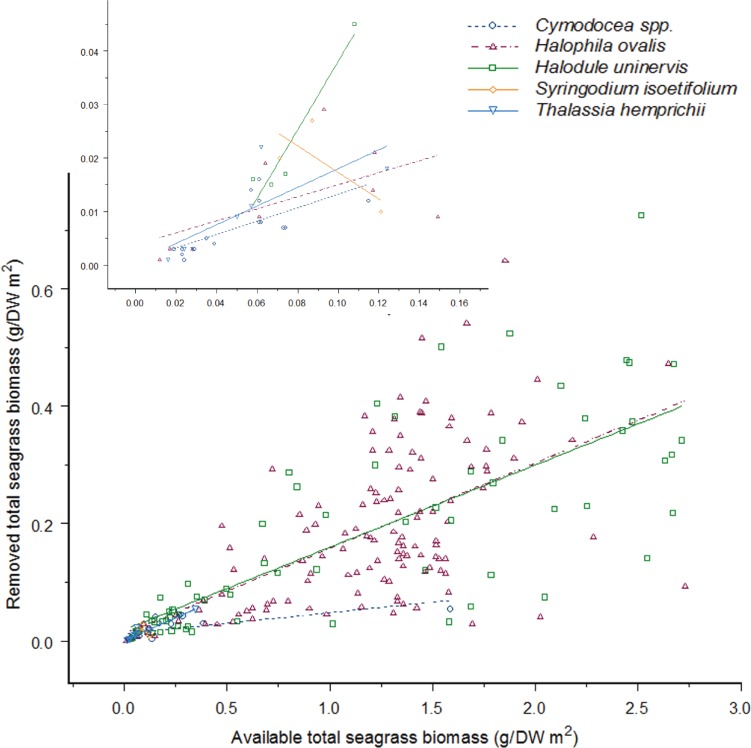
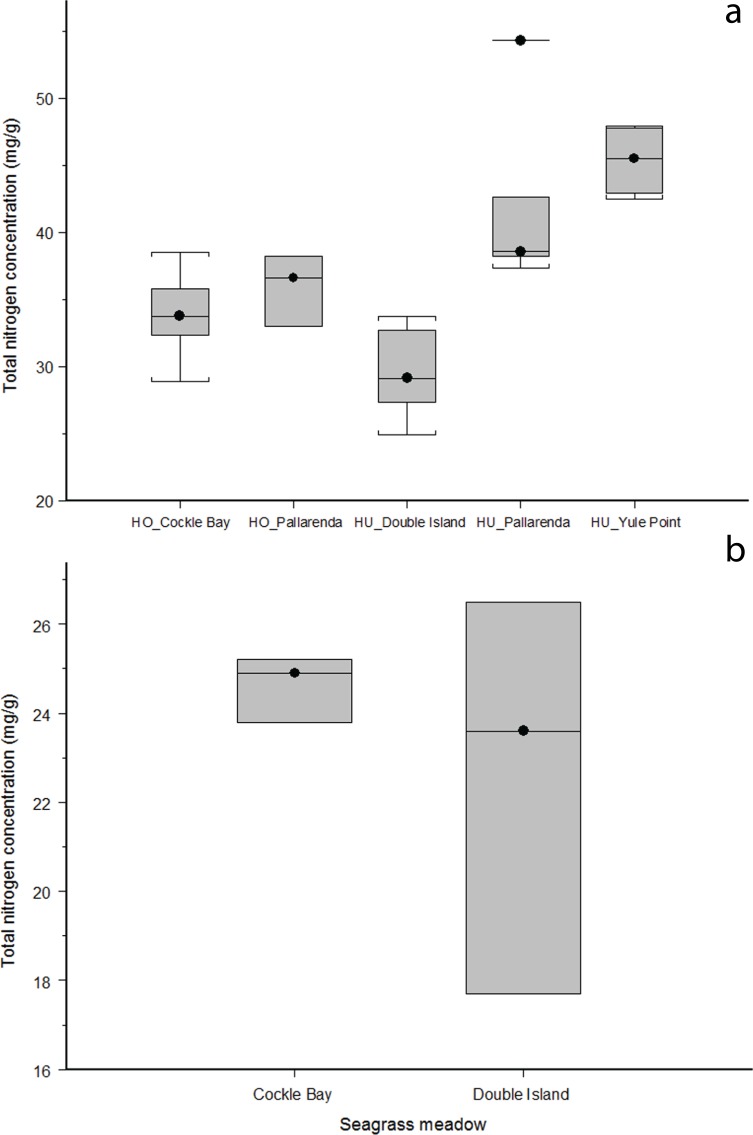
Dugongs (Dugong dugon) are listed as vulnerable to extinction due to rapid population reductions caused in part by loss of seagrass feeding meadows. Understanding dugong feeding behaviour in tropical Australia, where the majority of dugongs live, will assist conservation strategies. We examined whether feeding patterns in intertidal seagrass meadows in tropical north-eastern Australia were related to seagrass biomass, species composition and/or nitrogen content. The total biomass of each seagrass species removed by feeding dugongs was measured and compared to its relative availability. Nitrogen concentrations were also determined for each seagrass species present at the sites. Dugongs consumed seagrass species in proportion to their availability, with biomass being the primary determining factor. Species composition and/or nitrogen content influenced consumption to a lesser degree. Conservation plans focused on protecting high biomass intertidal seagrass meadows are likely to be most effective at ensuring the survival of dugong in tropical north-eastern Australia.
儒艮(Dugong dugon)因海草草甸丧失导致种群数量迅速减少,被列为易危物种。了解大多数儒艮生活的澳大利亚热带地区的儒艮觅食行为,将有助于制定保护策略。我们研究了澳大利亚东北部热带潮间带海草草甸的觅食模式是否与海草生物量、物种组成和/或氮含量有关。测量了觅食儒艮移除的每种海草物种的总生物量,并将其与其相对可利用量进行比较。还测定了这些地点存在的每种海草物种的氮浓度。儒艮按海草的可利用比例食用海草,生物量是主要决定因素。物种组成和/或氮含量对食用量的影响较小。专注于保护高生物量潮间带海草草甸的保护计划,可能对确保澳大利亚东北部热带地区儒艮的生存最为有效。