School of Biological and Health Systems Engineering, Arizona State University, Tempe, AZ, USA.
Barrow Neurological Institute at Phoenix Children's Hospital, Phoenix, AZ, USA.
Sci Rep. 2016 Jul 22;6:29988. doi: 10.1038/srep29988.
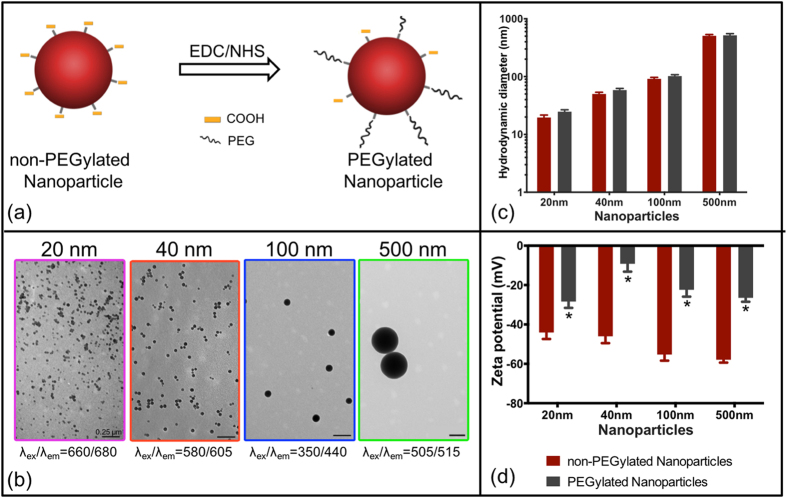
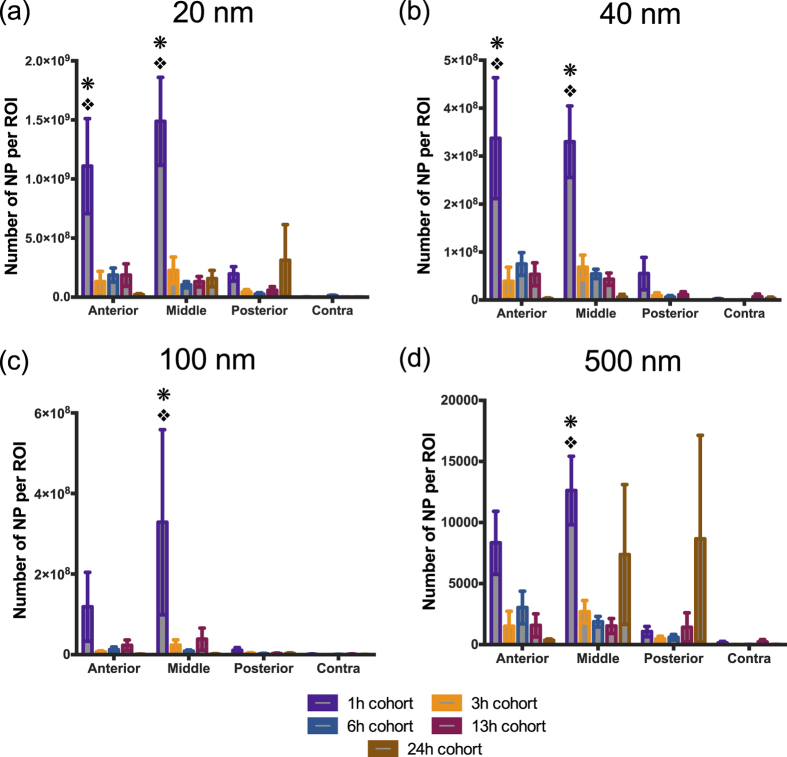
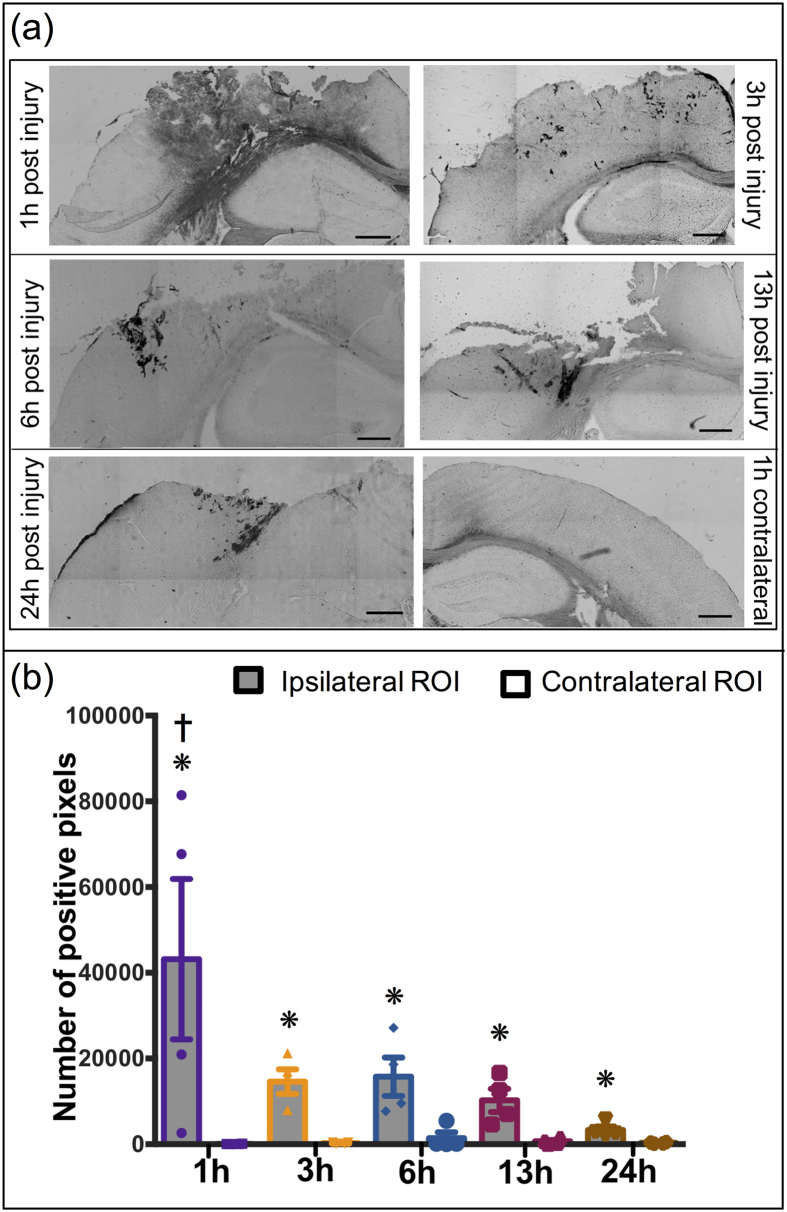
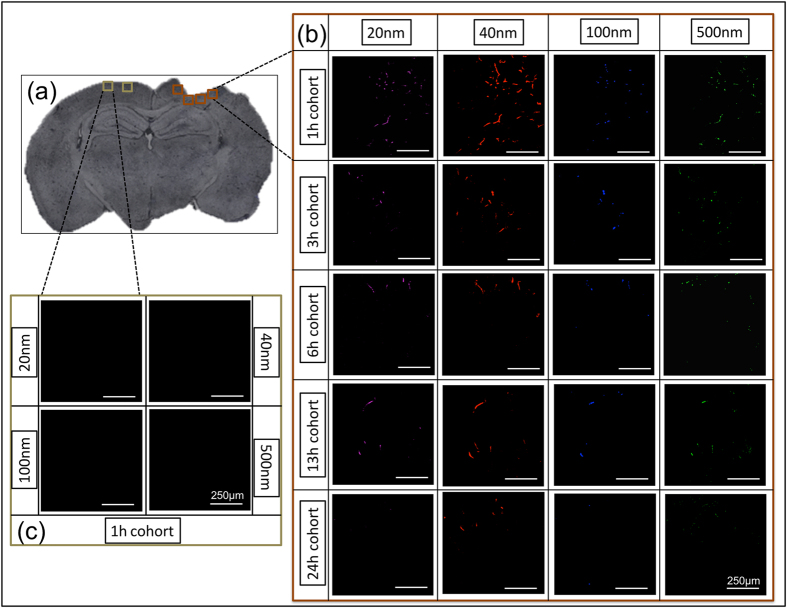
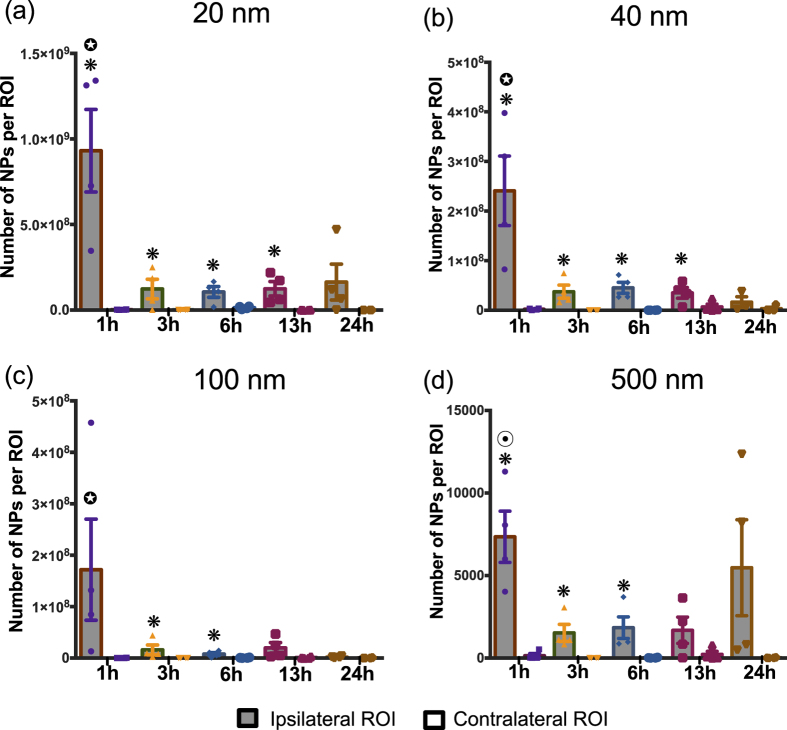
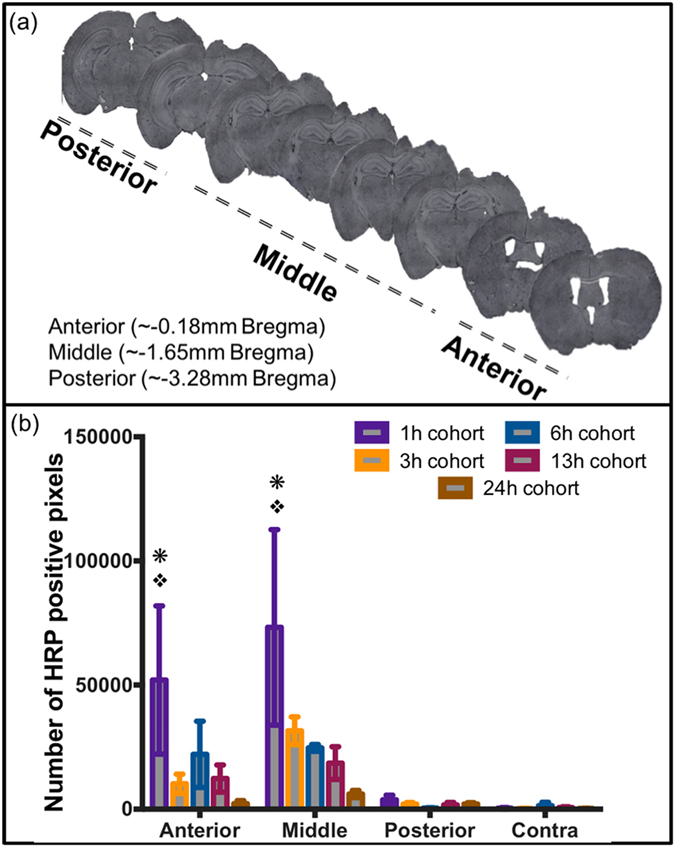
Nanoparticle (NP) based therapeutic and theranostic agents have been developed for various diseases, yet application to neural disease/injury is restricted by the blood-brain-barrier (BBB). Traumatic brain injury (TBI) results in a host of pathological alterations, including transient breakdown of the BBB, thus opening a window for NP delivery to the injured brain tissue. This study focused on investigating the spatiotemporal accumulation of different sized NPs after TBI. Specifically, animal cohorts sustaining a controlled cortical impact injury received an intravenous injection of PEGylated NP cocktail (20, 40, 100, and 500 nm, each with a unique fluorophore) immediately (0 h), 2 h, 5 h, 12 h, or 23 h after injury. NPs were allowed to circulate for 1 h before perfusion and brain harvest. Confocal microscopy demonstrated peak NP accumulation within the injury penumbra 1 h post-injury. An inverse relationship was found between NP size and their continued accumulation within the penumbra. NP accumulation preferentially occurred in the primary motor and somatosensory areas of the injury penumbra as compared to the parietal association and visual area. Thus, we characterized the accumulation of particles up to 500 nm at different times acutely after injury, indicating the potential of NP-based TBI theranostics in the acute period after injury.
纳米颗粒(NP)基治疗和治疗诊断试剂已被开发用于各种疾病,但由于血脑屏障(BBB)的存在,其在神经疾病/损伤中的应用受到限制。创伤性脑损伤(TBI)会导致一系列病理改变,包括 BBB 的短暂破坏,从而为 NP 向损伤脑组织的输送开辟了窗口。本研究重点研究了 TBI 后不同大小 NP 的时空积累。具体来说,接受皮质控制冲击损伤的动物队列在损伤后立即(0 h)、2 h、5 h、12 h 或 23 h 接受静脉注射聚乙二醇化 NP 鸡尾酒(20、40、100 和 500nm,每种都有一个独特的荧光团)。NP 在灌注和大脑收获前循环 1 h。共聚焦显微镜显示,NP 峰值积累在损伤半影区内 1 h 后。发现 NP 大小与其在半影区内的持续积累之间呈反比关系。NP 积累优先发生在损伤半影区的初级运动和感觉区域,而不是顶叶联合和视觉区域。因此,我们在损伤后不同时间急性研究了高达 500nm 的颗粒的积累情况,表明 NP 基 TBI 治疗诊断在损伤后急性期的潜力。