Senzacqua Martina, Severi Ilenia, Perugini Jessica, Acciarini Samantha, Cinti Saverio, Giordano Antonio
Department of Experimental and Clinical Medicine, Università Politecnica delle Marche Ancona, Italy.
Department of Experimental and Clinical Medicine, Università Politecnica delle MarcheAncona, Italy; Center of Obesity, Università Politecnica delle Marche-United HospitalsAncona, Italy.
Front Neurosci. 2016 Jun 27;10:289. doi: 10.3389/fnins.2016.00289. eCollection 2016.
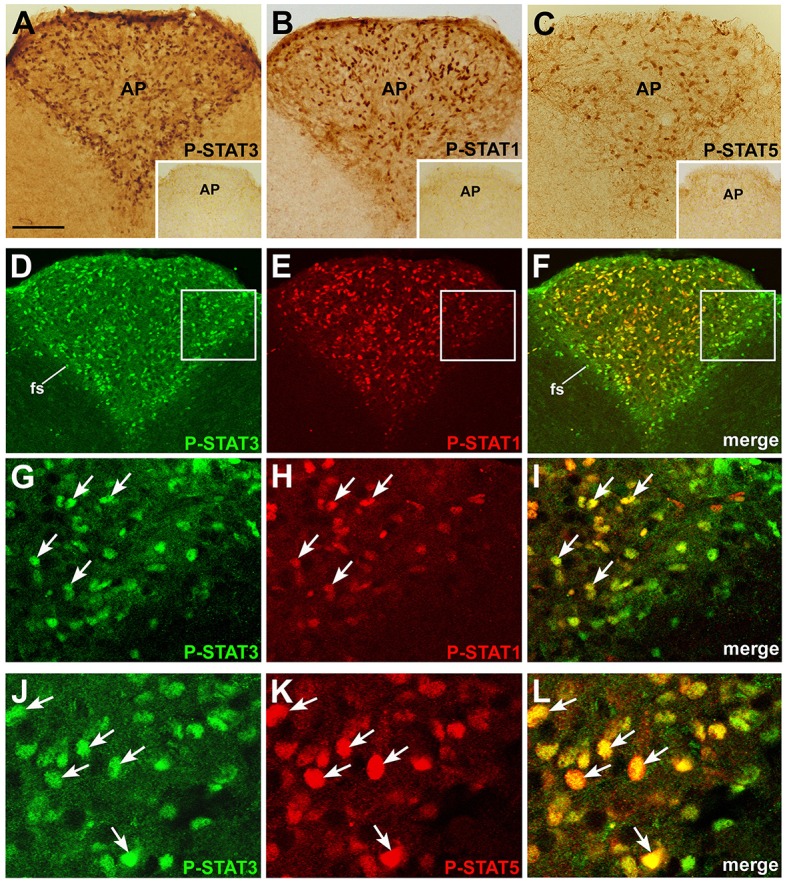
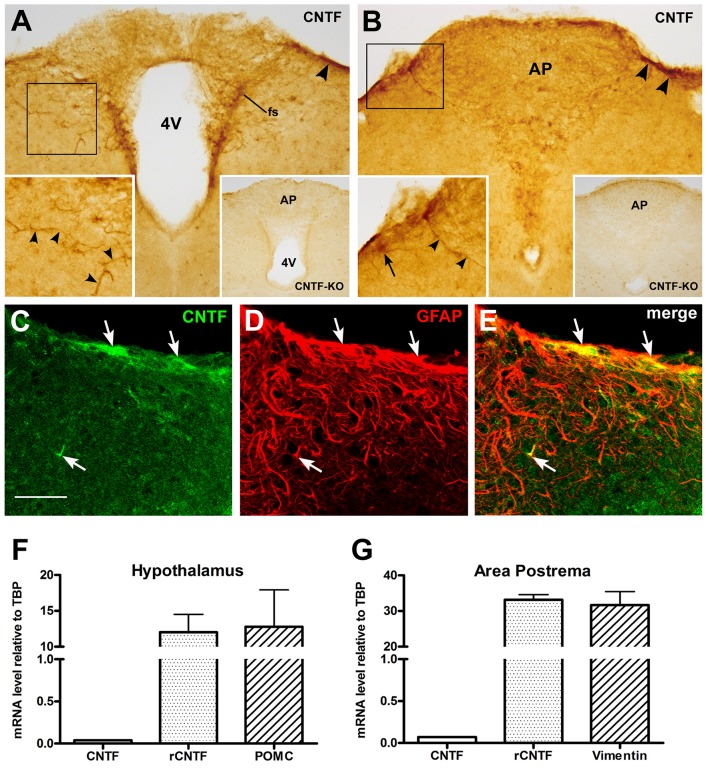
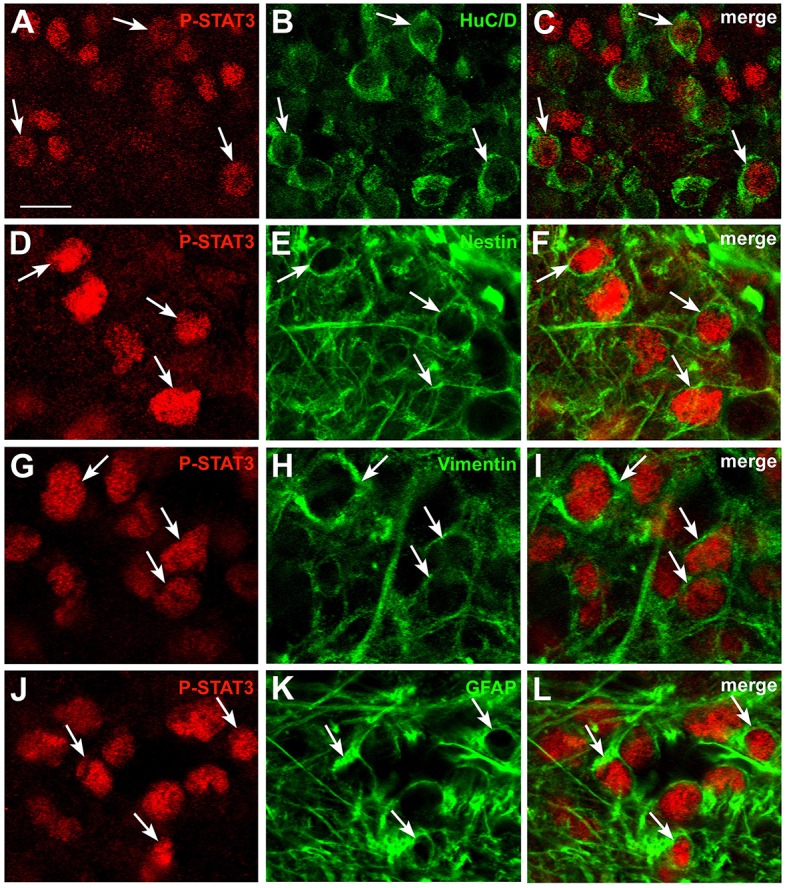
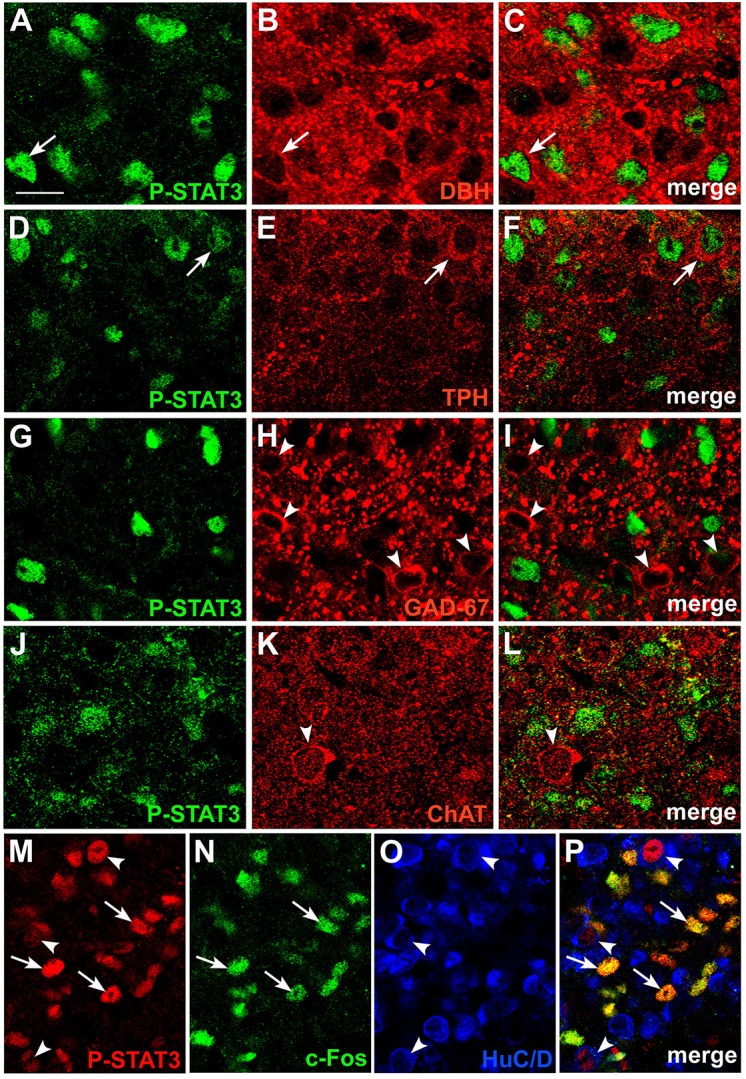
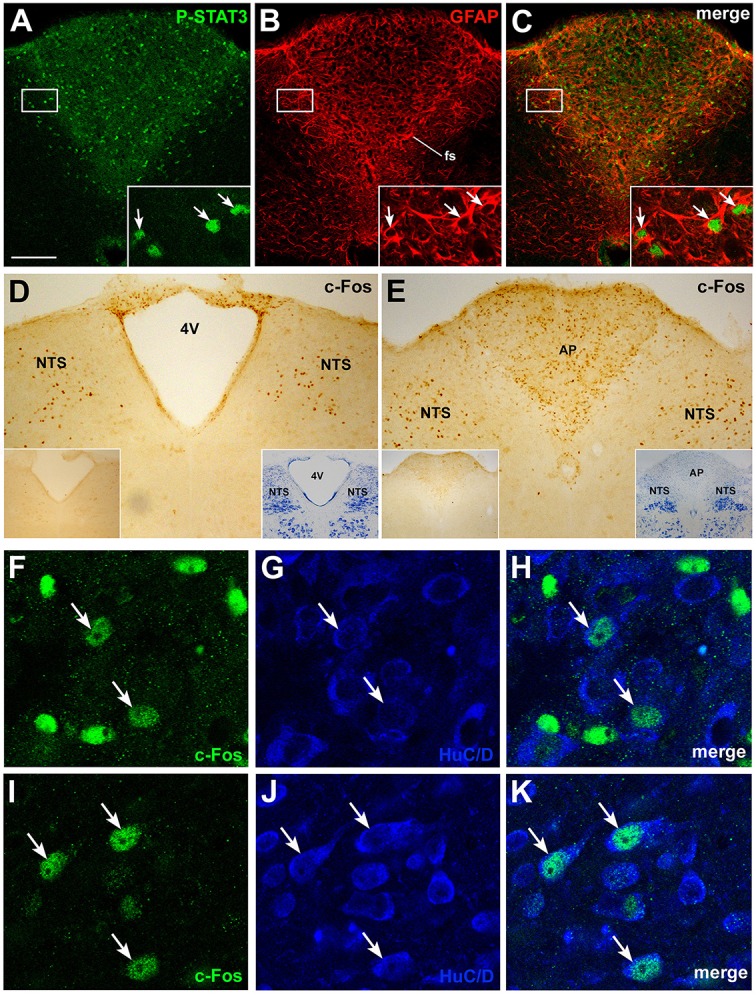
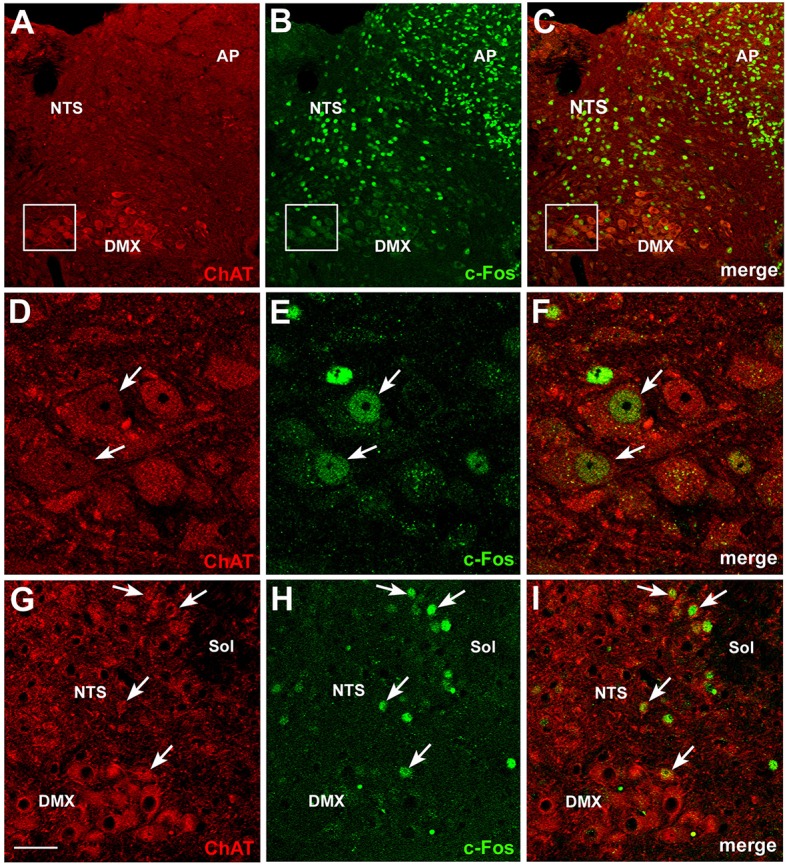
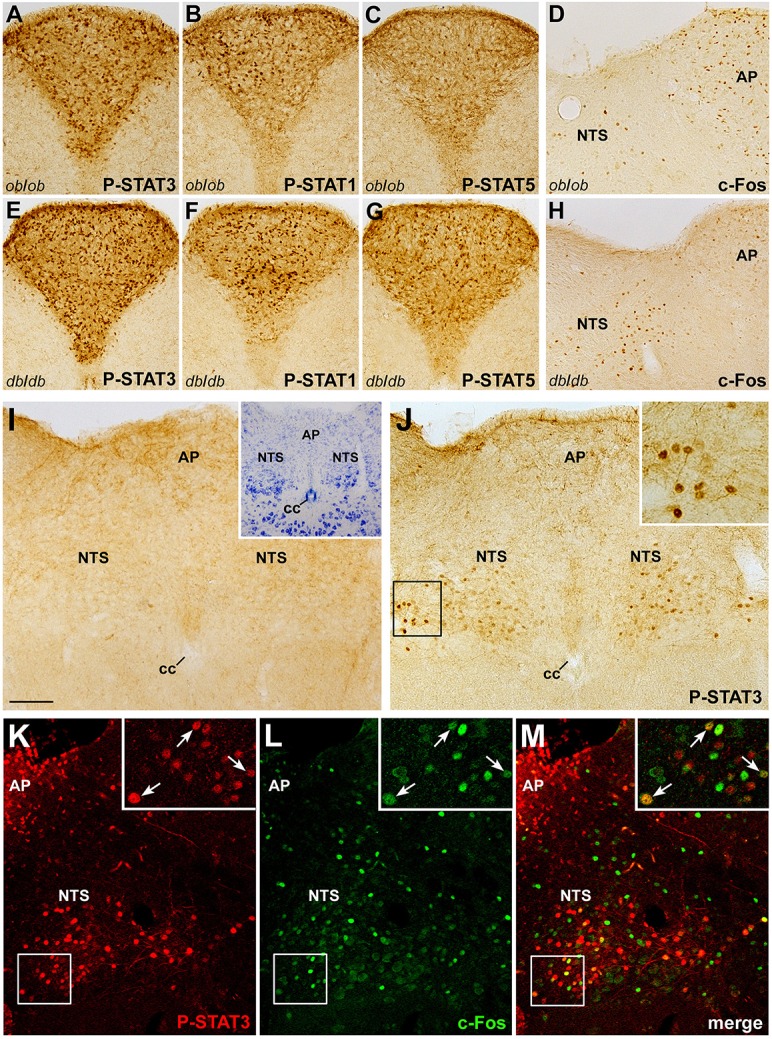
Ciliary neurotrophic factor (CNTF) induces weight loss in obese rodents and humans through activation of the hypothalamic Jak-STAT (Janus kinase-signal transducer and activator of transcription) signaling pathway. Here, we tested the hypothesis that CNTF also affects the brainstem centers involved in feeding and energy balance regulation. To this end, wild-type and leptin-deficient (ob/ob and db/db) obese mice were acutely treated with intraperitoneal recombinant CNTF. Coronal brainstem sections were processed for immunohistochemical detection of STAT3, STAT1, STAT5 phosphorylation and c-Fos. In wild-type mice, CNTF treatment for 45 min induced STAT3, STAT1, and STAT5 phosphorylation in neurons as well as glial cells of the area postrema; here, the majority of CNTF-responsive cells activated multiple STAT isoforms, and a significant proportion of CNTF-responsive glial cells bore the immaturity and plasticity markers nestin and vimentin. After 120 min CNTF treatment, c-Fos expression was intense in glial cells and weak in neurons of the area postrema, it was intense in several neurons of the rostral and caudal solitary tract nucleus (NTS), and weak in some cholinergic neurons of the dorsal motor nucleus of the vagus. In the ob/ob and db/db mice, Jak-STAT activation and c-Fos expression were similar to those induced in wild-type mouse brainstem. Treatment with CNTF (120 min, to induce c-Fos expression) and leptin (25 min, to induce STAT3 phosphorylation) demonstrated the co-localization of the two transcription factors in a small neuron population in the caudal NTS portion. Finally, weak immunohistochemical CNTF staining, detected in funiculus separans, and meningeal glial cells, matched the modest amount of CNTF found by RT-qPCR in micropunched area postrema tissue, which in contrast exhibited a very high amount of CNTF receptor. Collectively, the present findings show that the area postrema and the NTS exhibit high, distinctive responsiveness to circulating exogenous and, probably, endogenous CNTF.
睫状神经营养因子(CNTF)通过激活下丘脑Jak-STAT(Janus激酶-信号转导子和转录激活子)信号通路,使肥胖啮齿动物和人类体重减轻。在此,我们验证了CNTF也会影响参与进食和能量平衡调节的脑干中枢这一假设。为此,对野生型和瘦素缺乏型(ob/ob和db/db)肥胖小鼠腹腔注射重组CNTF进行急性处理。对冠状脑干切片进行处理,以免疫组化法检测STAT3、STAT1、STAT5磷酸化及c-Fos。在野生型小鼠中,CNTF处理45分钟可诱导最后区神经元及神经胶质细胞中STAT3、STAT1和STAT5磷酸化;在此,大多数对CNTF有反应的细胞激活了多种STAT亚型,且相当一部分对CNTF有反应的神经胶质细胞带有未成熟和可塑性标记物巢蛋白和波形蛋白。CNTF处理120分钟后,最后区神经胶质细胞中c-Fos表达强烈,神经元中表达较弱,在延髓头端和尾端孤束核(NTS)的一些神经元中表达强烈,而在迷走神经背运动核的一些胆碱能神经元中表达较弱。在ob/ob和db/db小鼠中,Jak-STAT激活及c-Fos表达与野生型小鼠脑干中诱导的情况相似。用CNTF(120分钟,以诱导c-Fos表达)和瘦素(25分钟,以诱导STAT3磷酸化)处理显示,这两种转录因子在尾端NTS部分的一小群神经元中共定位。最后,在分隔索和脑膜神经胶质细胞中检测到的微弱免疫组化CNTF染色,与RT-qPCR在微量穿孔最后区组织中发现的适量CNTF相匹配,相比之下,该组织中CNTF受体含量非常高。总的来说,目前的研究结果表明,最后区和NTS对循环中的外源性以及可能的内源性CNTF表现出高度、独特的反应性。