Department of Pediatrics and Molecular Cardiovascular Biology, Cincinnati Children's Hospital Medical Center, Cincinnati, Ohio 45229, USA.
Center for Cardiovascular Research, John A. Burns School of Medicine, University of Hawaii, Honolulu, Hawaii 96813, USA.
Nat Commun. 2016 Jul 22;7:12260. doi: 10.1038/ncomms12260.
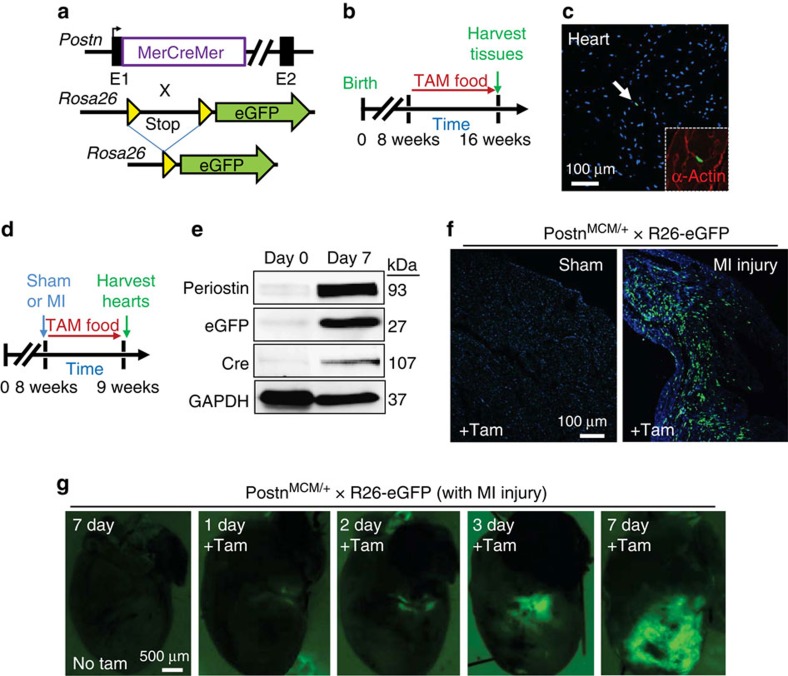
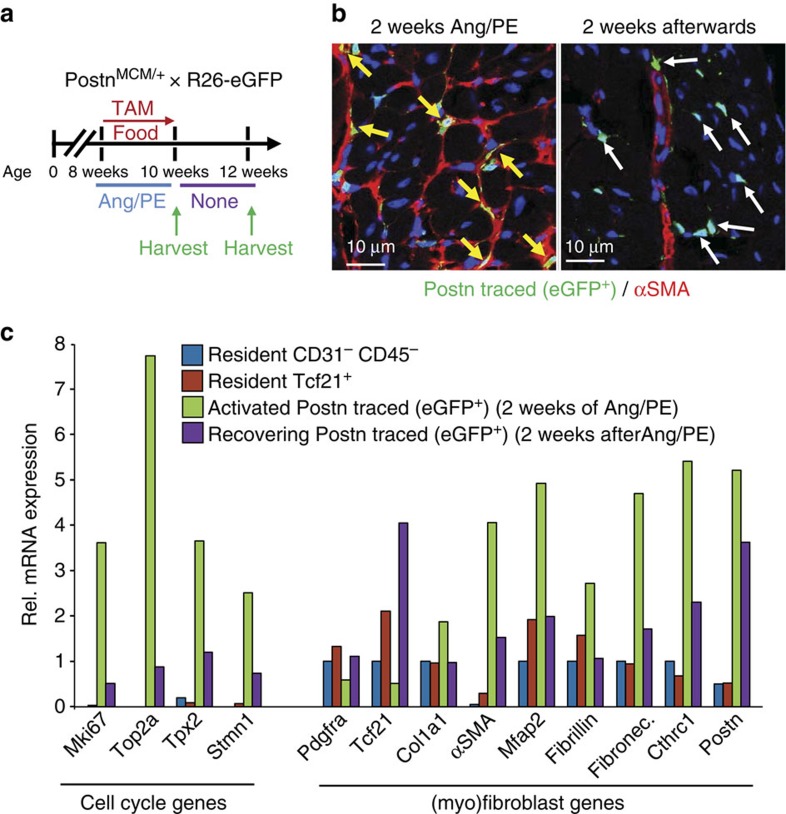
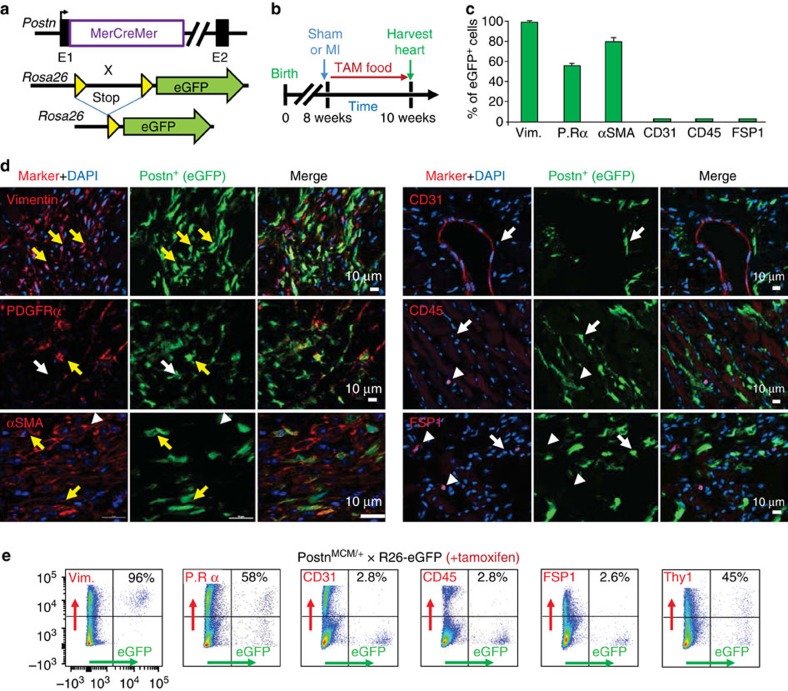
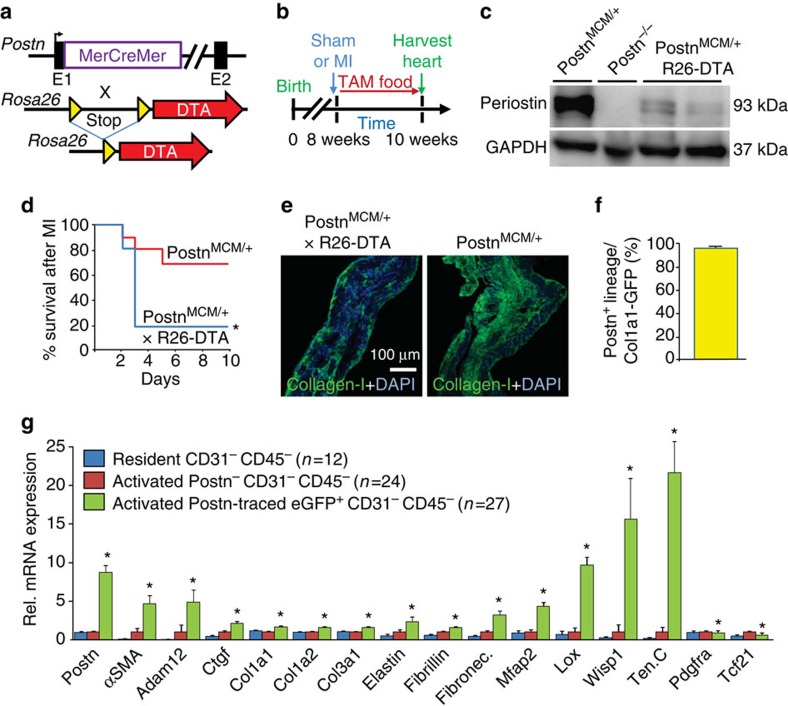
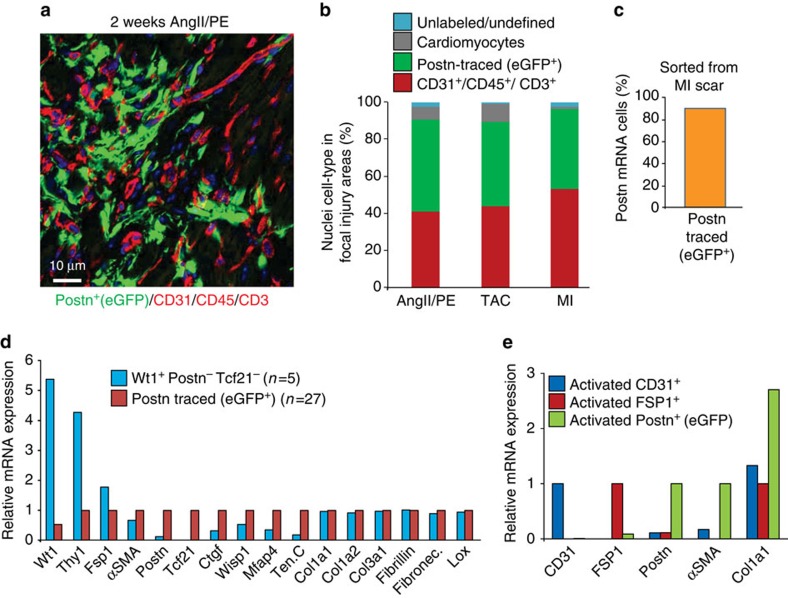
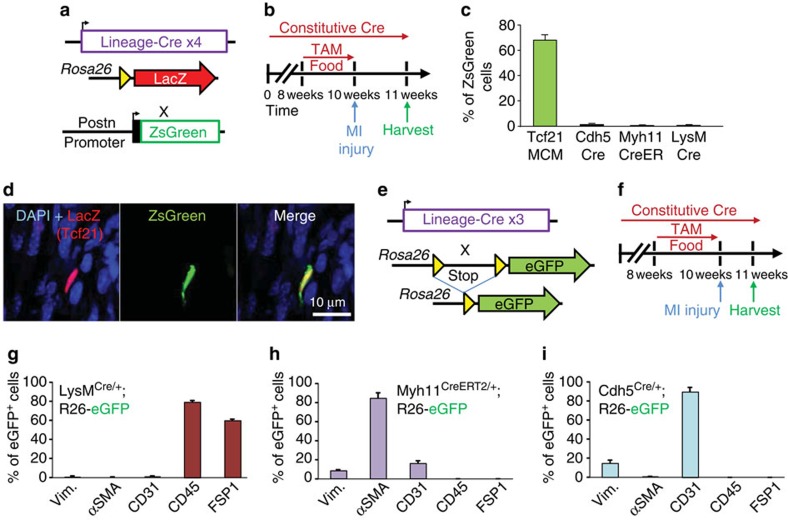
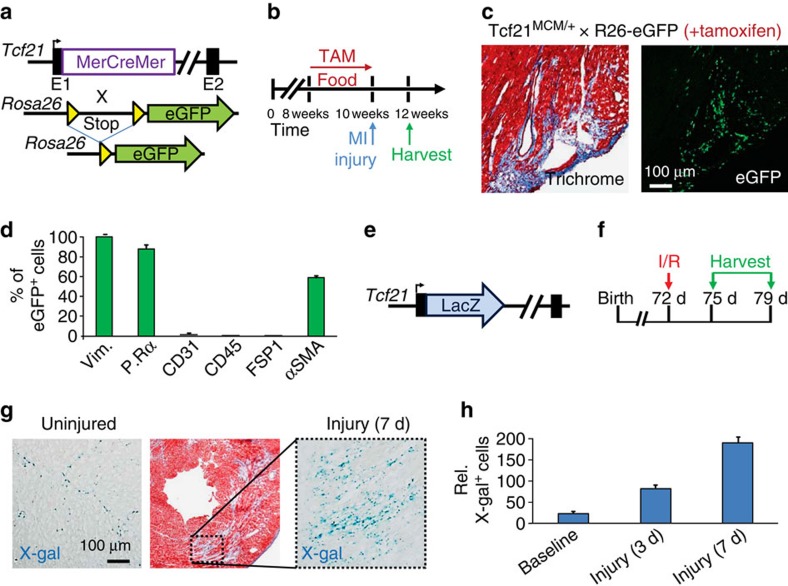
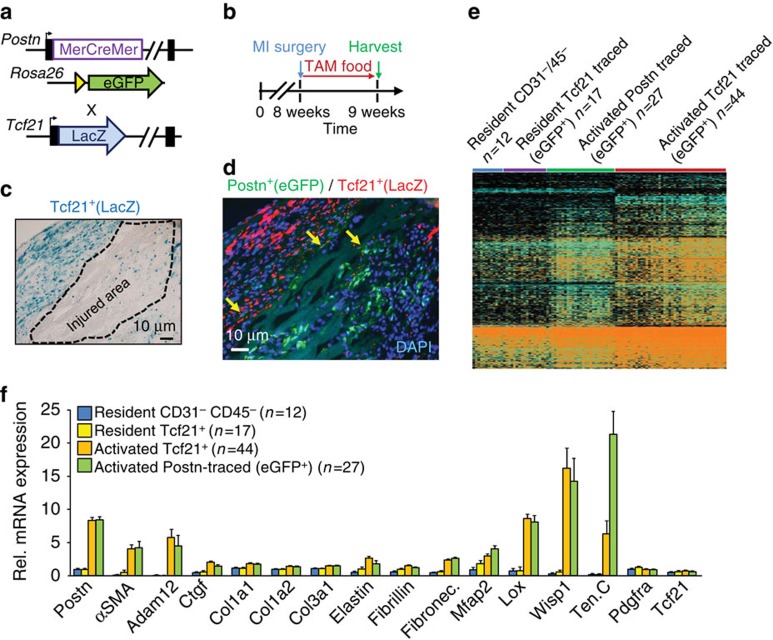
Cardiac fibroblasts convert to myofibroblasts with injury to mediate healing after acute myocardial infarction (MI) and to mediate long-standing fibrosis with chronic disease. Myofibroblasts remain a poorly defined cell type in terms of their origins and functional effects in vivo. Here we generate Postn (periostin) gene-targeted mice containing a tamoxifen-inducible Cre for cellular lineage-tracing analysis. This Postn allele identifies essentially all myofibroblasts within the heart and multiple other tissues. Lineage tracing with four additional Cre-expressing mouse lines shows that periostin-expressing myofibroblasts in the heart derive from tissue-resident fibroblasts of the Tcf21 lineage, but not endothelial, immune/myeloid or smooth muscle cells. Deletion of periostin(+) myofibroblasts reduces collagen production and scar formation after MI. Periostin-traced myofibroblasts also revert back to a less-activated state upon injury resolution. Our results define the myofibroblast as a periostin-expressing cell type necessary for adaptive healing and fibrosis in the heart, which arises from Tcf21(+) tissue-resident fibroblasts.
心肌成纤维细胞在损伤后转化为肌成纤维细胞,介导急性心肌梗死 (MI) 后的愈合,并介导慢性疾病的长期纤维化。就其起源和体内功能影响而言,肌成纤维细胞仍然是一种定义不明确的细胞类型。在这里,我们生成了含有他莫昔芬诱导型 Cre 的 Postn(骨桥蛋白)基因靶向小鼠,用于细胞谱系示踪分析。这个 Postn 等位基因基本上可以识别心脏和其他多种组织中的所有肌成纤维细胞。使用另外 4 种表达 Cre 的小鼠系进行的谱系追踪表明,心脏中表达骨桥蛋白的肌成纤维细胞源自 Tcf21 谱系的组织驻留成纤维细胞,而不是内皮细胞、免疫/髓样细胞或平滑肌细胞。删除骨桥蛋白(+)肌成纤维细胞可减少 MI 后的胶原生成和疤痕形成。损伤解决后,骨桥蛋白追踪的肌成纤维细胞也会恢复到较少激活的状态。我们的结果将肌成纤维细胞定义为心脏中适应性愈合和纤维化所必需的表达骨桥蛋白的细胞类型,它来源于 Tcf21(+)组织驻留成纤维细胞。