Poovitha Sundar, Parani Madasamy
Genomics Laboratory, Department of Genetic Engineering, SRM University, Kattankulathur, Chennai, 603203, India.
BMC Complement Altern Med. 2016 Jul 18;16 Suppl 1(Suppl 1):185. doi: 10.1186/s12906-016-1085-1.
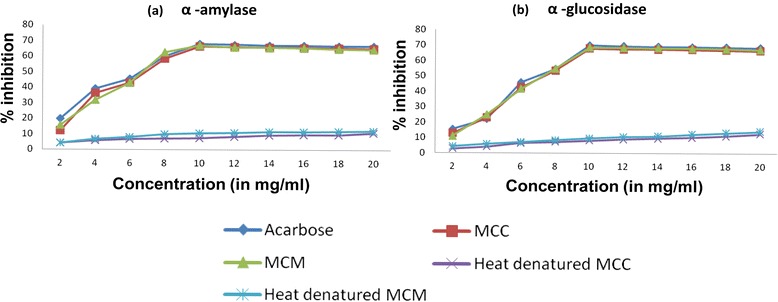
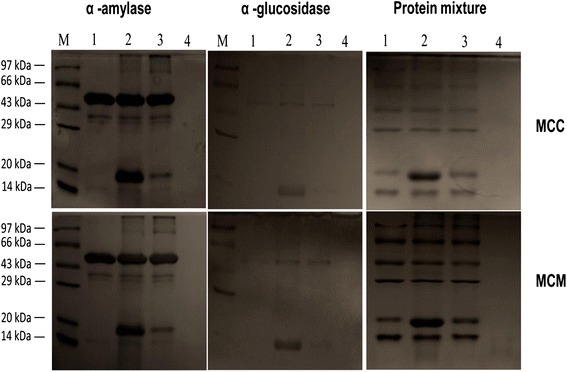
α-amylase and α-glucosidase digest the carbohydrates and increase the postprandial glucose level in diabetic patients. Inhibiting the activity of these two enzymes can control postprandial hyperglycemia, and reduce the risk of developing diabetes. Bitter gourd or balsam pear is one of the important medicinal plants used for controlling postprandial hyperglycemia in diabetes patients. However, there is limited information available on the presence of α-amylase and α-glucosidase inhibiting compounds. In the current study, the protein extracts from the fruits of M. charantia var. charantia (MCC) and M. charantia var. muricata (MCM) were tested for α-amylase and α-glucosidase inhibiting activities in vitro, and glucose lowering activity after oral administration in vivo.
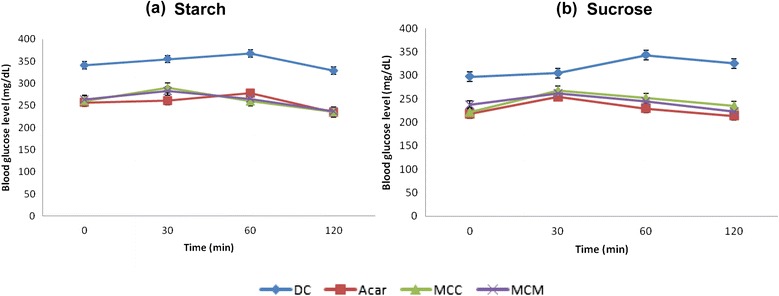
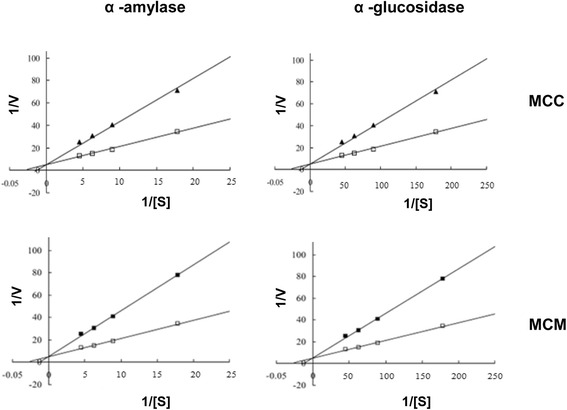
The protein extract from both MCC and MCM inhibited the activity of α-amylase and α-glucosidase through competitive inhibition, which was on par with Acarbose as indicated by in vitro percentage of inhibition (66 to 69 %) and IC50 (0.26 to 0.29 mg/ml). Both the protein extracts significantly reduced peak blood glucose and area under the curve in Streptozotocin-induced diabetic rats, which were orally challenged with starch and sucrose.
Protein extracts from the fruits of the two varieties of bitter gourd inhibited α-amylase and α-glucosidase in vitro and lowered the blood glucose level in vivo on par with Acarbose when orally administrated to Streptozotocin-induced diabetic rats. Further studies on mechanism of action and methods of safe and biologically active delivery will help to develop an anti-diabetic oral protein drug from these plants.
α-淀粉酶和α-葡萄糖苷酶可消化碳水化合物,使糖尿病患者餐后血糖水平升高。抑制这两种酶的活性可控制餐后高血糖,并降低患糖尿病的风险。苦瓜是用于控制糖尿病患者餐后高血糖的重要药用植物之一。然而,关于α-淀粉酶和α-葡萄糖苷酶抑制化合物的存在情况,现有信息有限。在本研究中,对苦瓜变种(MCC)和苦瓜变种(MCM)果实的蛋白质提取物进行了体外α-淀粉酶和α-葡萄糖苷酶抑制活性测试,以及体内口服给药后的降血糖活性测试。
MCC和MCM的蛋白质提取物均通过竞争性抑制作用抑制α-淀粉酶和α-葡萄糖苷酶的活性,体外抑制率(66%至69%)和IC50(0.26至0.29mg/ml)表明其与阿卡波糖相当。两种蛋白质提取物均显著降低了链脲佐菌素诱导的糖尿病大鼠经淀粉和蔗糖口服激发后的血糖峰值和曲线下面积。
两种苦瓜果实的蛋白质提取物在体外抑制α-淀粉酶和α-葡萄糖苷酶,并在口服给予链脲佐菌素诱导的糖尿病大鼠时,与阿卡波糖一样降低体内血糖水平。对作用机制以及安全且具有生物活性的给药方法的进一步研究,将有助于从这些植物中开发出一种抗糖尿病口服蛋白质药物。