Bernardi R E, Zohsel K, Hirth N, Treutlein J, Heilig M, Laucht M, Spanagel R, Sommer W H
Institute of Psychopharmacology, Central Institute of Mental Health, Medical Faculty Mannheim/Heidelberg University, Mannheim, Germany.
Department of Child and Adolescent Psychiatry, Central Institute of Mental Health, Medical Faculty Mannheim/Heidelberg University, Mannheim, Germany.
Transl Psychiatry. 2016 Jul 26;6(7):e861. doi: 10.1038/tp.2016.132.
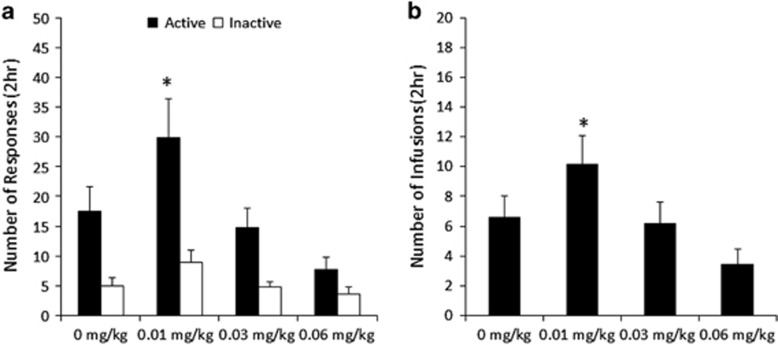
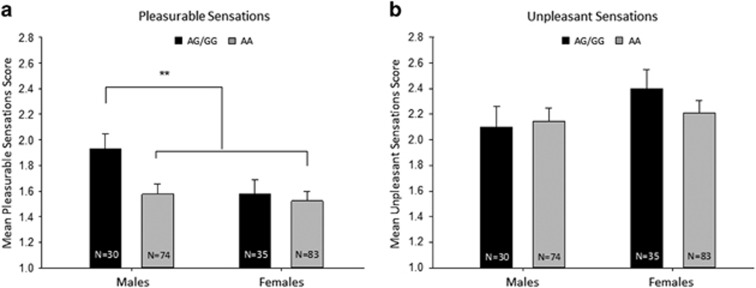
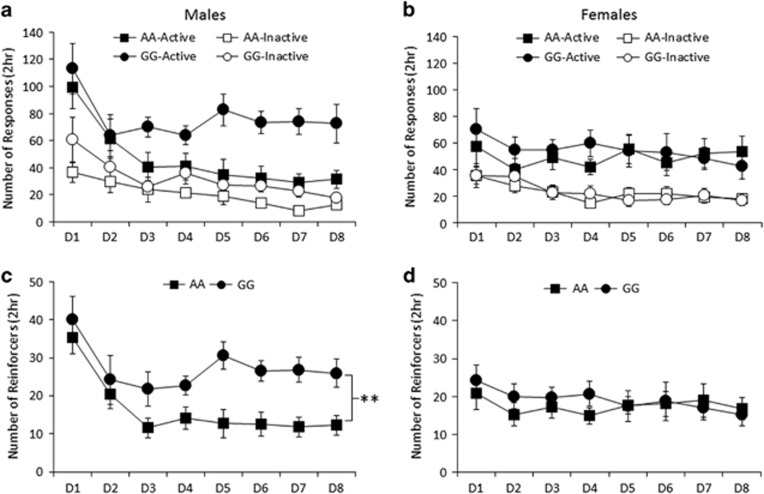
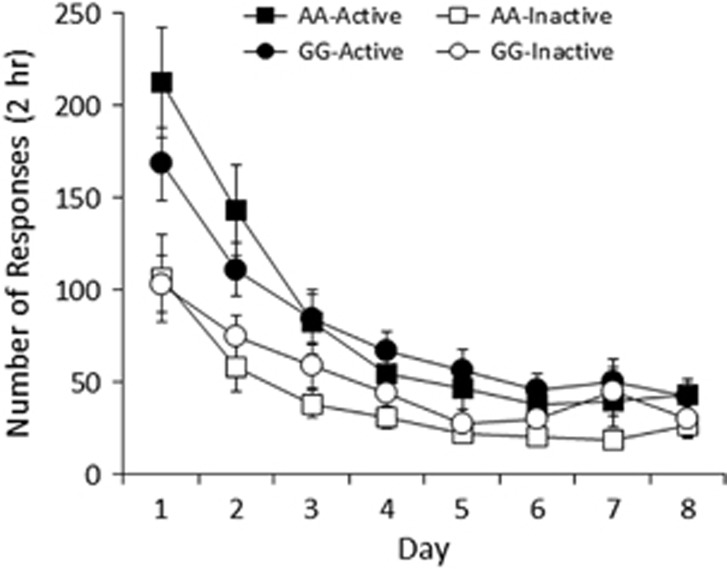
It has been proposed that vulnerability to nicotine addiction is moderated by variation at the μ-opioid receptor locus (OPRM1), but results from human studies vary and prospective studies based on genotype are lacking. We have developed a humanized mouse model of the most common functional OPRM1 polymorphism rs1799971_A>G (A118G). Here we use this model system together with a cohort of German youth to examine the role of the OPRM1 A118G variation on nicotine reward. Nicotine reinforcement was examined in the humanized mouse model using i.v. self-administration. Male (n=17) and female (n=26) mice homozygous either for the major human A allele (AA) or the minor G allele (GG) underwent eight daily 2 h sessions of nicotine self-administration. Furthermore, male (n=104) and female (n=118) subjects homozygous for the A allele or carrying the G allele from the Mannheim Study of Children at Risk were evaluated for pleasurable and unpleasant experiences during their initial smoking experience. A significant sex-by-genotype effect was observed for nicotine self-administration. Male 118GG mice demonstrated higher nicotine intake than male 118AA mice, suggesting increased nicotine reinforcement. In contrast, there was no genotype effect in female mice. Human male G allele carriers reported increased pleasurable effects from their first smoking experience, as compared to male homozygous A, female G and female homozygous A allele carriers. The 118G allele appears to confer greater sensitivity to nicotine reinforcement in males, but not females.
有人提出,μ-阿片受体基因座(OPRM1)的变异会调节对尼古丁成瘾的易感性,但人体研究的结果各不相同,且缺乏基于基因型的前瞻性研究。我们已经开发出了一种针对最常见的功能性OPRM1多态性rs1799971_A>G(A118G)的人源化小鼠模型。在此,我们将这个模型系统与一组德国青少年一起使用,以研究OPRM1 A118G变异对尼古丁奖赏的作用。使用静脉自我给药法在人源化小鼠模型中检测尼古丁强化作用。纯合主要人类A等位基因(AA)或次要G等位基因(GG)的雄性(n=17)和雌性(n=26)小鼠,每天进行8次、每次2小时的尼古丁自我给药实验。此外,对来自曼海姆高危儿童研究中纯合A等位基因或携带G等位基因的104名男性和118名女性受试者,在其初次吸烟经历期间的愉悦和不愉快体验进行了评估。在尼古丁自我给药实验中观察到了显著的性别×基因型效应。118GG雄性小鼠的尼古丁摄入量高于118AA雄性小鼠,表明尼古丁强化作用增强。相比之下,雌性小鼠中没有基因型效应。与男性纯合A、女性G和女性纯合A等位基因携带者相比,人类男性G等位基因携带者报告称其初次吸烟经历带来的愉悦效果增强。118G等位基因似乎使男性对尼古丁强化作用更敏感,而女性则不然。