Rose N L, Turner S D, Goldsmith B, Gosling L, Davidson T A
Environmental Change Research Centre, Department of Geography, University College London, Gower St, London, WC1E 6BT, UK.
Centre for Environmental Policy, Imperial College London, 13-15 Prince's Gardens, London, SW7 1NA, UK.
BMC Ecol. 2016 Jul 22;16 Suppl 1(Suppl 1):14. doi: 10.1186/s12898-016-0063-2.
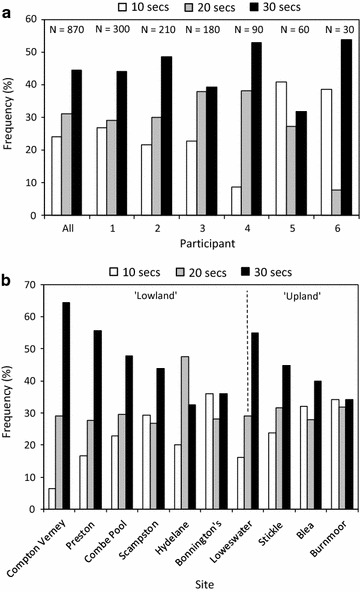
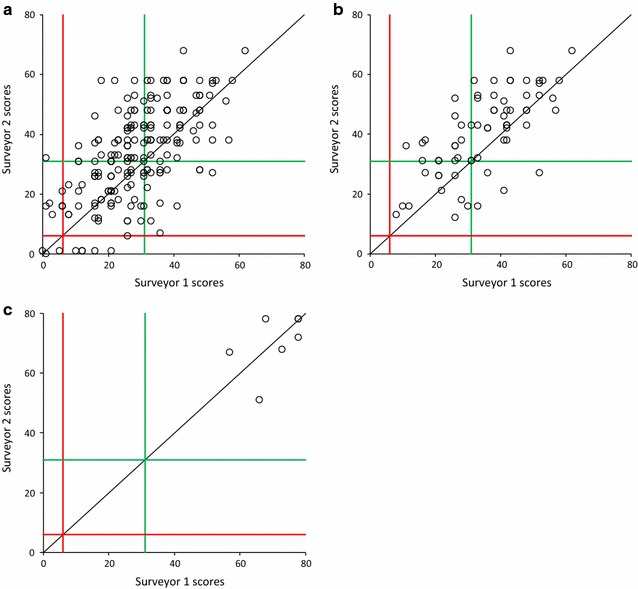
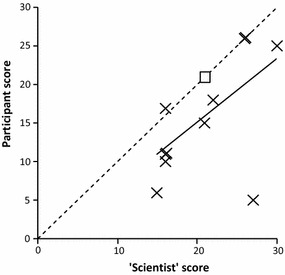
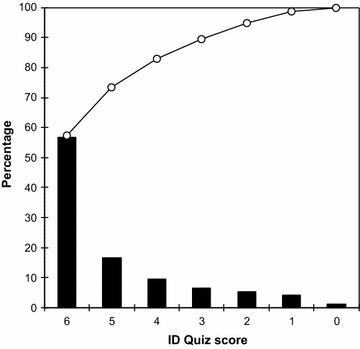
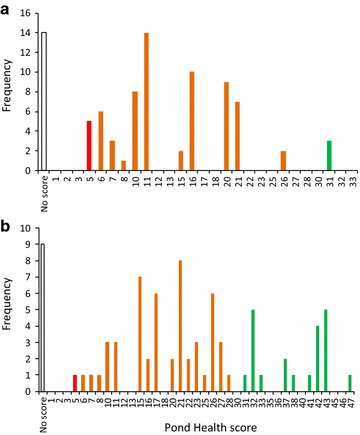
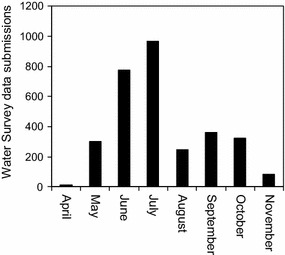
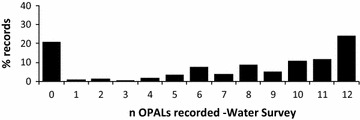
Public participation in scientific data collection is a rapidly expanding field. In water quality surveys, the involvement of the public, usually as trained volunteers, generally includes the identification of aquatic invertebrates to a broad taxonomic level. However, quality assurance is often not addressed and remains a key concern for the acceptance of publicly-generated water quality data. The Open Air Laboratories (OPAL) Water Survey, launched in May 2010, aimed to encourage interest and participation in water science by developing a 'low-barrier-to-entry' water quality survey. During 2010, over 3000 participant-selected lakes and ponds were surveyed making this the largest public participation lake and pond survey undertaken to date in the UK. But the OPAL approach of using untrained volunteers and largely anonymous data submission exacerbates quality control concerns. A number of approaches were used in order to address data quality issues including: sensitivity analysis to determine differences due to operator, sampling effort and duration; direct comparisons of identification between participants and experienced scientists; the use of a self-assessment identification quiz; the use of multiple participant surveys to assess data variability at single sites over short periods of time; comparison of survey techniques with other measurement variables and with other metrics generally considered more accurate. These quality control approaches were then used to screen the OPAL Water Survey data to generate a more robust dataset.
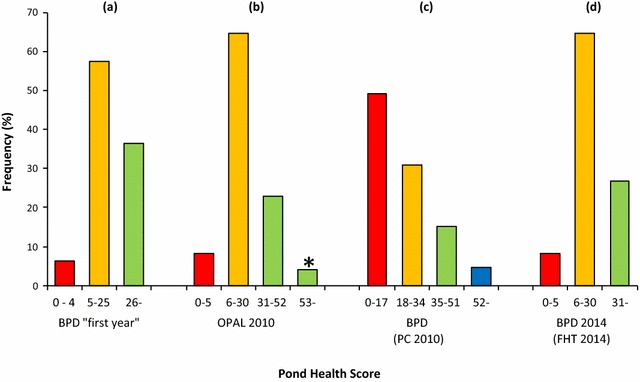
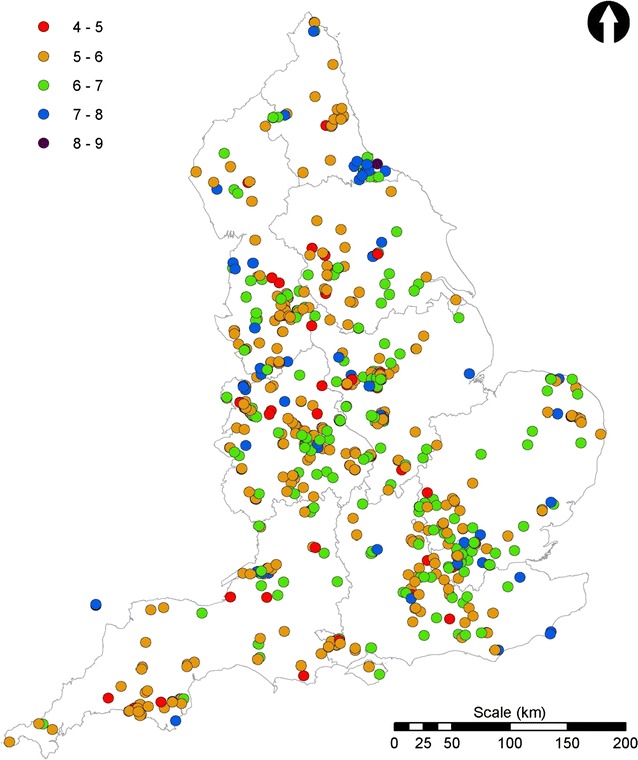
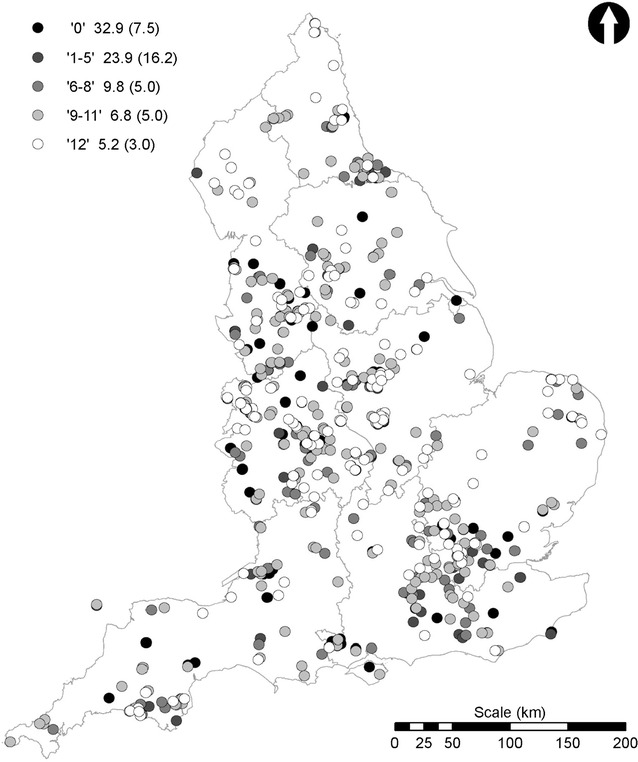
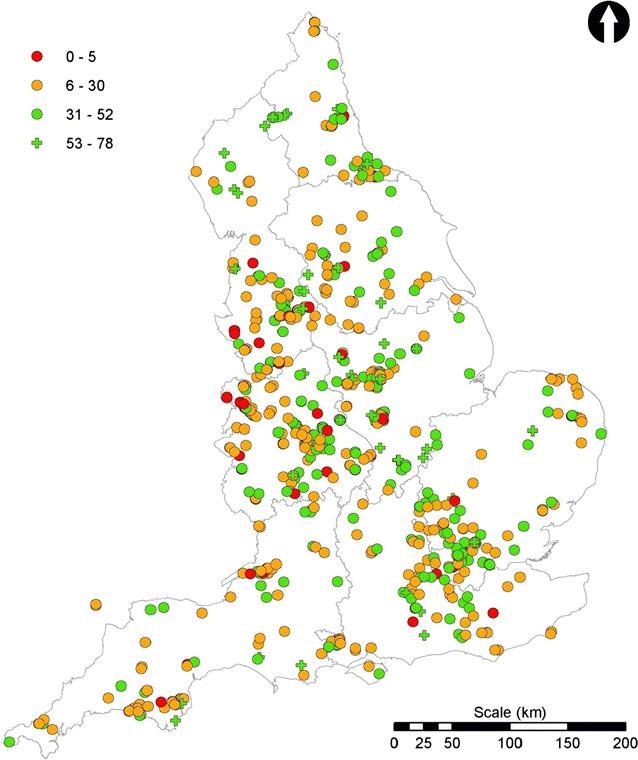
The OPAL Water Survey results provide a regional and national assessment of water quality as well as a first national picture of water clarity (as suspended solids concentrations). Less than 10 % of lakes and ponds surveyed were 'poor' quality while 26.8 % were in the highest water quality band.
It is likely that there will always be a question mark over untrained volunteer generated data simply because quality assurance is uncertain, regardless of any post hoc data analyses. Quality control at all stages, from survey design, identification tests, data submission and interpretation can all increase confidence such that useful data can be generated by public participants.
公众参与科学数据收集是一个迅速发展的领域。在水质调查中,公众通常作为经过培训的志愿者参与其中,其工作一般包括将水生无脊椎动物鉴定到宽泛的分类水平。然而,质量保证问题常常未得到解决,这仍然是公众生成的水质数据被接受的关键问题。2010年5月启动的露天实验室(OPAL)水质调查,旨在通过开展一项“低门槛参与”的水质调查来激发人们对水科学的兴趣并鼓励公众参与。2010年期间,对3000多个由参与者选定的湖泊和池塘进行了调查,这使其成为英国迄今为止规模最大的公众参与的湖泊和池塘调查。但是,OPAL使用未经培训的志愿者以及大量匿名数据提交的方式加剧了质量控制方面的担忧。为了解决数据质量问题,采用了多种方法,包括:敏感性分析,以确定因操作人员、采样工作量和持续时间导致的差异;参与者与经验丰富的科学家之间鉴定结果的直接比较;使用自我评估鉴定测验;使用多次参与者调查来评估短期内单个地点的数据变异性;将调查技术与其他测量变量以及通常被认为更准确的其他指标进行比较。然后,这些质量控制方法被用于筛选OPAL水质调查数据,以生成一个更可靠的数据集。
OPAL水质调查结果提供了区域和全国水质评估,以及首张全国水清澈度(以悬浮固体浓度表示)情况图。被调查的湖泊和池塘中,水质“差”的不到10%,而26.8%处于最高水质等级。
仅仅因为质量保证不确定,未经培训的志愿者生成的数据可能总会存在疑问,无论事后进行何种数据分析。从调查设计、鉴定测试、数据提交到解释的所有阶段进行质量控制,都可以增强信心,使公众参与者能够生成有用的数据。