Nakano Masahito, Tanaka Masatoshi, Kuromatsu Ryoko, Nagamatsu Hiroaki, Satani Manabu, Niizeki Takashi, Okamura Shusuke, Iwamoto Hideki, Shimose Shigeo, Shirono Tomotake, Noda Yu, Koga Hironori, Torimura Takuji
Division of Gastroenterology, Department of Medicine, Kurume University School of Medicine, Kurume, Fukuoka, Japan.
Yokokura Hospital, Miyama, Fukuoka, Japan.
Oncotarget. 2016 Sep 27;7(39):64400-64409. doi: 10.18632/oncotarget.10794.
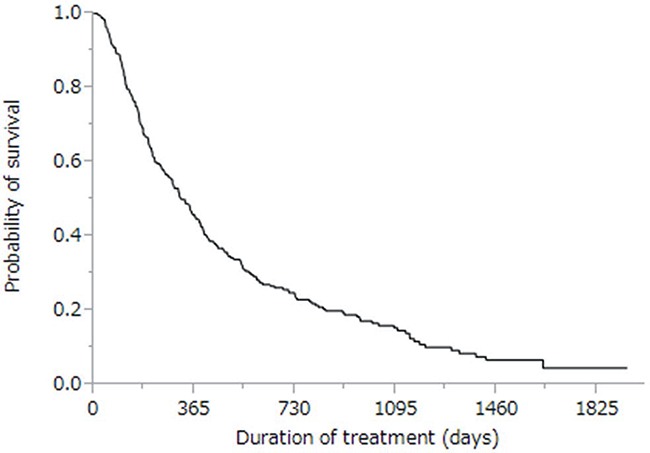
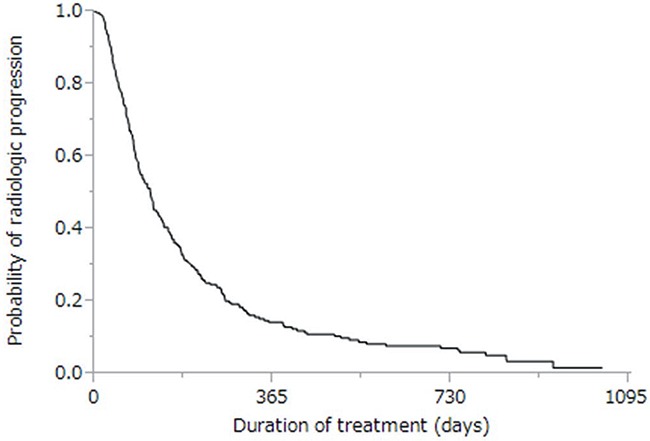
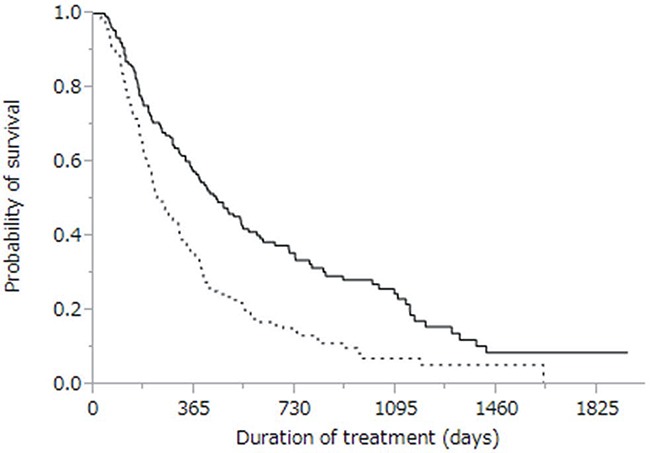
Sorafenib is an oral multikinase inhibitor that has been approved to treat advanced hepatocellular carcinoma (HCC), though it is unclear how much benefit advanced HCC patients with progressive disease (PD) derive from sorafenib treatment. This study aimed to assess survival risk factors and evaluate therapeutic strategies for advanced HCC patients with PD after sorafenib treatment. We analyzed the clinical data and treatment outcomes for 315 consecutive advanced HCC patients treated with sorafenib. Univariate analyses of overall survival identified therapeutic effect as an independent risk factor in all patients. Among all patients, 141 developed PD. Of those, 58 (41%) were treated with sorafenib monotherapy, 70 (50%) with agents other than sorafenib, and 13 (9%) were not treated at all. The median survival time was 6.1 months for PD patients with sorafenib monotherapy and 12.2 months for those administered alternative treatments (p < 0.0001). Our results indicated that sorafenib treatment may have negative long-term therapeutic effects in advanced HCC patients with PD, and that alternative treatments should be considered for these patients after sorafenib administration.
索拉非尼是一种口服多激酶抑制剂,已被批准用于治疗晚期肝细胞癌(HCC),不过尚不清楚疾病进展(PD)的晚期HCC患者能从索拉非尼治疗中获得多大益处。本研究旨在评估晚期HCC患者在索拉非尼治疗后疾病进展的生存风险因素并评价治疗策略。我们分析了315例连续接受索拉非尼治疗的晚期HCC患者的临床数据和治疗结果。总生存的单因素分析确定治疗效果是所有患者的独立风险因素。在所有患者中,141例出现疾病进展。其中,58例(41%)接受索拉非尼单药治疗,70例(50%)接受索拉非尼以外的药物治疗,13例(9%)未接受任何治疗。索拉非尼单药治疗的疾病进展患者的中位生存时间为6.1个月,接受替代治疗的患者为12.2个月(p<0.0001)。我们的结果表明,索拉非尼治疗可能对疾病进展的晚期HCC患者有负面的长期治疗效果,对于这些患者在接受索拉非尼治疗后应考虑替代治疗。