Palacios Jorge E, Khondoker Mizanur, Achilla Evanthia, Tylee Andre, Hotopf Matthew
Psychological Medicine Department, Institute of Psychiatry, Psychology, and Neuroscience, King's College London, London, United Kingdom.
Health Service and Population Research Department, Institute of Psychiatry, Psychology, and Neuroscience, King's College London, London, United Kingdom.
PLoS One. 2016 Jul 27;11(7):e0158163. doi: 10.1371/journal.pone.0158163. eCollection 2016.
To determine whether a one-off, baseline measure of depression and anxiety in a primary care, coronary heart disease (CHD) population predicts ongoing symptoms, costs, and quality of life across a 3-year follow-up.
Longitudinal cohort study.
16 General Practice surgeries across South-East London.
803 adults (70% male, mean age 71 years) contributing up to 7 follow-up points.
Ongoing reporting of symptoms, health care costs, and quality of life.
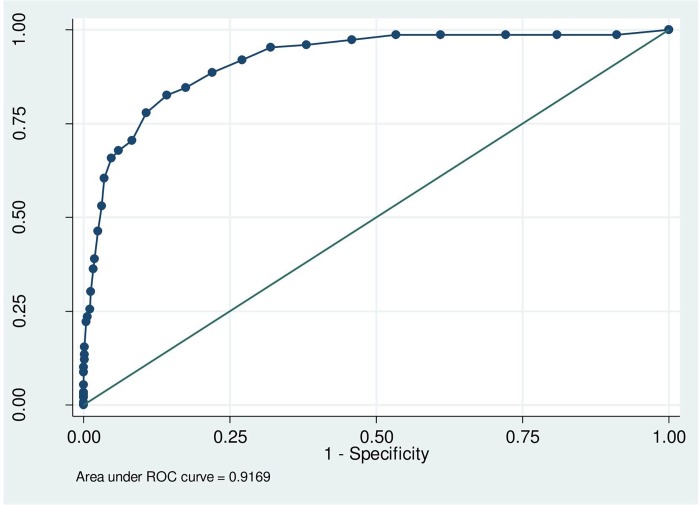
At baseline, 27% of the sample screened positive for symptoms of depression and anxiety, as measured by the Hospital Anxiety and Depression Scale (HADS). The probability of scoring above the cut-off throughout the follow-up was 71.5% (p<0.001) for those screening positive at baseline, and for those screening negative, the probability of scoring below the cut-off throughout the follow-up was 97.6% (p<0.001). Total health care costs were 39% higher during follow-up for those screening positive (p<0.05). Quality of life as measured by the SF-12 was lower on the mental component during follow-up for those screening positive (-0.75, CI -1.53 to 0.03, p = 0.059), and significantly lower on the physical component (-4.99, CI -6.23 to -.376, p<0.001).
A one-off measure for depression and anxiety symptoms in CHD predicts future symptoms, costs, and quality of life over the subsequent three-years. These findings suggest symptoms of depression and anxiety in CHD persist throughout long periods and are detrimental to a patient's quality of life, whilst incurring higher health care costs for primary and secondary care services. Screening for these symptoms at the primary care level is important to identify and manage patients at risk of the negative effects of this comorbidity. Implementation of screening, and possible collaborative care strategies and interventions that help mitigate this risk should be the ongoing focus of researchers and policy-makers.
确定在初级保健冠心病(CHD)人群中一次性进行的抑郁和焦虑基线测量是否能预测3年随访期间的持续症状、成本和生活质量。
纵向队列研究。
伦敦东南部的16家全科诊所。
803名成年人(70%为男性,平均年龄71岁),最多有7个随访点。
持续的症状报告、医疗保健成本和生活质量。
在基线时,根据医院焦虑抑郁量表(HADS)测量,27%的样本筛查出抑郁和焦虑症状呈阳性。在基线时筛查呈阳性的患者在整个随访期间得分高于临界值的概率为71.5%(p<0.001),而筛查呈阴性的患者在整个随访期间得分低于临界值的概率为97.6%(p<0.001)。筛查呈阳性的患者在随访期间的总医疗保健成本高出39%(p<0.05)。在随访期间,根据SF - 12测量,筛查呈阳性的患者在心理成分上生活质量较低(-0.75,可信区间-1.53至0.03,p = 0.059),在身体成分上显著较低(-4.99,可信区间-6.23至-0.376,p<0.001)。
对冠心病患者抑郁和焦虑症状进行一次性测量可预测未来三年的症状、成本和生活质量。这些发现表明,冠心病患者的抑郁和焦虑症状长期持续,对患者生活质量有害,同时给初级和二级医疗服务带来更高的医疗保健成本。在初级保健层面筛查这些症状对于识别和管理有这种合并症负面影响风险的患者很重要。实施筛查以及可能有助于减轻这种风险的协作护理策略和干预措施应是研究人员和政策制定者持续关注的重点。