Markovics Adrienn, Ocskó Tímea, Katz Robert S, Buzás Edit I, Glant Tibor T, Mikecz Katalin
Section of Molecular Medicine, Department of Orthopedic Surgery, Rush University Medical Center, Chicago, Illinois, United States of America.
Rheumatology Associates, Rush University Medical Center, Chicago, Illinois, United States of America.
PLoS One. 2016 Jul 28;11(7):e0160284. doi: 10.1371/journal.pone.0160284. eCollection 2016.
Rheumatoid arthritis (RA) is an autoimmune inflammatory disease affecting the joints. Anti-citrullinated protein antibodies (ACPA) are frequently found in RA. Previous studies identified a citrullinated epitope in cartilage proteoglycan (PG) aggrecan that elicited pro-inflammatory cytokine production by RA T cells. We recently reported the presence of ACPA-reactive (citrullinated) PG in RA cartilage. Herein, we sought to identify additional citrullinated epitopes in human PG that are recognized by T cells or antibodies from RA patients.
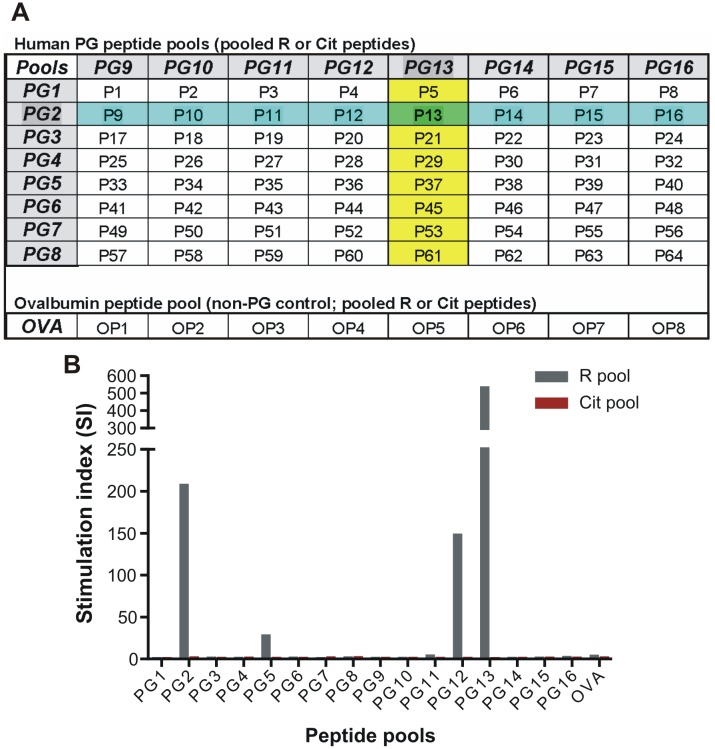
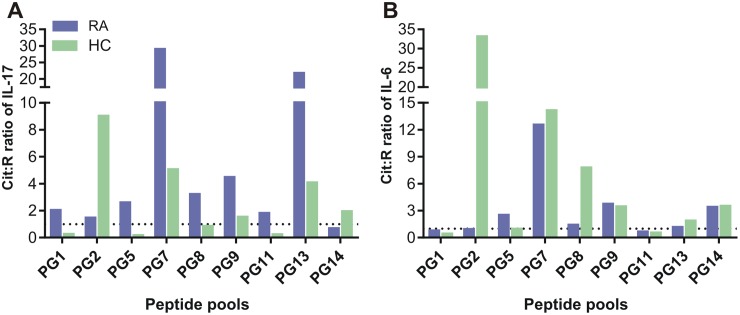
We used mice with PG-induced arthritis (PGIA) as a screening tool to select citrulline (Cit)-containing PG peptides that were more immunogenic than the arginine (R)-containing counterparts. The selected peptide pairs were tested for induction of pro-inflammatory T-cell cytokine production in RA and healthy control peripheral blood mononuclear cell (PBMC) cultures using ELISA and flow cytometry. Anti-Cit and anti-R peptide antibodies were detected by ELISA.
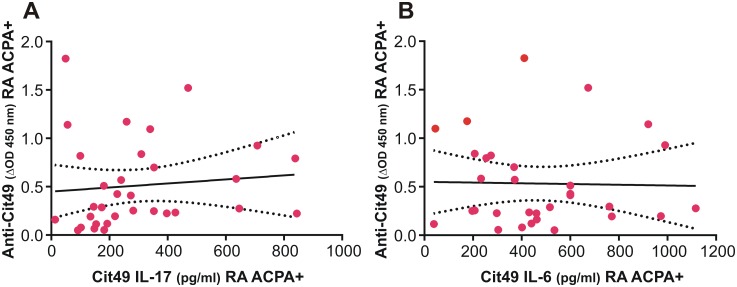
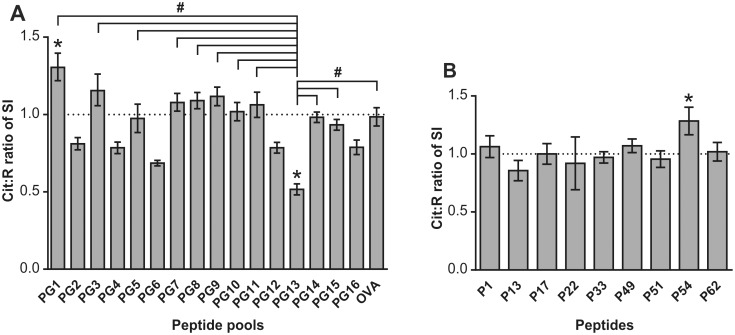
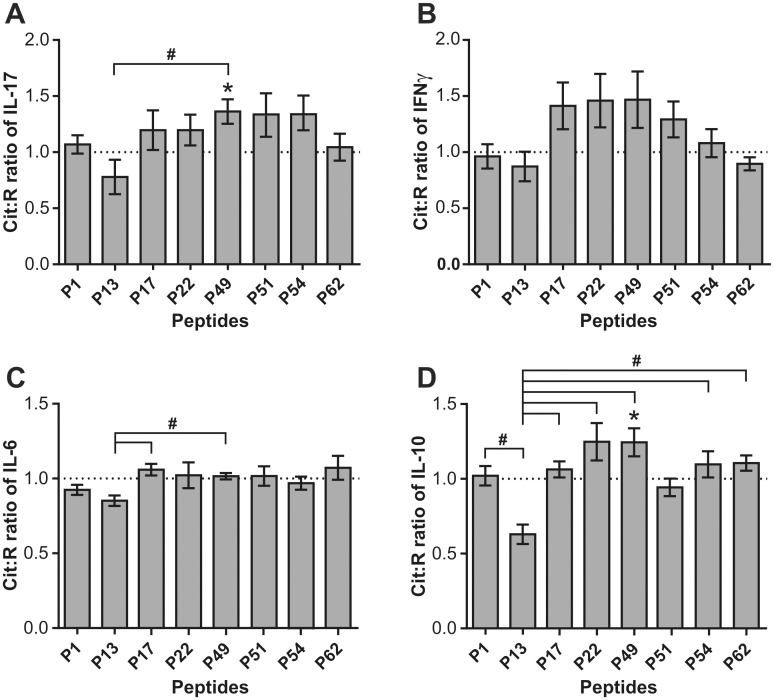
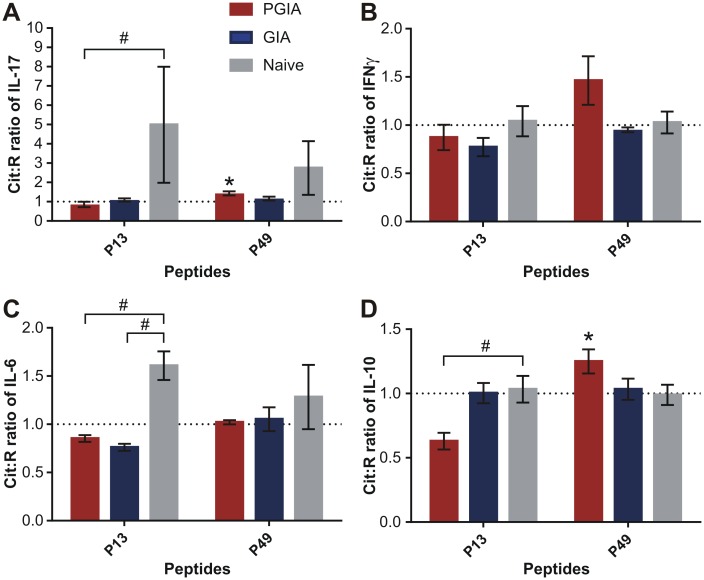
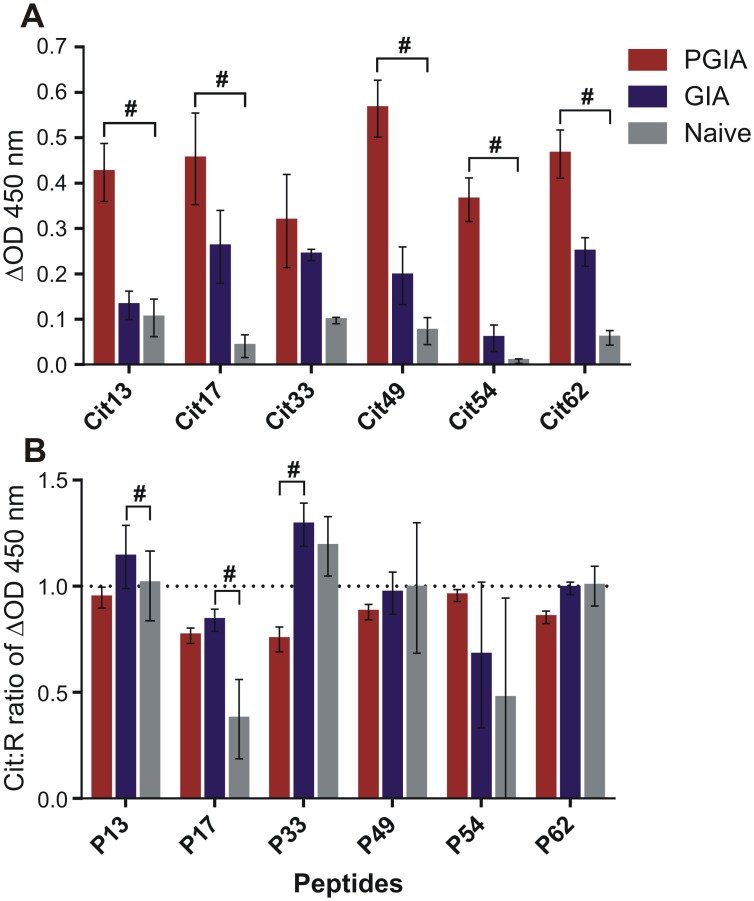
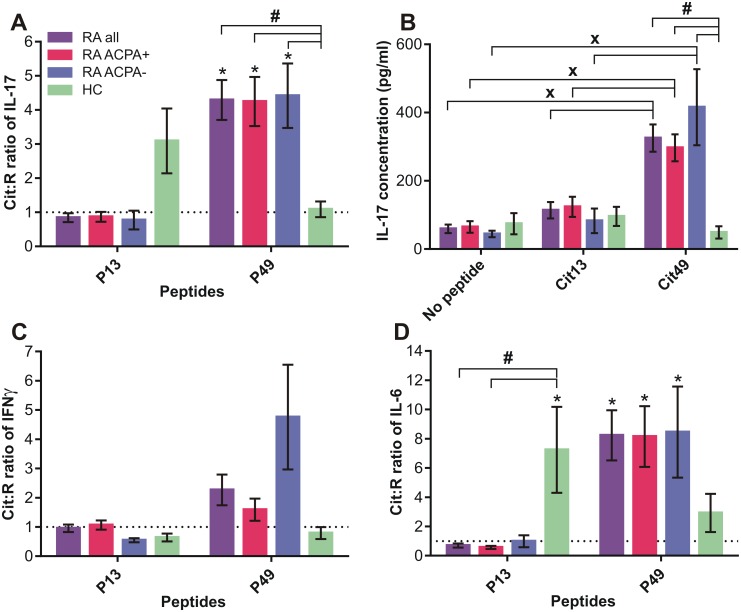
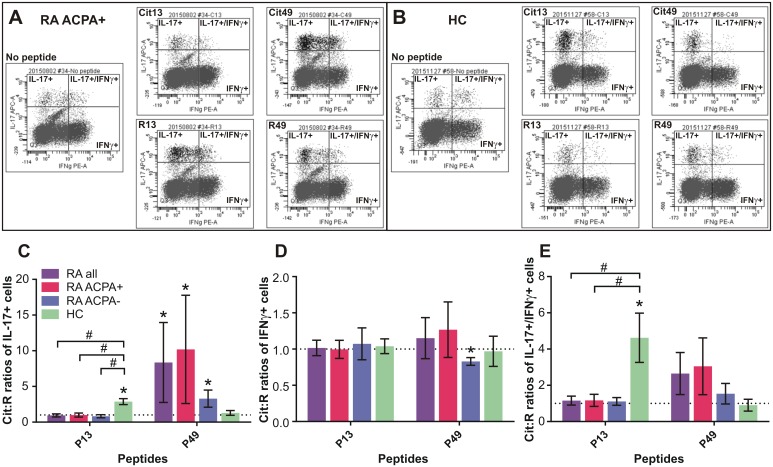
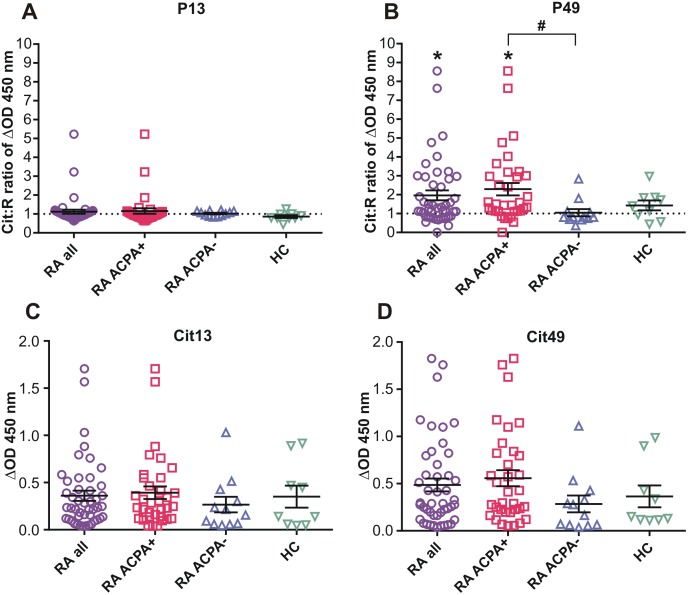
Splenocytes from mice with PGIA exhibited greater T-cell cytokine secretion in response to the Cit than the R version of PG peptide 49 (P49) and anti-P49 antibodies were found in PGIA serum. PBMC from ACPA+ and ACPA- RA patients, but not from healthy controls, responded to Cit49 with robust cytokine production. High levels of anti-Cit49 antibodies were found in the plasma of a subset of ACPA+ RA patients. Another PG peptide (Cit13) similar to the previously described T-cell epitope induced greater cytokine responses than R13 by control (but not RA) PBMC, however, anti-Cit13 antibodies were rarely detected in human plasma.
We identified a novel citrullinated PG epitope (Cit49) that is highly immunogenic in mice with PGIA and in RA patients. We also describe T-cell and antibody reactivity with Cit49 in ACPA+ RA. As citrullinated PG might be present in RA articular cartilage, Cit PG epitope-induced T-cell activation or antibody deposition may occur in the joints of RA patients.
类风湿关节炎(RA)是一种影响关节的自身免疫性炎症性疾病。抗瓜氨酸化蛋白抗体(ACPA)在RA中经常被发现。先前的研究在软骨蛋白聚糖(PG)聚集蛋白聚糖中鉴定出一种瓜氨酸化表位,该表位可引发RA T细胞产生促炎细胞因子。我们最近报道了RA软骨中存在ACPA反应性(瓜氨酸化)PG。在此,我们试图鉴定人PG中其他被RA患者的T细胞或抗体识别的瓜氨酸化表位。
我们使用PG诱导性关节炎(PGIA)小鼠作为筛选工具,以选择比含精氨酸(R)的对应物更具免疫原性的含瓜氨酸(Cit)的PG肽。使用酶联免疫吸附测定(ELISA)和流式细胞术,在RA和健康对照外周血单核细胞(PBMC)培养物中测试所选肽对促炎性T细胞细胞因子产生的诱导作用。通过ELISA检测抗Cit和抗R肽抗体。
PGIA小鼠的脾细胞对Cit的反应比R型PG肽49(P49)表现出更大的T细胞细胞因子分泌,并且在PGIA血清中发现了抗P49抗体。来自ACPA阳性和ACPA阴性RA患者的PBMC,而非健康对照的PBMC,对Cit49有强烈的细胞因子产生反应。在一部分ACPA阳性RA患者的血浆中发现了高水平的抗Cit49抗体。另一种与先前描述的T细胞表位相似的PG肽(Cit13),对照(而非RA)PBMC对其诱导的细胞因子反应比R13更大,然而,在人血浆中很少检测到抗Cit13抗体。
我们鉴定出一种新的瓜氨酸化PG表位(Cit49),其在PGIA小鼠和RA患者中具有高度免疫原性。我们还描述了ACPA阳性RA中T细胞和抗体与Cit49的反应性。由于瓜氨酸化PG可能存在于RA关节软骨中,Cit PG表位诱导的T细胞活化或抗体沉积可能发生在RA患者的关节中。