Maelfait Jonathan, Bridgeman Anne, Benlahrech Adel, Cursi Chiara, Rehwinkel Jan
Medical Research Council Human Immunology Unit, Weatherall Institute of Molecular Medicine and Radcliffe Department of Medicine, University of Oxford, Oxford OX3 9DS, UK.
Medical Research Council Human Immunology Unit, Weatherall Institute of Molecular Medicine and Nuffield Department of Medicine, University of Oxford, Oxford OX3 9DS, UK.
Cell Rep. 2016 Aug 9;16(6):1492-1501. doi: 10.1016/j.celrep.2016.07.002. Epub 2016 Jul 28.
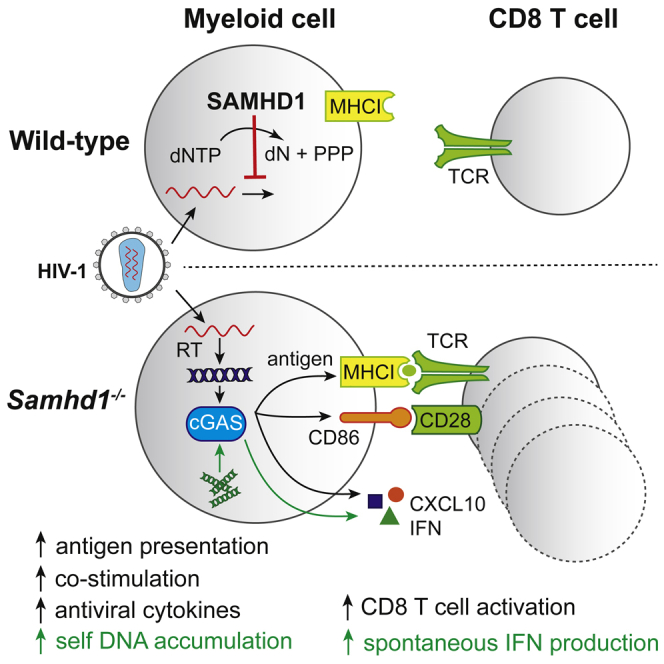
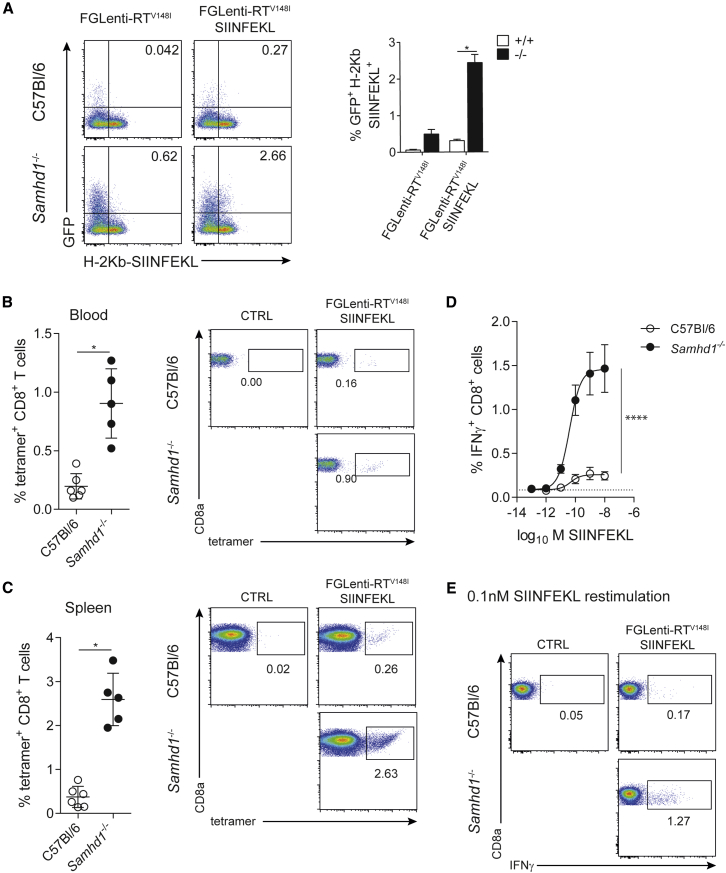
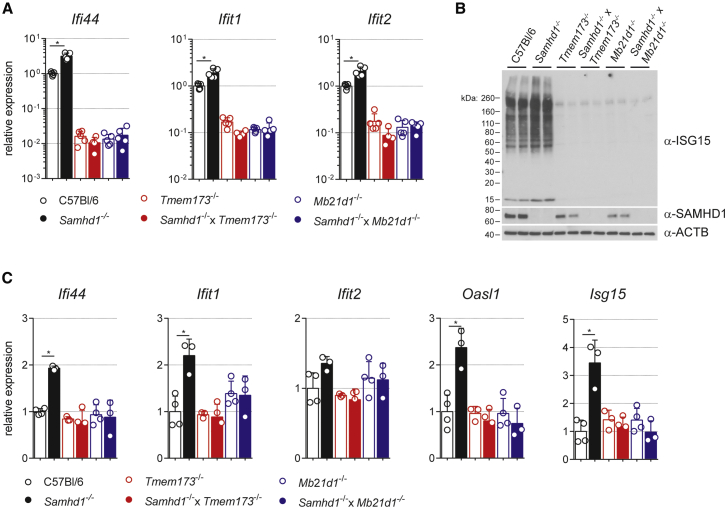
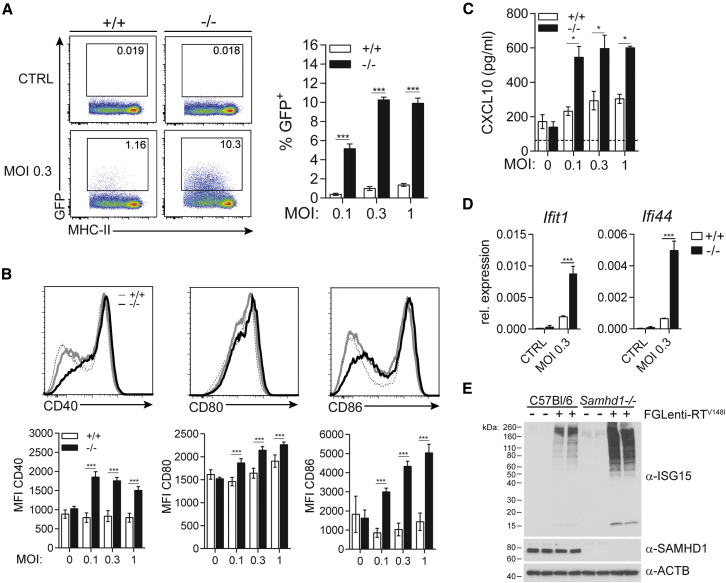
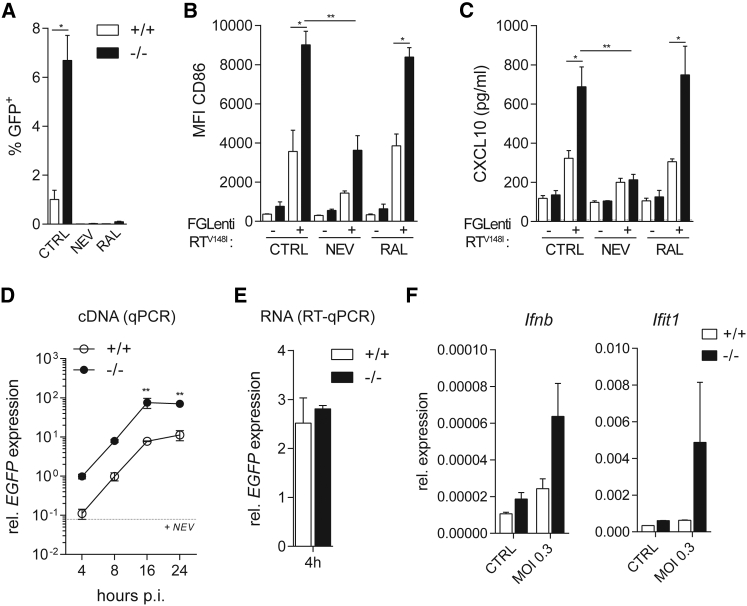
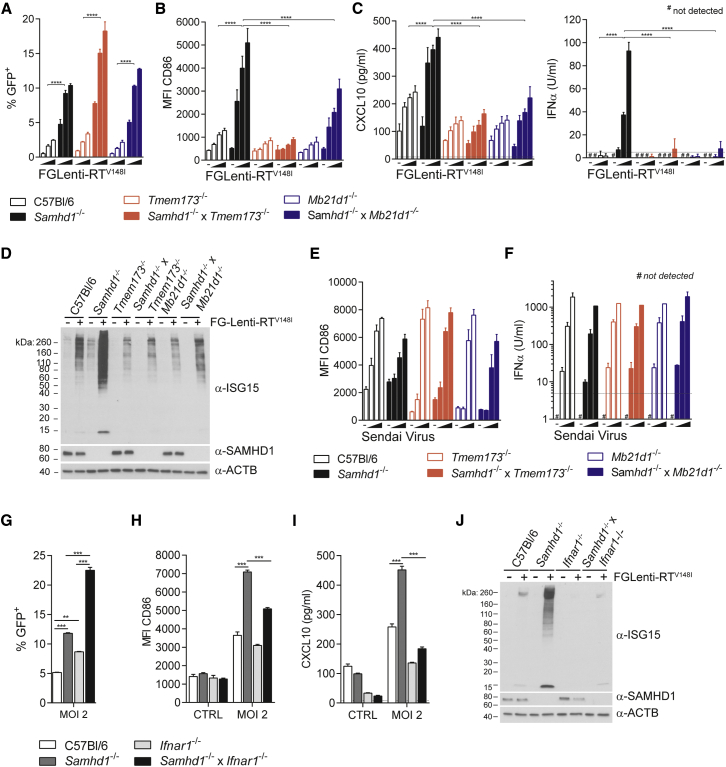
SAMHD1 is a restriction factor for HIV-1 infection. SAMHD1 mutations cause the autoinflammatory Aicardi-Goutières syndrome that is characterized by chronic type I interferon (IFN) secretion. We show that the spontaneous IFN response in SAMHD1-deficient cells and mice requires the cGAS/STING cytosolic DNA-sensing pathway. We provide genetic evidence that cell-autonomous control of lentivirus infection in myeloid cells by SAMHD1 limits virus-induced production of IFNs and the induction of co-stimulatory markers. This program of myeloid cell activation required reverse transcription, cGAS and STING, and signaling through the IFN receptor. Furthermore, SAMHD1 reduced the induction of virus-specific cytotoxic T cells in vivo. Therefore, virus restriction by SAMHD1 limits the magnitude of IFN and T cell responses. This demonstrates a competition between cell-autonomous virus control and subsequent innate and adaptive immune responses, a concept with important implications for the treatment of infection.
SAMHD1是HIV-1感染的一个限制因子。SAMHD1突变会导致自身炎症性的艾卡迪-古铁雷斯综合征,其特征是慢性I型干扰素(IFN)分泌。我们发现,SAMHD1缺陷细胞和小鼠中的自发性IFN反应需要cGAS/STING胞质DNA感应途径。我们提供了遗传学证据,表明SAMHD1对髓系细胞中慢病毒感染的细胞自主控制限制了病毒诱导的IFN产生以及共刺激标志物的诱导。这种髓系细胞激活程序需要逆转录、cGAS和STING,以及通过IFN受体的信号传导。此外,SAMHD1在体内减少了病毒特异性细胞毒性T细胞的诱导。因此,SAMHD1对病毒的限制限制了IFN和T细胞反应的强度。这证明了细胞自主病毒控制与随后的先天性和适应性免疫反应之间的竞争,这一概念对感染治疗具有重要意义。