Li Li, Liu Hui, Dong Peng, Li Dong, Legant Wesley R, Grimm Jonathan B, Lavis Luke D, Betzig Eric, Tjian Robert, Liu Zhe
Janelia Research Campus, Howard Hughes Medical Institute, Ashburn, United States.
LKS Bio-medical and Health Sciences Center, CIRM Center of Excellence, University of California, Berkeley, United States.
Elife. 2016 Aug 3;5:e17056. doi: 10.7554/eLife.17056.
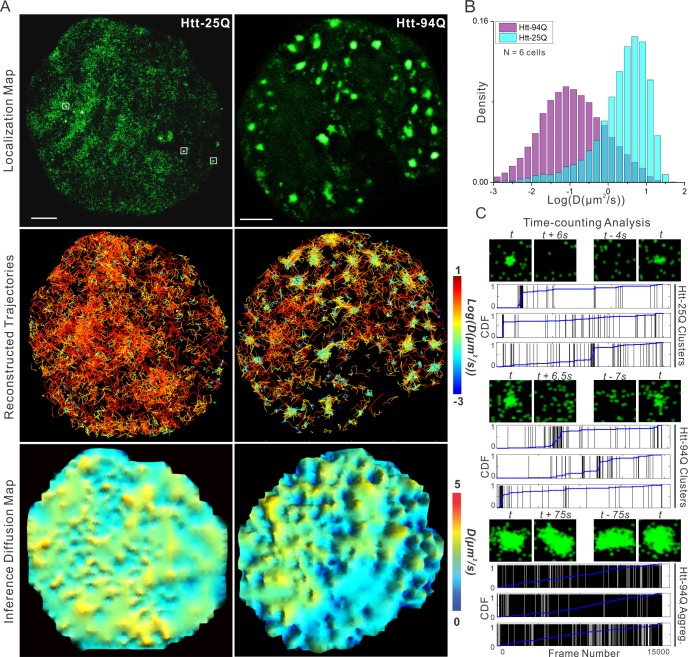
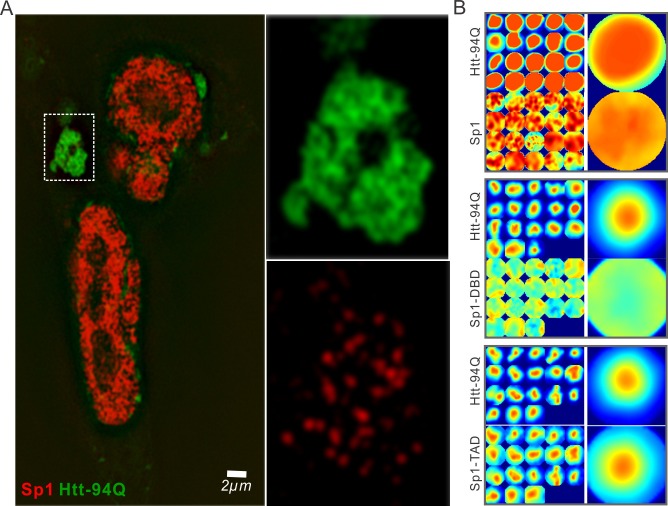
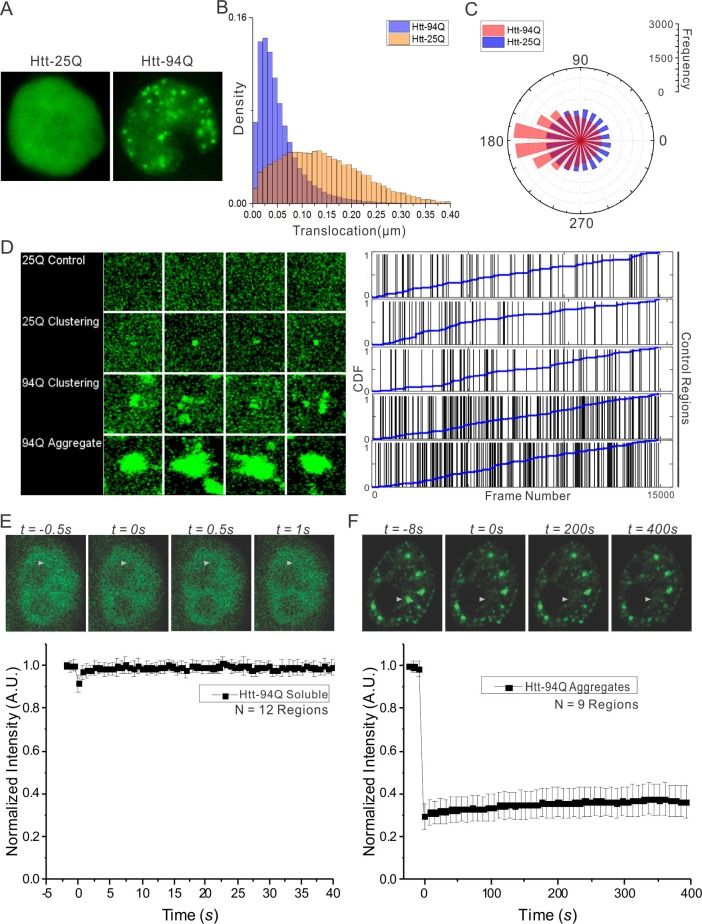
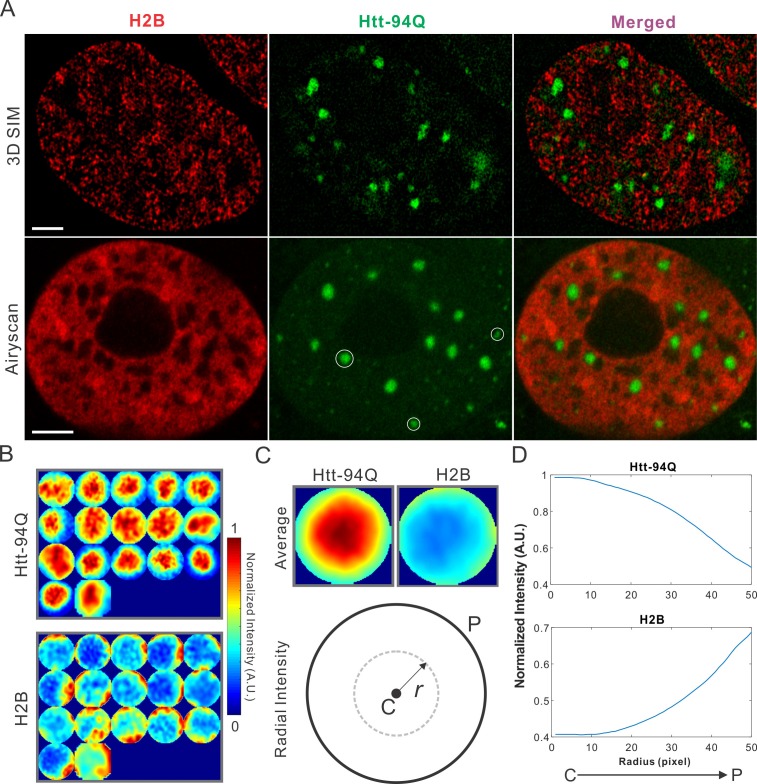
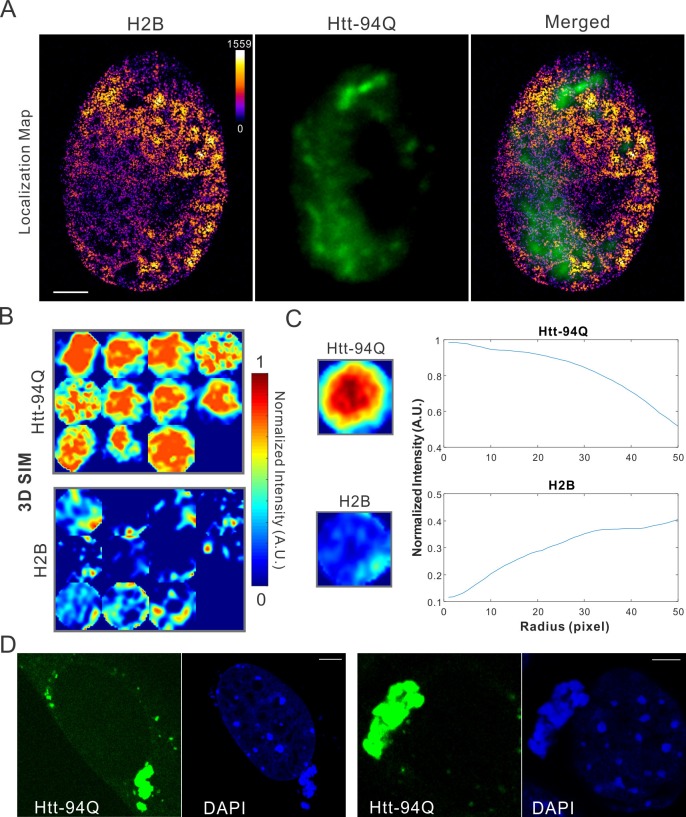
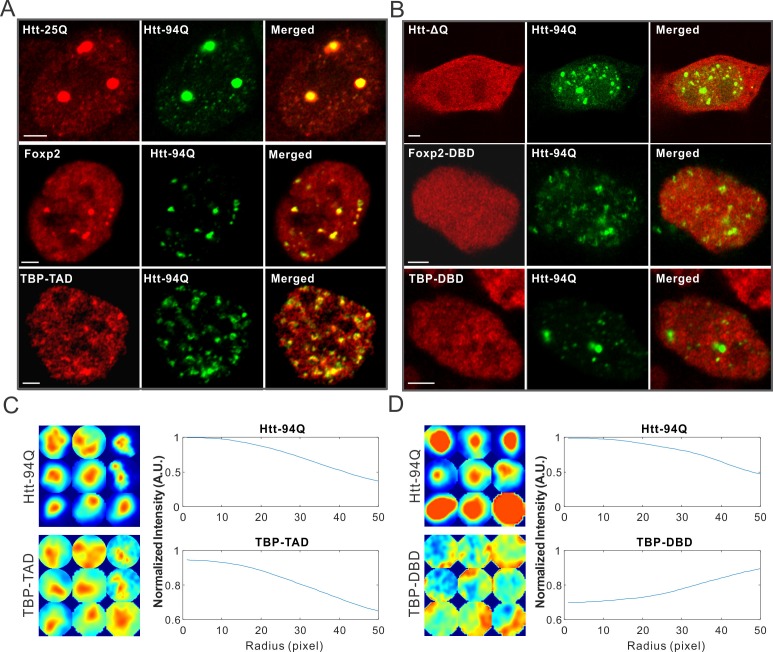
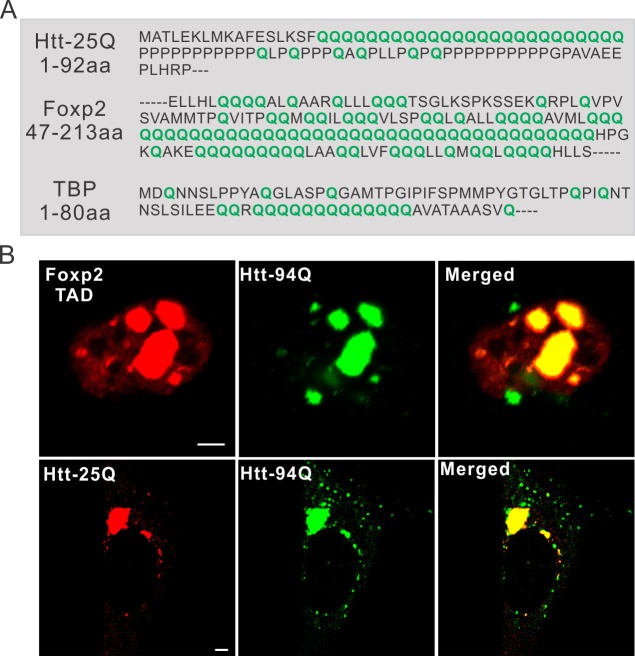
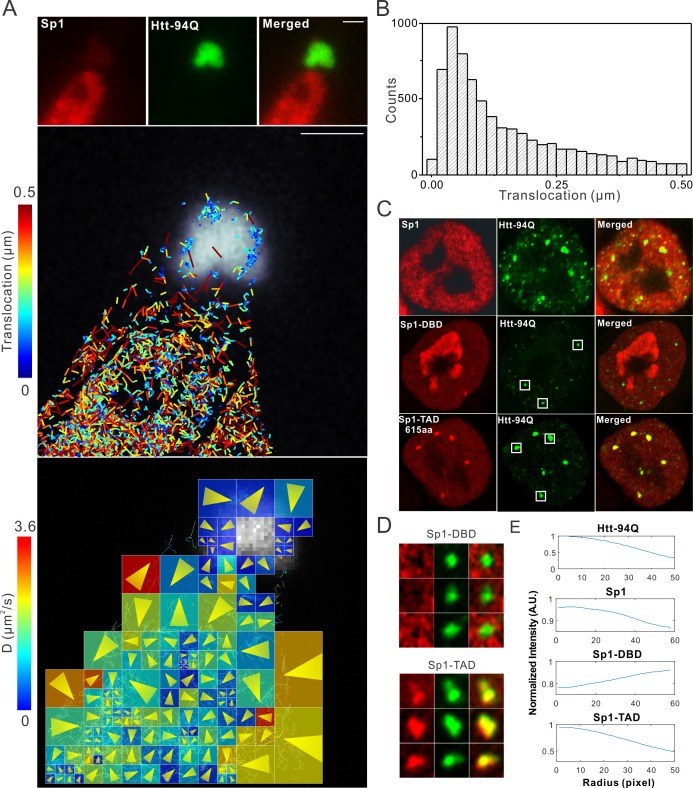
The presumptive altered dynamics of transient molecular interactions in vivo contributing to neurodegenerative diseases have remained elusive. Here, using single-molecule localization microscopy, we show that disease-inducing Huntingtin (mHtt) protein fragments display three distinct dynamic states in living cells - 1) fast diffusion, 2) dynamic clustering and 3) stable aggregation. Large, stable aggregates of mHtt exclude chromatin and form 'sticky' decoy traps that impede target search processes of key regulators involved in neurological disorders. Functional domain mapping based on super-resolution imaging reveals an unexpected role of aromatic amino acids in promoting protein-mHtt aggregate interactions. Genome-wide expression analysis and numerical simulation experiments suggest mHtt aggregates reduce transcription factor target site sampling frequency and impair critical gene expression programs in striatal neurons. Together, our results provide insights into how mHtt dynamically forms aggregates and disrupts the finely-balanced gene control mechanisms in neuronal cells.
体内导致神经退行性疾病的瞬时分子相互作用的推测性动态变化一直难以捉摸。在这里,我们使用单分子定位显微镜表明,致病的亨廷顿蛋白(mHtt)片段在活细胞中表现出三种不同的动态状态——1)快速扩散,2)动态聚集,3)稳定聚集。mHtt的大的稳定聚集体排除染色质并形成“粘性”诱饵陷阱,阻碍参与神经疾病的关键调节因子的靶标搜索过程。基于超分辨率成像的功能域映射揭示了芳香族氨基酸在促进蛋白质-mHtt聚集体相互作用中的意外作用。全基因组表达分析和数值模拟实验表明,mHtt聚集体降低了转录因子靶位点采样频率,并损害了纹状体神经元中的关键基因表达程序。总之,我们的结果为mHtt如何动态形成聚集体并破坏神经元细胞中精细平衡的基因控制机制提供了见解。