Liang Tian, Li Liru, Cheng Yan, Ren Chengcheng, Zhang Guangmei
Department of Gynecology and Obstetrics, The first Affiliated Hospital of Harbin Medical University, Nangang District, Harbin, Hei Longjiang, People's Republic of China.
Onco Targets Ther. 2016 Jul 15;9:4307-15. doi: 10.2147/OTT.S90976. eCollection 2016.
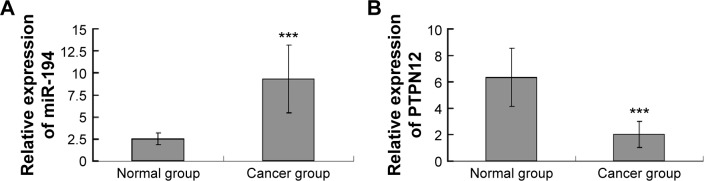
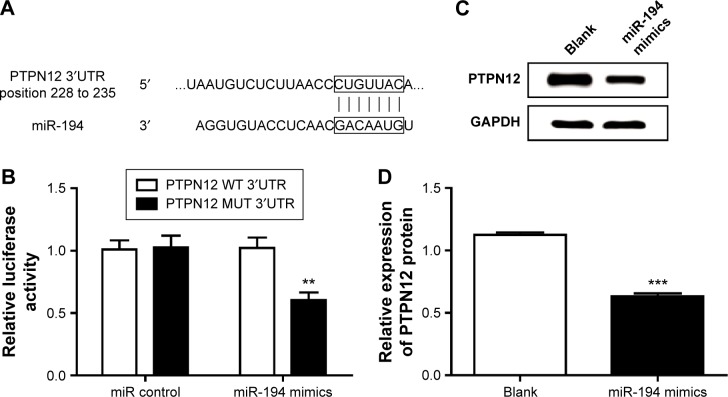
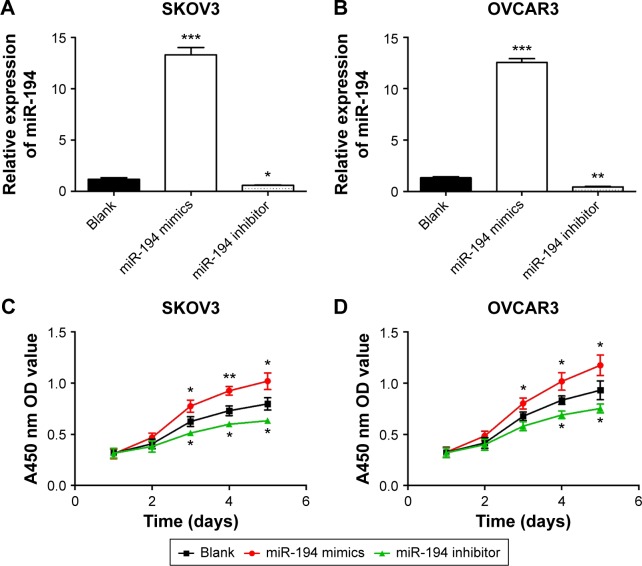
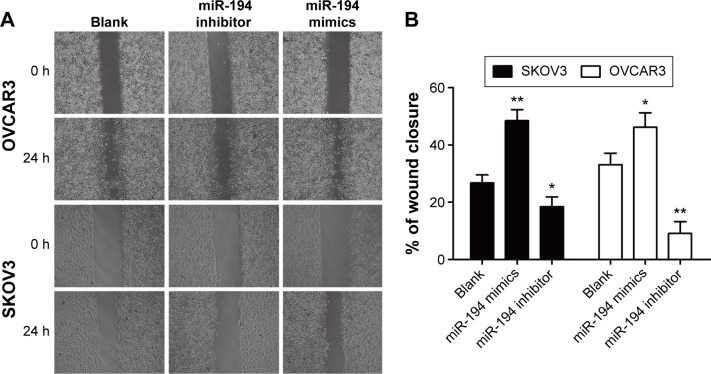
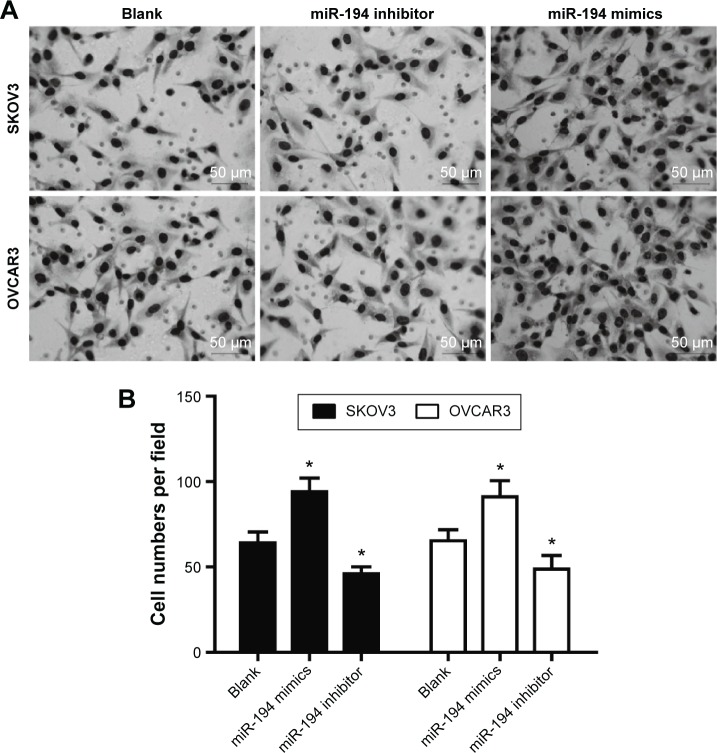
Ovarian carcinoma is the most lethal gynecologic malignancy among women. Ovarian cancer metastasis is the main reason for poor prognosis. MicroRNAs (miRNAs) have been shown to play an important role in tumorigenesis and metastasis in various cancers by affecting the expression of their targets. In this study, we explored the role of miR-194 in ovarian cancer. Real-time polymerase chain reaction assays showed that miR-194 was significantly upregulated in ovarian cancer tissues. Overexpression of miR-194 in ovarian cancer cells promotes cell proliferation, migration, and invasion; in contrast, inhibition of the expression of miR-194 has the opposite effects. Meanwhile, bioinformatics tools were used to identify protein tyrosine phosphatase nonreceptor type 12 (PTPN12) as a potential target of miR-194. The luciferase assay showed that miR-194 directly binds to the 3'-untranslated region of PTPN12. Western blot analysis and quantitative real-time polymerase chain reaction assay revealed that PTPN12 expression was negatively associated with miR-194 expression in both ovarian cancer tissues and cells. Thus, we conclude that miR-194 targets PTPN12 and functions as an oncogene in ovarian cancer cells. This novel pathway may provide a new insight to explain ovarian cancer development and metastasis.
卵巢癌是女性中最致命的妇科恶性肿瘤。卵巢癌转移是预后不良的主要原因。微小RNA(miRNA)已被证明通过影响其靶标的表达在各种癌症的肿瘤发生和转移中发挥重要作用。在本研究中,我们探讨了miR-194在卵巢癌中的作用。实时聚合酶链反应分析表明,miR-194在卵巢癌组织中显著上调。miR-194在卵巢癌细胞中的过表达促进细胞增殖、迁移和侵袭;相反,抑制miR-194的表达则产生相反的效果。同时,利用生物信息学工具鉴定蛋白酪氨酸磷酸酶非受体12型(PTPN12)为miR-194的潜在靶标。荧光素酶测定表明,miR-194直接与PTPN12的3'-非翻译区结合。蛋白质印迹分析和实时定量聚合酶链反应分析显示,在卵巢癌组织和细胞中,PTPN12的表达与miR-194的表达呈负相关。因此,我们得出结论,miR-194靶向PTPN12并在卵巢癌细胞中作为癌基因发挥作用。这一新途径可能为解释卵巢癌的发生和转移提供新的见解。