Striebel Maren, Schabhüttl Stefanie, Hodapp Dorothee, Hingsamer Peter, Hillebrand Helmut
Institute for Chemistry and Biology of the Marine Environment, University of Oldenburg, Schleusenstrasse 1, 26382, Wilhelmshaven, Germany.
Institute of Hydrobiology and Aquatic Ecosystem Management, University of Natural Resources and Life Sciences, Max Emanuel-Strasse 17, 1180, Vienna, Austria.
Oecologia. 2016 Nov;182(3):815-27. doi: 10.1007/s00442-016-3693-3. Epub 2016 Aug 4.
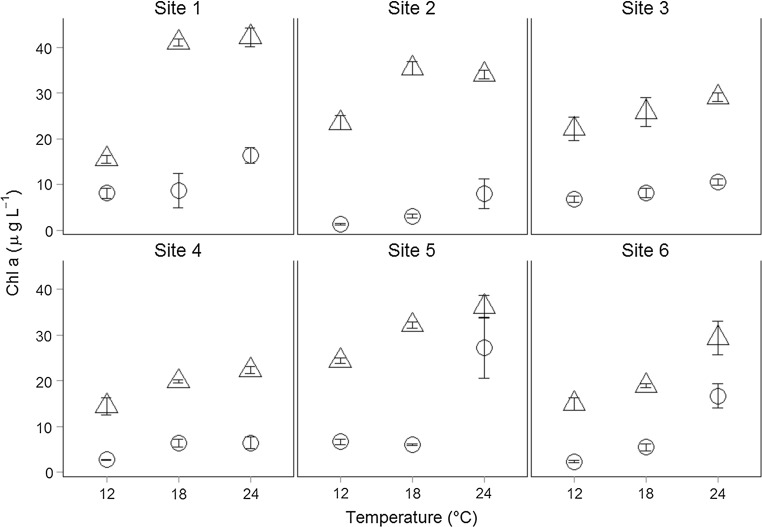
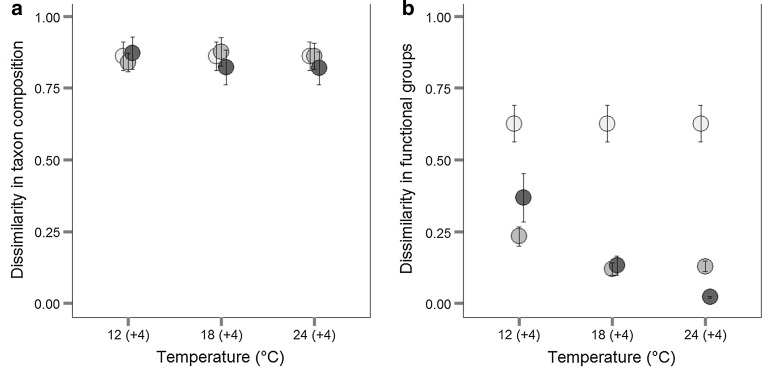
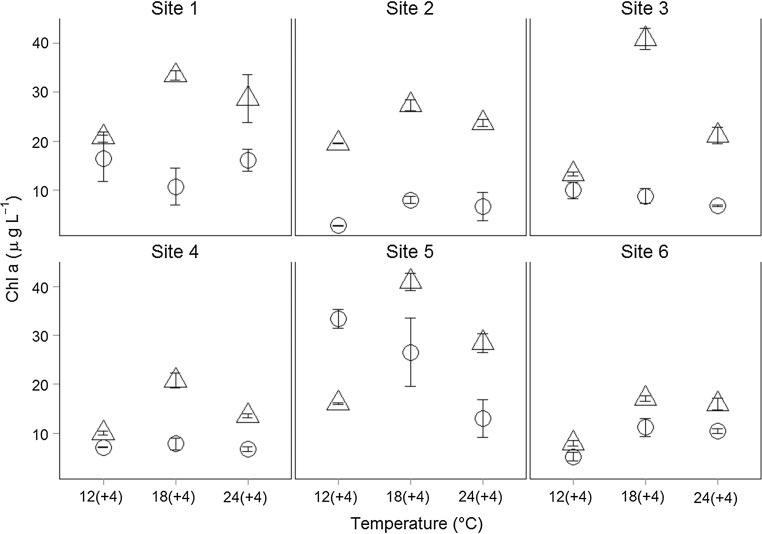
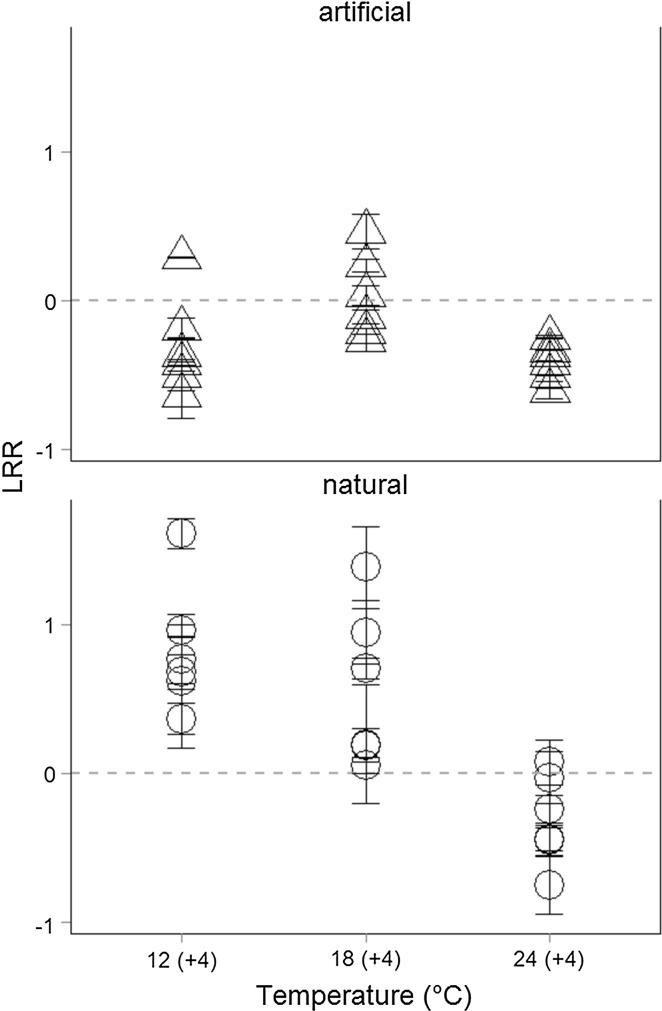
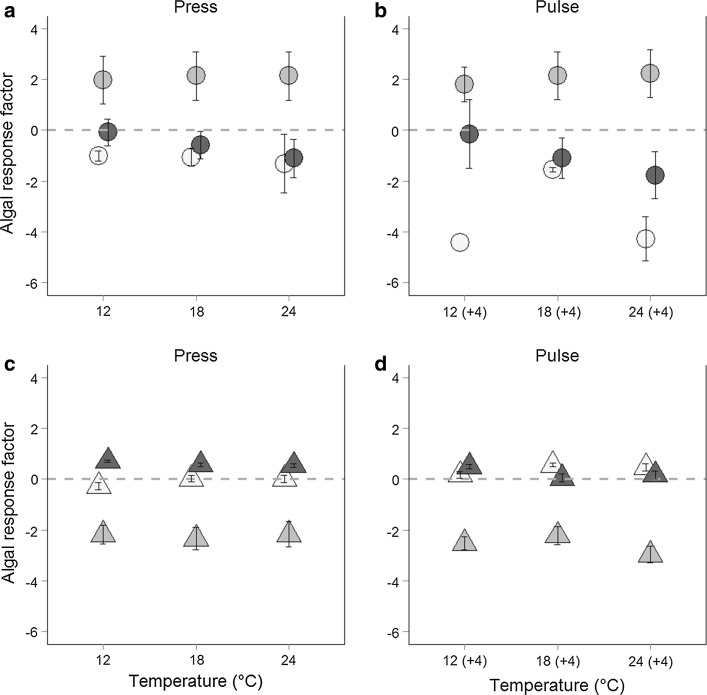
Effects of temperature changes on phytoplankton communities seem to be highly context-specific, but few studies have analyzed whether this context specificity depends on differences in the abiotic conditions or in species composition between studies. We present an experiment that allows disentangling the contribution of abiotic and biotic differences in shaping the response to two aspects of temperature change: permanent increase of mean temperature versus pulse disturbance in form of a heat wave. We used natural communities from six different sites of a floodplain system as well as artificially mixed communities from laboratory cultures and grew both, artificial and natural communities, in water from the six different floodplain lakes (sites). All 12 contexts (2 communities × 6 sites) were first exposed to three different temperature levels (12, 18, 24 °C, respectively) and afterward to temperature pulses (4 °C increase for 7 h day(-1)). Temperature-dependent changes in biomass and community composition depended on the initial composition of phytoplankton communities. Abiotic conditions had a major effect on biomass of phytoplankton communities exposed to different temperature conditions, however, the effect of biotic and abiotic conditions together was even more pronounced. Additionally, phytoplankton community responses to pulse temperature effects depended on the warming history. By disentangling abiotic and biotic effects, our study shows that temperature-dependent effects on phytoplankton communities depend on both, biotic and abiotic constraints.
温度变化对浮游植物群落的影响似乎具有高度的情境特异性,但很少有研究分析这种情境特异性是否取决于不同研究之间非生物条件或物种组成的差异。我们开展了一项实验,该实验能够厘清非生物和生物差异在塑造对温度变化两个方面的响应时所起的作用:平均温度的持续升高与热浪形式的脉冲干扰。我们使用了来自洪泛平原系统六个不同地点的自然群落以及实验室培养的人工混合群落,并在来自六个不同洪泛平原湖泊(地点)的水中培养人工群落和自然群落。所有12种情境(2种群落×6个地点)首先暴露于三种不同的温度水平(分别为12、18、24°C),然后再暴露于温度脉冲(每天7小时升高4°C)。浮游植物生物量和群落组成的温度依赖性变化取决于浮游植物群落的初始组成。非生物条件对暴露于不同温度条件下的浮游植物群落生物量有重大影响,然而,生物和非生物条件共同作用的影响更为显著。此外,浮游植物群落对脉冲温度效应的响应取决于升温历史。通过厘清非生物和生物效应,我们的研究表明,温度对浮游植物群落的影响取决于生物和非生物限制因素。