Lewandowski L B, Schanberg L E, Thielman N, Phuti A, Kalla A A, Okpechi I, Nourse P, Gajjar P, Faller G, Ambaram P, Reuter H, Spittal G, Scott C
1 Pediatric Rheumatology, Duke University Medical Center, USA.
2 Duke Hubert Yeargan Global Health, Duke University Medical Center, USA.
Lupus. 2017 Feb;26(2):186-194. doi: 10.1177/0961203316660625. Epub 2016 Aug 19.
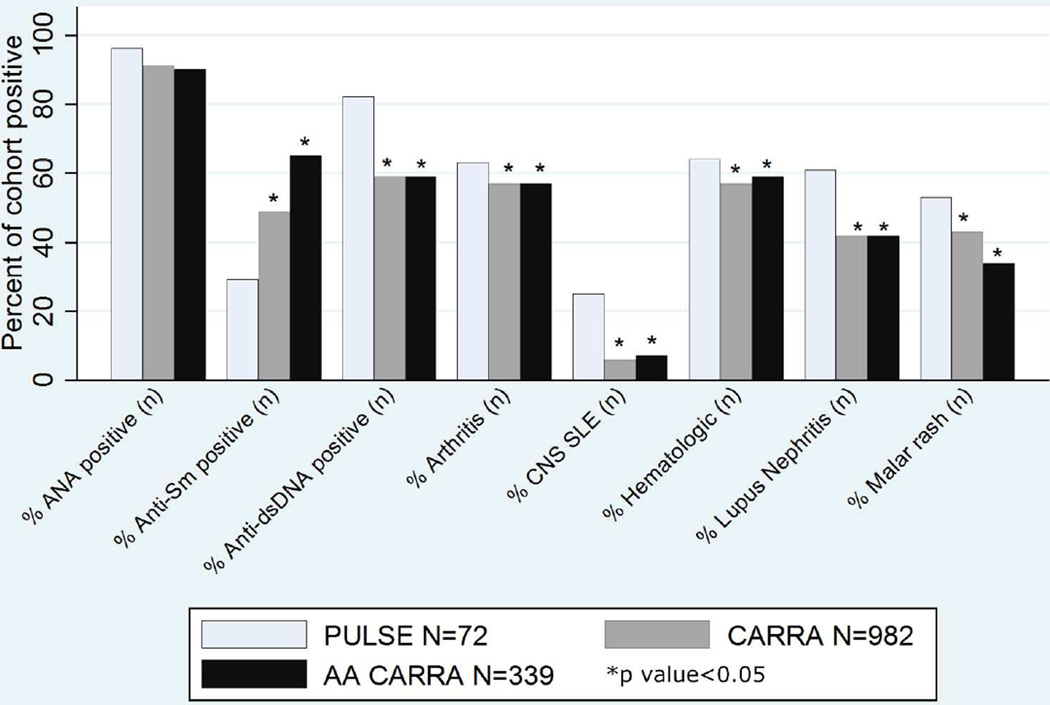
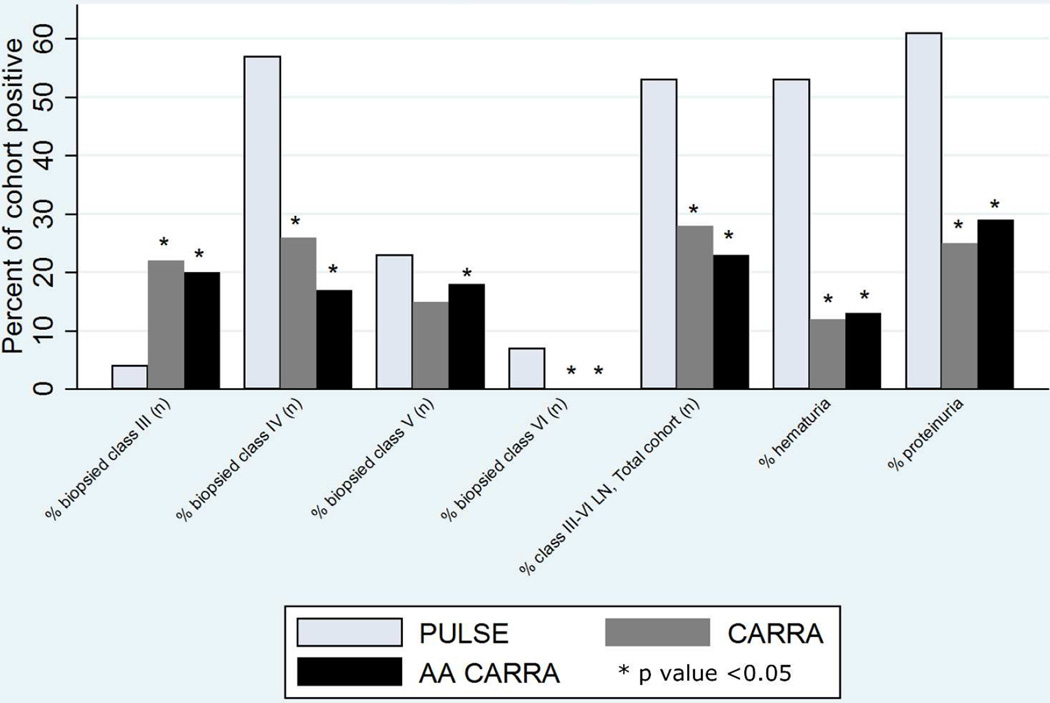
Background Systemic lupus erythematosus (SLE) is a life-threatening multisystem autoimmune disease that is more severe in patients of African ancestry and children, yet pediatric SLE on the African continent has been understudied. This study describes a cohort of pediatric SLE (PULSE) patients in South Africa. Methods Patients with a diagnosis of SLE (1997 American College of Rheumatology criteria) diagnosed prior to age 19 years in Cape Town, South Africa, were enrolled in this cross-sectional study from September 2013 to December 2014. Information on clinical and serological characteristics was extracted from medical records. Results were compared to a well-described North American pediatric SLE cohort. Results Seventy-two South African patients were enrolled in the study; mean age 11.5 years; 82% were girls. The racial distribution was 68% Coloured, 24% Black, 5% White and 3% Asian/Indian. Most patients presented with severe lupus nephritis documented by renal biopsy (61%). Of patients with lupus nephritis, 63% presented with International Society of Nephrology/Renal Pathology Society class III or IV. Patients in the PULSE cohort were more likely to be treated with cyclophosphamide, methotrexate and azathioprine. The PULSE cohort had high disease activity at diagnosis (mean Systemic Lupus Erythematosus Disease Activity Index-2K (SLEDAI-2K) 20.6). The SLEDAI-2K at enrolment in the PULSE cohort (5.0) did not differ from the North American pediatric SLE cohort (4.8). Sixty-three per cent of the PULSE cohort had end organ damage with Systemic Lupus International Collaborating Clinics Damage Index (SLICC-DI) score >0 (mean SLICC-DI 1.9), compared to 23% in a previously reported US cohort. Within the PULSE cohort, nine (13%) developed end-stage renal disease with six (8%) requiring transplant, strikingly higher than North American peers (transplant rate <1%). Conclusions The PULSE cohort had highly active multiorgan disease at diagnosis and significant disease damage at enrolment in the South African registry. South African patients have severe lupus nephritis and poor renal outcomes compared to North American peers. Our study revealed a severe disease phenotype in the PULSE cohort resulting in poor outcomes in this high-risk population.
系统性红斑狼疮(SLE)是一种危及生命的多系统自身免疫性疾病,在非洲裔患者和儿童中更为严重,但非洲大陆的儿童SLE研究较少。本研究描述了南非一组儿童SLE(PULSE)患者。方法:在南非开普敦,对1997年美国风湿病学会标准诊断为SLE且年龄在19岁之前的患者,于2013年9月至2014年12月纳入本横断面研究。从病历中提取临床和血清学特征信息。将结果与详细描述的北美儿童SLE队列进行比较。结果:72名南非患者纳入研究;平均年龄11.5岁;82%为女孩。种族分布为68%有色人种、24%黑人、5%白人、3%亚洲/印度人。大多数患者经肾活检证实有严重狼疮性肾炎(61%)。狼疮性肾炎患者中,63%表现为国际肾脏病学会/肾脏病理学会III或IV级。PULSE队列中的患者更可能接受环磷酰胺、甲氨蝶呤和硫唑嘌呤治疗。PULSE队列在诊断时疾病活动度高(平均系统性红斑狼疮疾病活动指数-2K(SLEDAI-2K)为20.6)。PULSE队列入组时的SLEDAI-2K(5.0)与北美儿童SLE队列(4.8)无差异。PULSE队列中63%的患者有终末器官损害,系统性红斑狼疮国际协作诊所损伤指数(SLICC-DI)评分>0(平均SLICC-DI为1.9),而之前报道的美国队列中这一比例为23%。在PULSE队列中,9名(13%)患者发展为终末期肾病,6名(8%)需要进行移植,显著高于北美同龄人(移植率<1%)。结论:PULSE队列在诊断时多器官疾病高度活跃,在南非登记时疾病损害严重。与北美同龄人相比,南非患者有严重的狼疮性肾炎且肾脏预后较差。我们的研究揭示了PULSE队列中的严重疾病表型,导致这一高危人群预后不良。