He Jun-Jun, Ma Jun, Elsheikha Hany M, Song Hui-Qun, Huang Si-Yang, Zhu Xing-Quan
State Key Laboratory of Veterinary Etiological Biology, Key Laboratory of Veterinary Parasitology of Gansu Province, Lanzhou Veterinary Research Institute, Chinese Academy of Agricultural Sciences, Lanzhou, Gansu Province, 730046, People's Republic of China.
College of Veterinary Medicine, Hunan Agricultural University, Changsha, Hunan Province, 410128, People's Republic of China.
Parasit Vectors. 2016 Aug 3;9(1):427. doi: 10.1186/s13071-016-1716-x.
Toxoplasma gondii is a worldwide spread pathogen which can infect all tissues of its host. The transcriptomic responses of infected brain and spleen have been reported. However, our knowledge of the global transcriptomic change in infected liver is limited. Additionally, T. gondii infection represents a highly dynamic process involving complex biological responses of the host at many levels. Herein, we describe such processes at a global level by discovering gene expression changes in mouse livers after acute infection with T. gondii ToxoDB#9 strain.
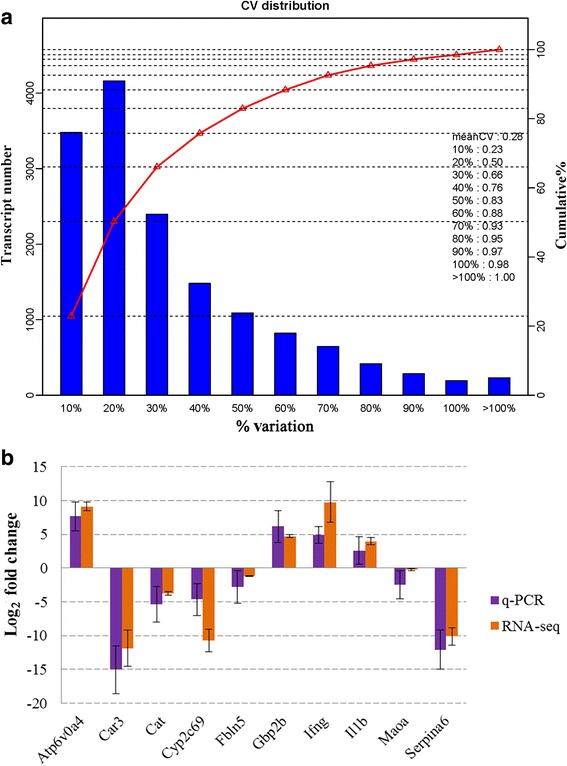
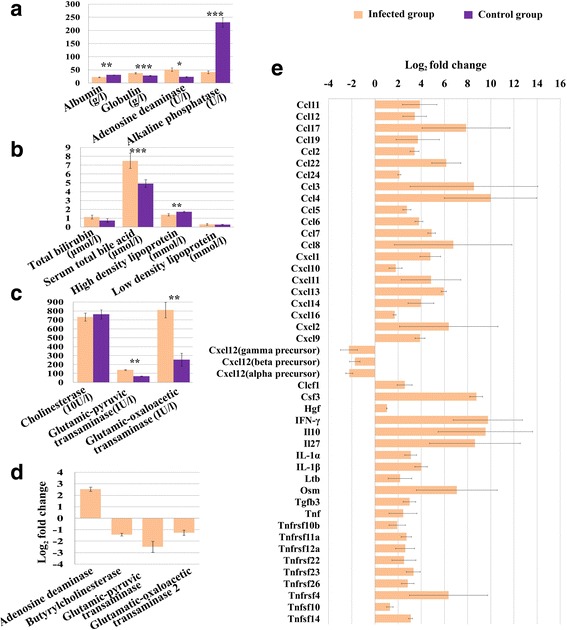
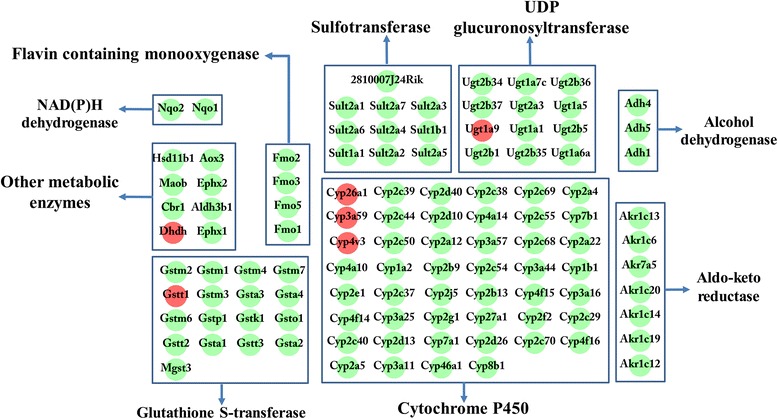
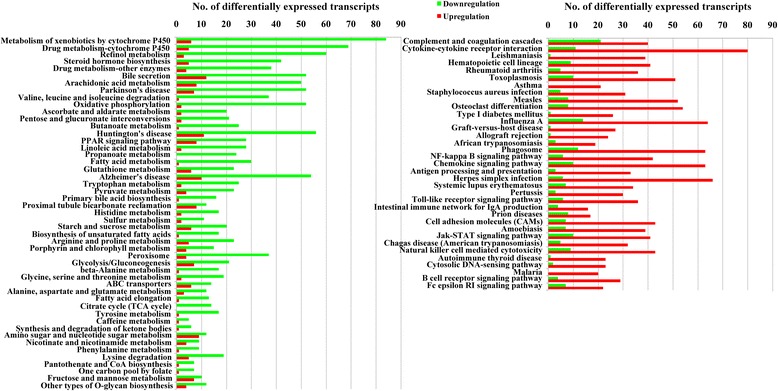
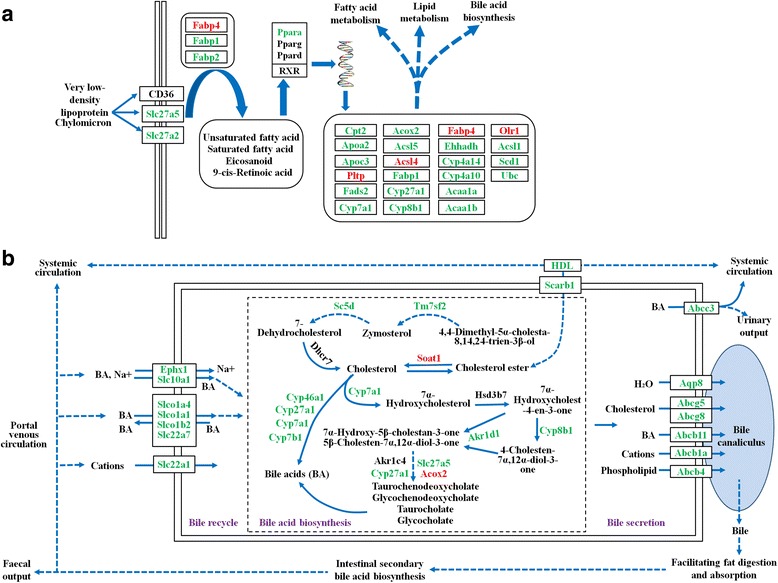
Global transcriptomic analysis identified 2,758 differentially expressed transcripts in infected liver, of which 1,356 were significantly downregulated and 1,402 upregulated. GO and KEGG database analyses showed that host immune responses were upregulated, while the metabolic-related processes/pathways were downregulated, especially xenobiotic metabolism, fatty acid metabolism, energy metabolism, and bile biosynthesis and secretion. The metabolism of more than 800 chemical compounds including anti-Toxoplasma prescribed medicines were predicted to be modulated during acute T. gondii infection due to the downregulation of enzymes involved in xenobiotic metabolism.
To the best of our knowledge, this is the first global transcriptomic analysis of mouse liver infected by T. gondii. The present data indicate that during the early stage of liver infection, T. gondii can induce changes in liver xenobiotic metabolism, upregulating inflammatory response and downregulating hepatocellular PPAR signaling pathway, altering host bile biosynthesis and secretion pathway; these changes could enhance host intestinal dysbacteriosis and thus contribute to the pathological changes of both liver and intestine of infected mice. These findings describe the biological changes in infected liver, providing a potential mechanistic pathway that links hepatic and intestinal pathologies to T. gondii infection.
刚地弓形虫是一种在全球范围内传播的病原体,可感染其宿主的所有组织。已报道了受感染大脑和脾脏的转录组反应。然而,我们对受感染肝脏中全球转录组变化的了解有限。此外,弓形虫感染是一个高度动态的过程,涉及宿主在多个层面的复杂生物学反应。在此,我们通过发现小鼠肝脏在急性感染弓形虫ToxoDB#9株后的基因表达变化,在全球层面描述了此类过程。
全球转录组分析确定了受感染肝脏中2758个差异表达的转录本,其中1356个显著下调,1402个上调。基因本体(GO)和京都基因与基因组百科全书(KEGG)数据库分析表明,宿主免疫反应上调,而代谢相关过程/途径下调,尤其是外源性物质代谢、脂肪酸代谢、能量代谢以及胆汁生物合成和分泌。由于外源性物质代谢中涉及的酶下调,预计在急性弓形虫感染期间,包括抗弓形虫处方药在内的800多种化合物的代谢会受到调节。
据我们所知,这是首次对受弓形虫感染的小鼠肝脏进行全球转录组分析。目前的数据表明,在肝脏感染的早期阶段,弓形虫可诱导肝脏外源性物质代谢发生变化,上调炎症反应并下调肝细胞过氧化物酶体增殖物激活受体(PPAR)信号通路,改变宿主胆汁生物合成和分泌途径;这些变化可能会加剧宿主肠道菌群失调,从而导致受感染小鼠肝脏和肠道的病理变化。这些发现描述了受感染肝脏中的生物学变化,提供了一条将肝脏和肠道病理与弓形虫感染联系起来的潜在机制途径。