Bronger Holger, Singer Judith, Windmüller Claudia, Reuning Ute, Zech Daniela, Delbridge Claire, Dorn Julia, Kiechle Marion, Schmalfeldt Barbara, Schmitt Manfred, Avril Stefanie
Department of Gynecology and Obstetrics, Klinikum rechts der Isar, Technical University of Munich, Ismaninger Straße 22, 81675 Munich, Germany.
Department of Pathology, Technical University of Munich, Ismaninger Straße 22, 81675 Munich, Germany.
Br J Cancer. 2016 Aug 23;115(5):553-63. doi: 10.1038/bjc.2016.172. Epub 2016 Aug 4.
Tumour-infiltrating lymphocytes (TILs) are associated with improved survival in several epithelial cancers. The two chemokines CXCL9 and CXCL10 facilitate chemotactic recruitment of TILs, and their intratumoral accumulation is a conceivable way to improve TIL-dependent immune intervention in cancer. However, the prognostic impact of CXCL9 and CXCL10 in high-grade serous ovarian cancer (HGSC) is largely unknown.
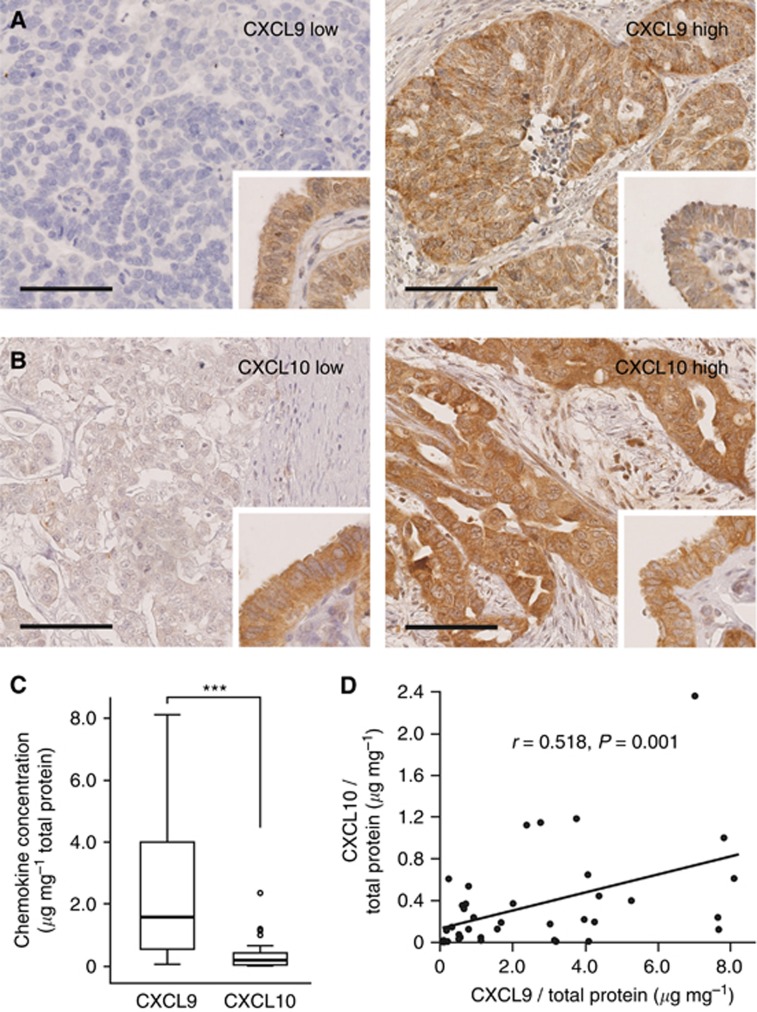
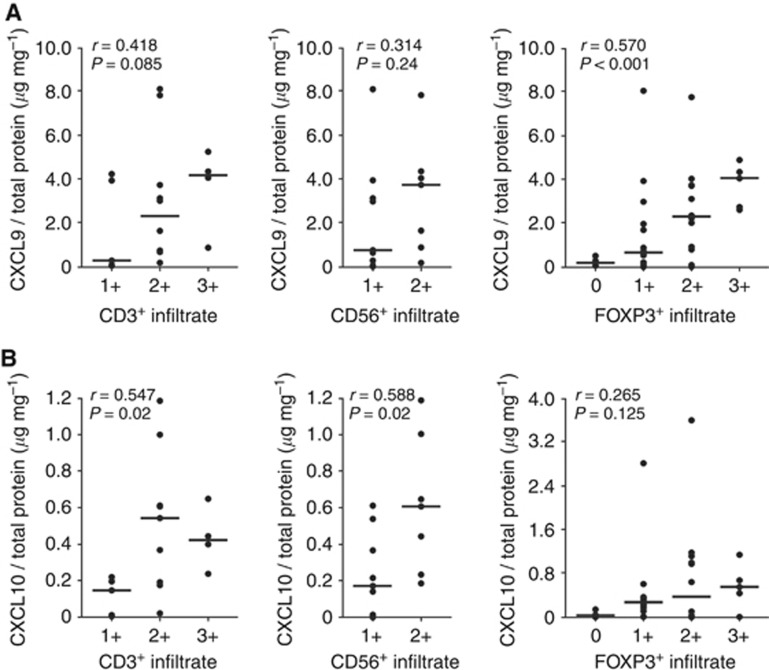
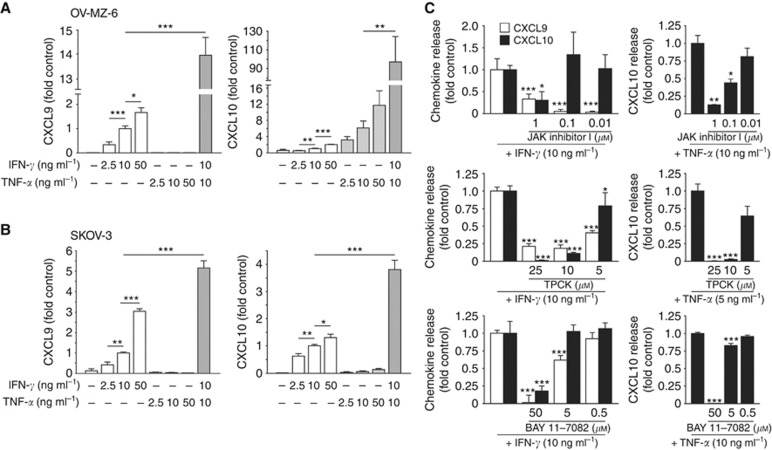
One hundred and eighty four cases of HGSC were immunohistochemically analyzed for CXCL9, CXCL10. TILs were assessed using CD3, CD56 and FOXP3 staining. Chemokine regulation was investigated using the ovarian cancer cell lines OV-MZ-6 and SKOV-3.
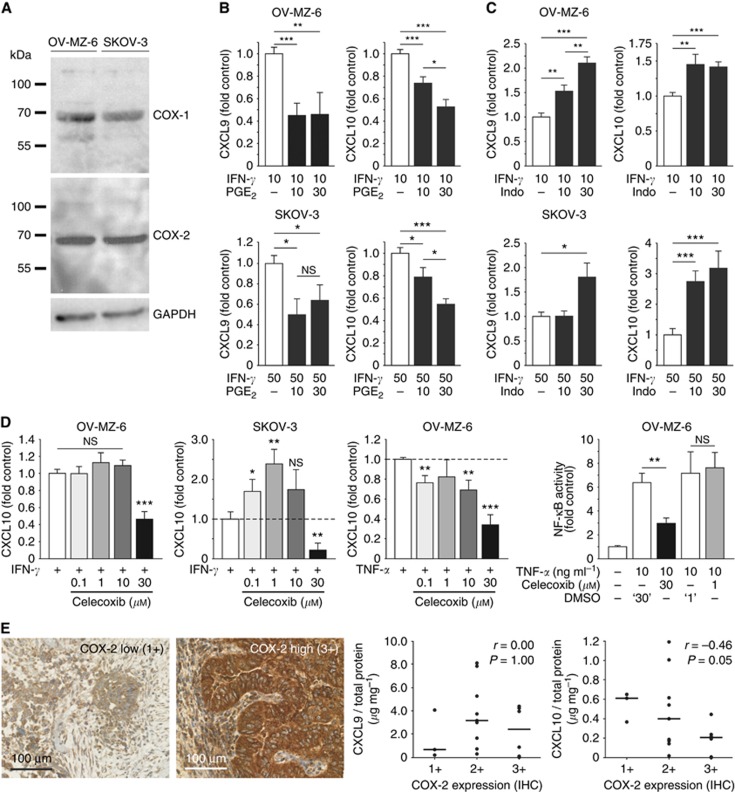
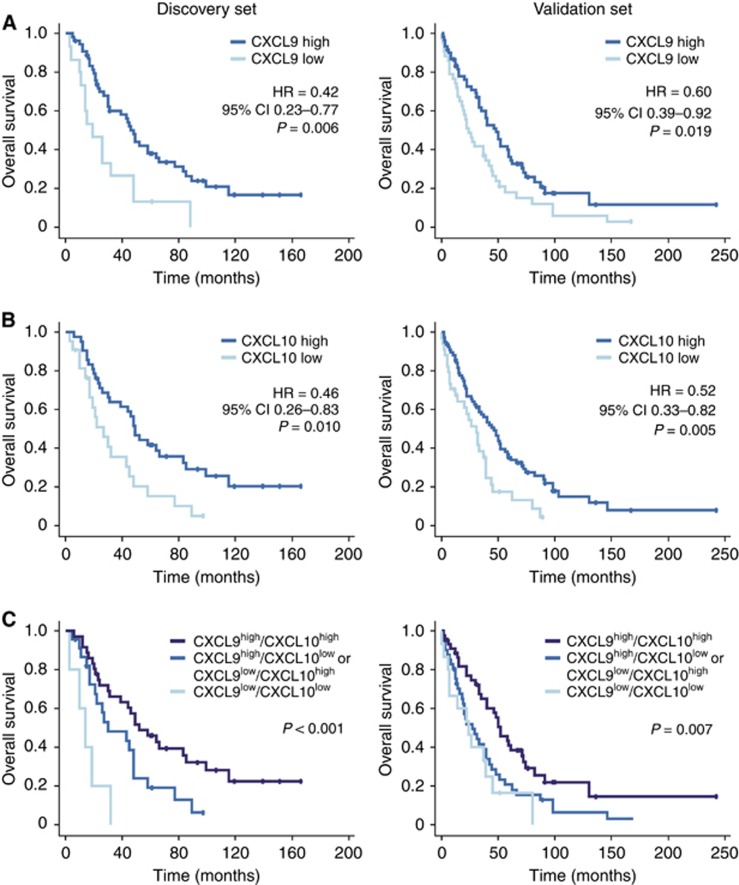
High expression of CXCL9 and CXCL10 was associated with an approximately doubled overall survival (n=70, CXCL9: HR 0.41; P=0.006; CXCL10: HR 0.46; P=0.010) which was confirmed in an independent validation set (n=114; CXCL9: HR 0.60; P=0.019; CXCL10: HR 0.52; P=0.005). Expression of CXCR3 ligands significantly correlated with TILs. In human ovarian cancer cell lines the cyclooxygenase (COX) metabolite Prostaglandin E2 was identified as negative regulator of chemokine secretion, whereas COX inhibition by indomethacin significantly upregulated CXCL9 and CXCL10. In contrast, celecoxib, the only COX inhibitor prospectively evaluated for therapy of ovarian cancer, suppressed NF-κB activation and inhibited chemokine release.
Our results support the notion that CXCL9 and CXCL10 exert tumour-suppressive function by TIL recruitment in human ovarian cancer. COX inhibition by indomethacin, not by celecoxib, may be a promising approach to concomitantly improve immunotherapies.
肿瘤浸润淋巴细胞(TILs)与多种上皮癌患者生存率的提高相关。两种趋化因子CXCL9和CXCL10促进TILs的趋化募集,其在肿瘤内的蓄积是改善癌症中TIL依赖的免疫干预的一种可行方式。然而,CXCL9和CXCL10在高级别浆液性卵巢癌(HGSC)中的预后影响在很大程度上尚不清楚。
对184例HGSC病例进行CXCL9、CXCL10的免疫组织化学分析。使用CD3、CD56和FOXP3染色评估TILs。利用卵巢癌细胞系OV-MZ-6和SKOV-3研究趋化因子调节。
CXCL9和CXCL10的高表达与总生存期延长约一倍相关(n = 70,CXCL9:风险比0.41;P = 0.006;CXCL10:风险比0.46;P = 0.010),这在一个独立验证组中得到证实(n = 114;CXCL9:风险比0.60;P = 0.019;CXCL10:风险比0.52;P = 0.005)。CXCR3配体的表达与TILs显著相关。在人卵巢癌细胞系中,环氧化酶(COX)代谢产物前列腺素E2被确定为趋化因子分泌的负调节因子,而吲哚美辛对COX的抑制显著上调CXCL9和CXCL10。相比之下,塞来昔布是唯一一种经前瞻性评估用于卵巢癌治疗的COX抑制剂,它抑制NF-κB活化并抑制趋化因子释放。
我们的结果支持以下观点,即CXCL9和CXCL10通过在人卵巢癌中募集TIL发挥肿瘤抑制功能。吲哚美辛而非塞来昔布对COX的抑制可能是一种同时改善免疫治疗的有前景的方法。