McKenzie Karen, Maclean Michelle, Grant M Helen, Ramakrishnan Praveen, MacGregor Scott J, Anderson John G
Robertson Trust Laboratory for Electronic Sterilisation Technologies (ROLEST), University of Strathclyde, 204 George Street, Glasgow, Scotland G1 1XW, UK.
Department of Biomedical Engineering, University of Strathclyde, Wolfson Centre, 106 Rottenrow, Glasgow, Scotland G4 0NW, UK.
Microbiology (Reading). 2016 Sep;162(9):1680-1688. doi: 10.1099/mic.0.000350. Epub 2016 Aug 5.
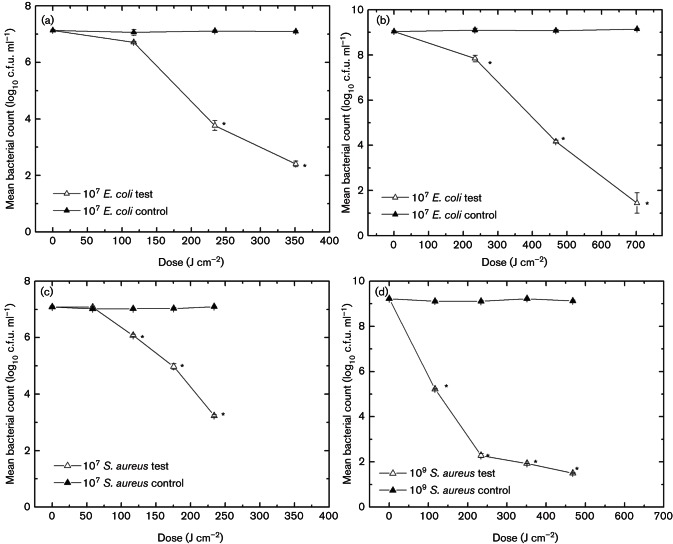
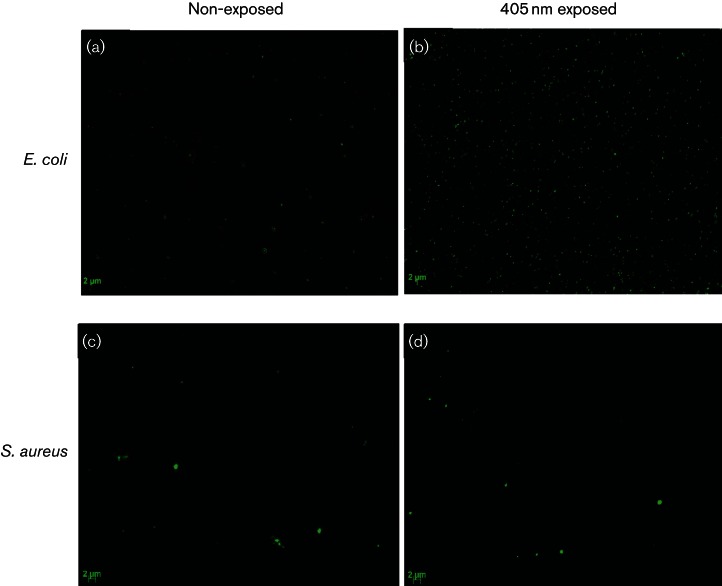
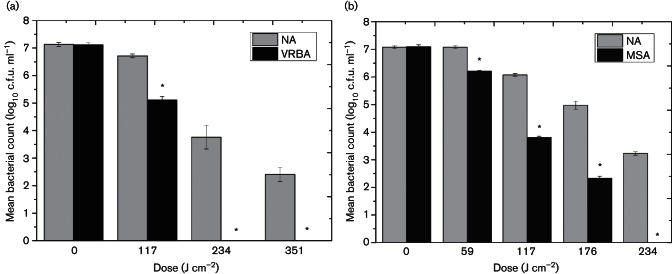
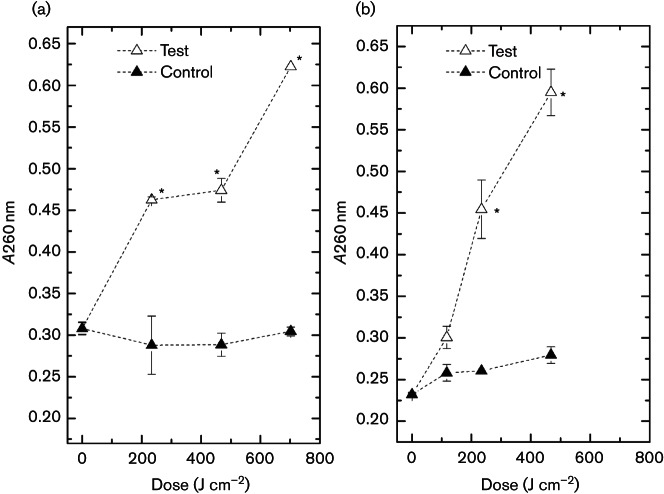
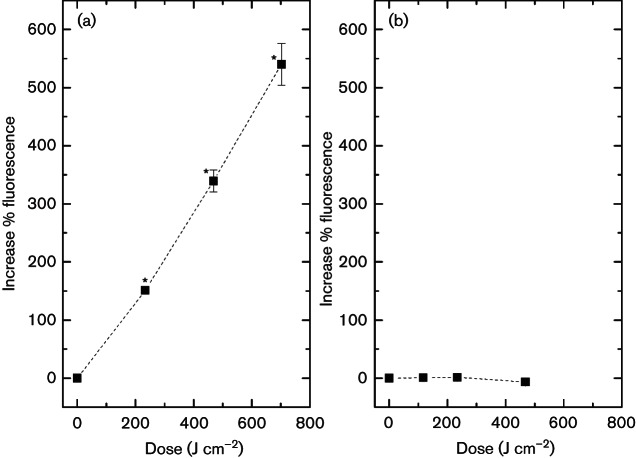
Bacterial inactivation by 405 nm light is accredited to the photoexcitation of intracellular porphyrin molecules resulting in energy transfer and the generation of reactive oxygen species that impart cellular oxidative damage. The specific mechanism of cellular damage, however, is not fully understood. Previous work has suggested that destruction of nucleic acids may be responsible for inactivation; however, microscopic imaging has suggested membrane damage as a major constituent of cellular inactivation. This study investigates the membrane integrity of Escherichia coli and Staphylococcus aureus exposed to 405 nm light. Results indicated membrane damage to both species, with loss of salt and bile tolerance by S. aureus and E. coli, respectively, consistent with reduced membrane integrity. Increased nucleic acid release was also demonstrated in 405 nm light-exposed cells, with up to 50 % increase in DNA concentration into the extracellular media in the case of both organisms. SYTOX green fluorometric analysis, however, demonstrated contradictory results between the two test species. With E. coli, increasing permeation of SYTOX green was observed following increased exposure, with >500 % increase in fluorescence, whereas no increase was observed with S. aureus. Overall, this study has provided good evidence that 405 nm light exposure causes loss of bacterial membrane integrity in E. coli, but the results with S. aureus are more difficult to explain. Further work is required to gain greater understanding of the inactivation mechanism in different bacterial species, as there are likely to be other targets within the cell that are also impaired by the oxidative damage from photo-generated reactive oxygen species.
405纳米光对细菌的灭活作用归因于细胞内卟啉分子的光激发,从而导致能量转移和活性氧的产生,进而造成细胞氧化损伤。然而,细胞损伤的具体机制尚未完全明确。此前的研究表明,核酸的破坏可能是导致细菌灭活的原因;然而,显微镜成像显示,膜损伤是细胞灭活的主要因素。本研究调查了暴露于405纳米光下的大肠杆菌和金黄色葡萄球菌的膜完整性。结果表明,两种细菌均出现了膜损伤,金黄色葡萄球菌和大肠杆菌分别丧失了对盐和胆汁的耐受性,这与膜完整性降低相一致。在暴露于405纳米光的细胞中,核酸释放也有所增加,两种细菌的细胞外培养基中的DNA浓度均增加了50%。然而,SYTOX green荧光分析显示,两种受试细菌的结果相互矛盾。对于大肠杆菌,随着光照时间的增加,SYTOX green的渗透率增加,荧光增加了500%以上,而金黄色葡萄球菌则未观察到荧光增加。总体而言,本研究提供了充分的证据,证明暴露于405纳米光会导致大肠杆菌的细菌膜完整性丧失,但金黄色葡萄球菌的结果更难解释。需要进一步开展研究,以更深入地了解不同细菌物种的灭活机制,因为细胞内可能还有其他靶点也会受到光生成的活性氧的氧化损伤。