Chen Yang, Liu Weishuai, Wang Peng, Hou Hailing, Liu Ningbo, Gong Linlin, Wang Youyou, Ji Kai, Zhao Lujun, Wang Ping
Department of Radiation Oncology, Center of Cancer, Key Laboratory of Cancer Prevention and Therapy, Tianjin 300060, China.
Department of Pain Management, Tianjin Medical University Cancer Institute and Hospital, National Clinical Research, Center of Cancer, Key Laboratory of Cancer Prevention and Therapy, Tianjin 300060, China.
Oncotarget. 2016 Nov 1;7(44):71341-71352. doi: 10.18632/oncotarget.11217.
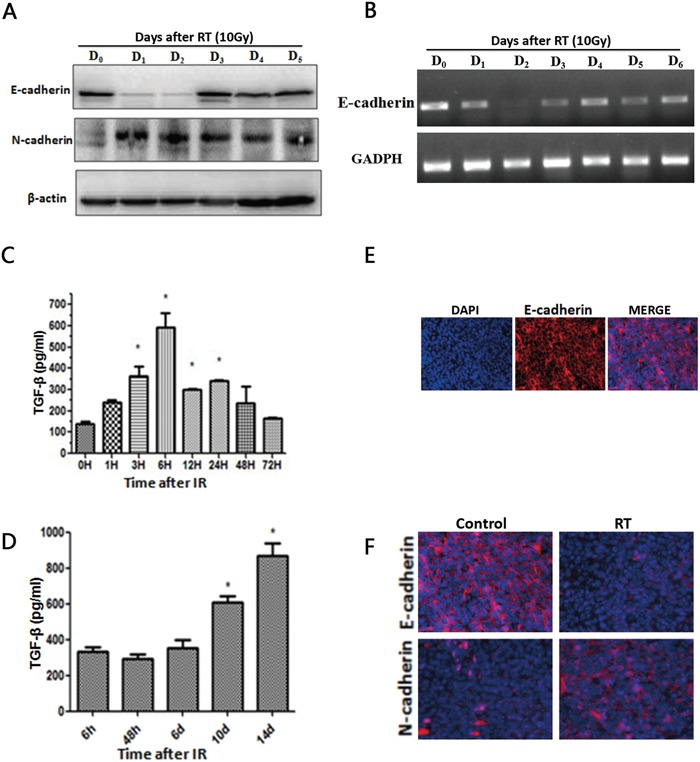
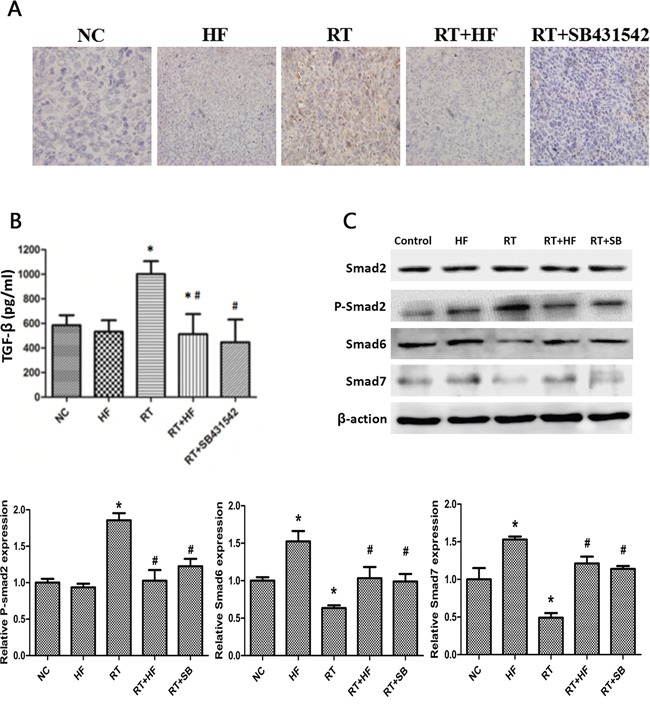
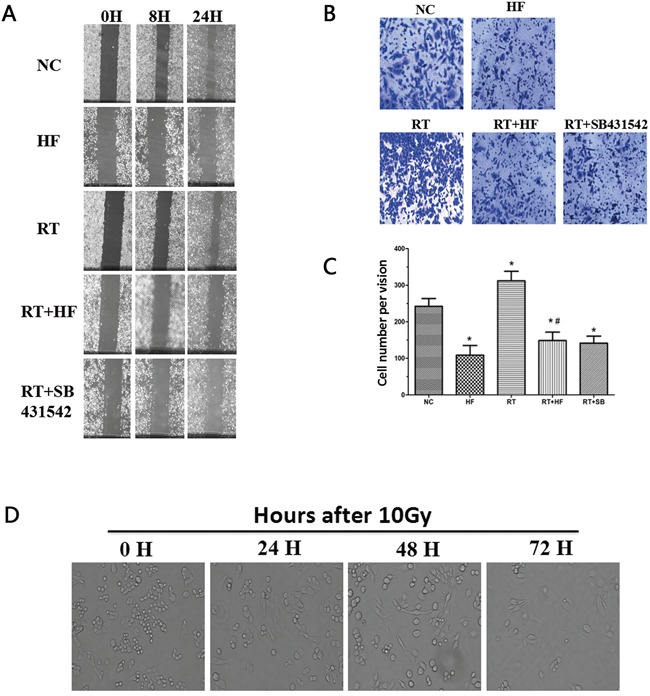
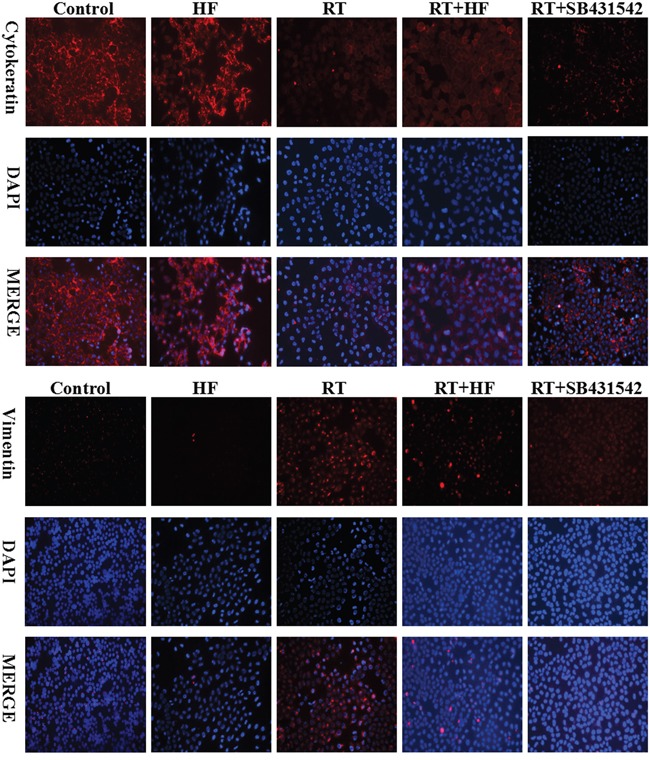
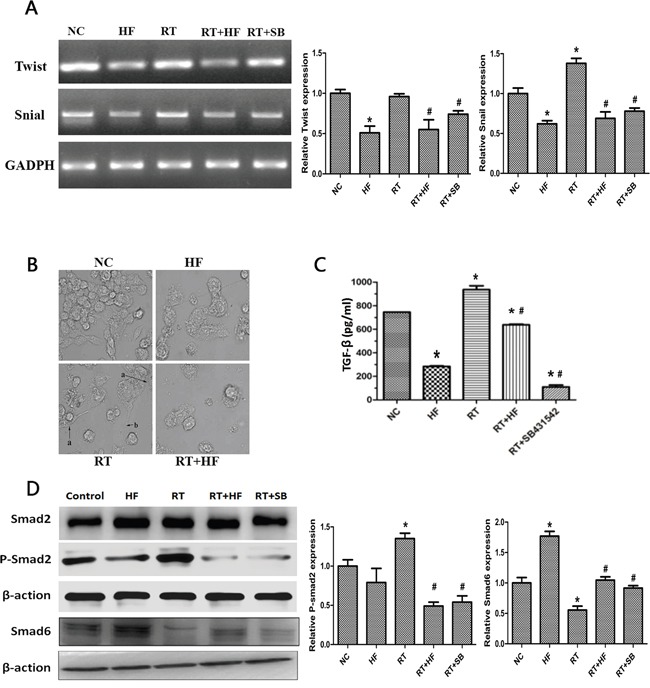
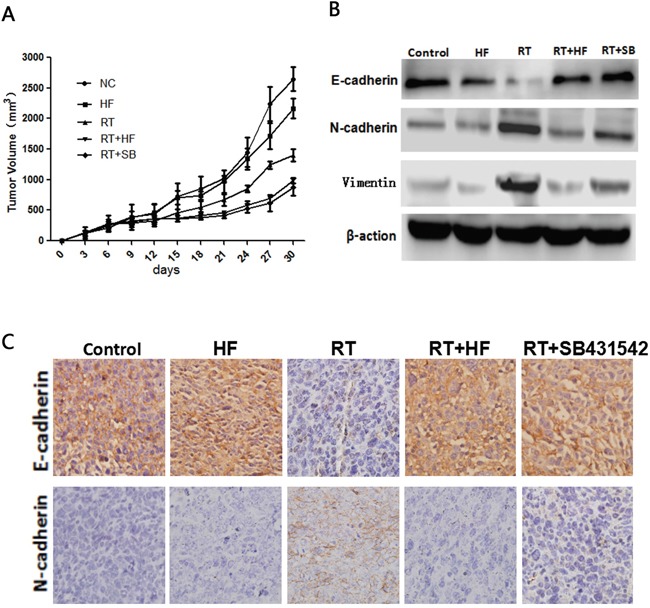
Radiotherapy is used to treat many different human tumors. Paradoxically, radiation can activate TGF-β1 signaling and induce the epithelial-mesenchymal transition (EMT), which is associated with enhanced tumor progression. This study investigated the inhibitory effects of halofuginone, a plant-derived alkaloid that has been shown to inhibit TGF-β1 signaling, on radiation-induced EMT and explored the underlying mechanisms using a Lewis lung carcinoma (LLC) xenograft model. The cells and animals were divided into five treatment groups: Normal Control (NC), Halofuginone alone (HF), Radiotherapy alone (RT), Radiotherapy combined with Halofuginone (RT+HF), and Radiotherapy combined with the TGF-β1 inhibitor SB431542 (RT+SB). Radiation induced EMT in lung cancer cells and xenografts, as evidenced by increased expression of the mesenchymal markers N-cadherin and Vimentin, and reduced expression of the epithelial markers E-cadherin and Cytokeratin. Further, radiotherapy treatment increased the migration and invasion of LLC cells. Halofuginone reversed the EMT induced by radiotherapy in vitro and in vivo, and inhibited the migration and invasion of LLC cells. In addition, TGF-β1/Smad signaling was activated by radiotherapy and the mRNA expression of Twist and Snail was elevated; this effect was reversed by halofuginone or the TGF-β1 inhibitor SB431542. Our results demonstrate that halofuginone inhibits radiation-induced EMT, and suggest that suppression of TGF-β1 signaling may be responsible for this effect.
放射疗法用于治疗多种不同的人类肿瘤。矛盾的是,辐射可激活转化生长因子-β1(TGF-β1)信号传导并诱导上皮-间质转化(EMT),这与肿瘤进展增强相关。本研究调查了已被证明可抑制TGF-β1信号传导的植物源生物碱常山酮对辐射诱导的EMT的抑制作用,并使用刘易斯肺癌(LLC)异种移植模型探索其潜在机制。将细胞和动物分为五个治疗组:正常对照(NC)、单独使用常山酮(HF)、单独放疗(RT)、放疗联合常山酮(RT+HF)以及放疗联合TGF-β1抑制剂SB431542(RT+SB)。辐射诱导肺癌细胞和异种移植中的EMT,表现为间质标志物N-钙黏蛋白和波形蛋白的表达增加,以及上皮标志物E-钙黏蛋白和细胞角蛋白的表达降低。此外,放疗增加了LLC细胞的迁移和侵袭。常山酮在体外和体内逆转了放疗诱导的EMT,并抑制了LLC细胞的迁移和侵袭。此外,放疗激活了TGF-β1/Smad信号传导,Twist和Snail的mRNA表达升高;这种作用被常山酮或TGF-β1抑制剂SB431542逆转。我们的结果表明,常山酮抑制辐射诱导的EMT,并提示抑制TGF-β1信号传导可能是造成这种作用的原因。