Gao Shan, Park Byung M, Cha Seung A, Bae Ui J, Park Byung H, Park Woo H, Kim Suhn H
Department of Physiology, Chonbuk National University Medical School, Jeonju, Korea Department of Pharmacology, Taishan Medical University, Shandong, China.
Department of Physiology, Chonbuk National University Medical School, Jeonju, Korea.
Physiol Rep. 2016 Aug;4(16). doi: 10.14814/phy2.12900.
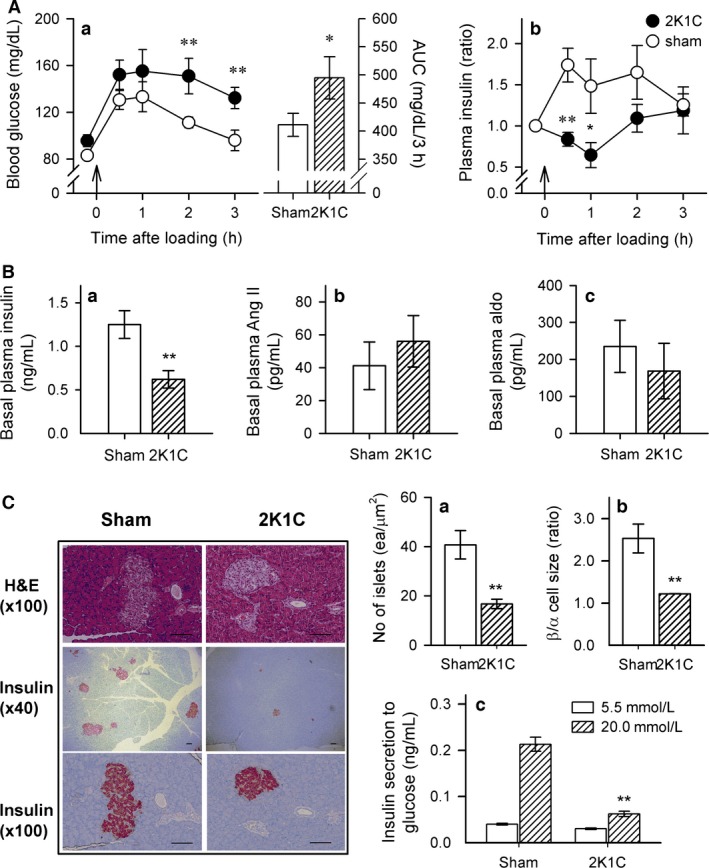
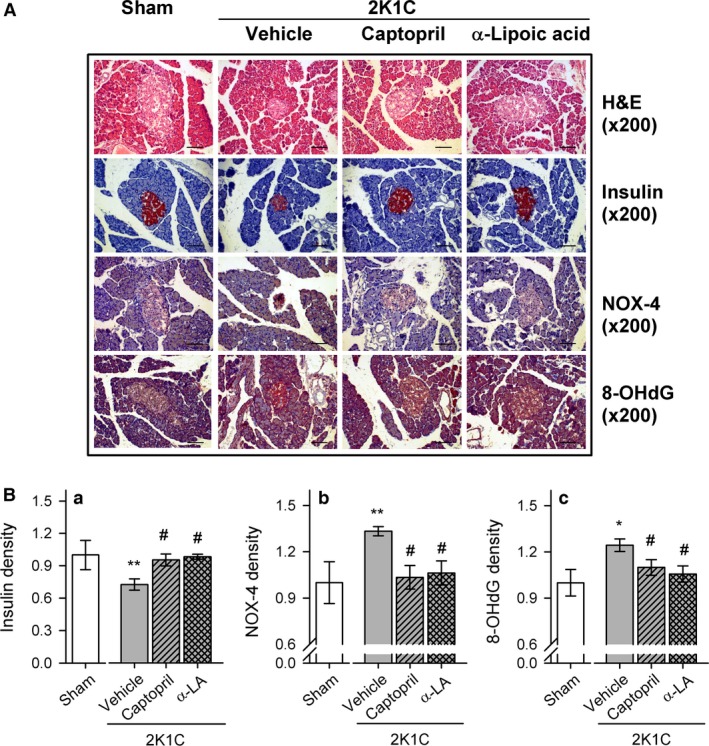
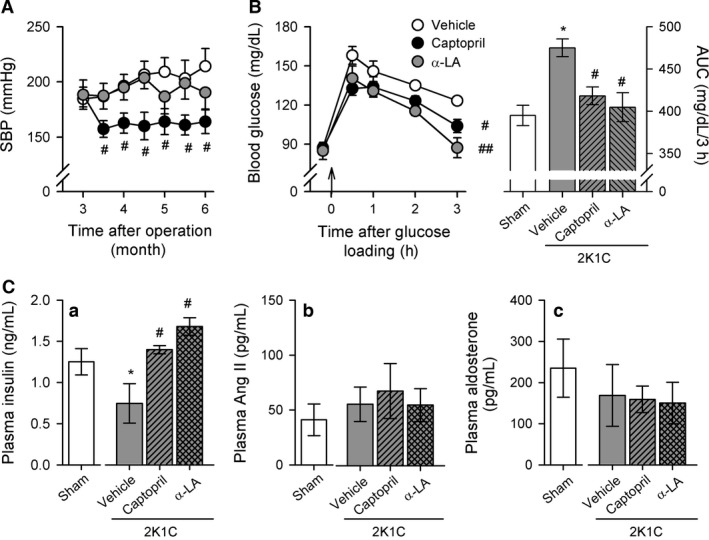
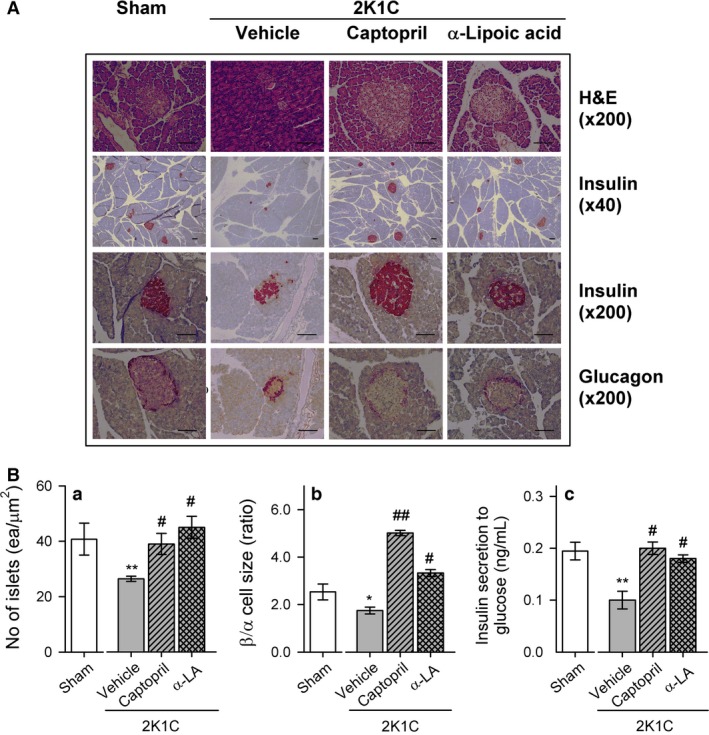
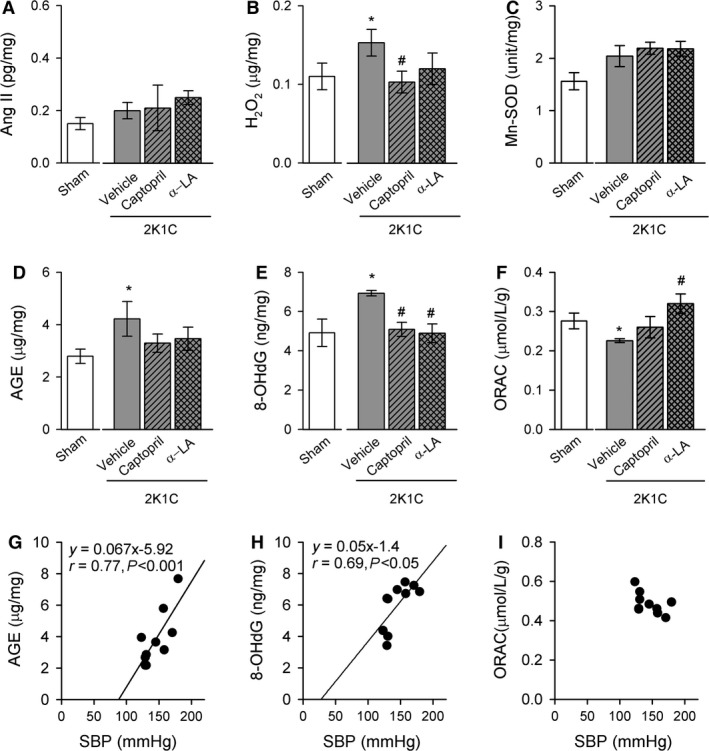
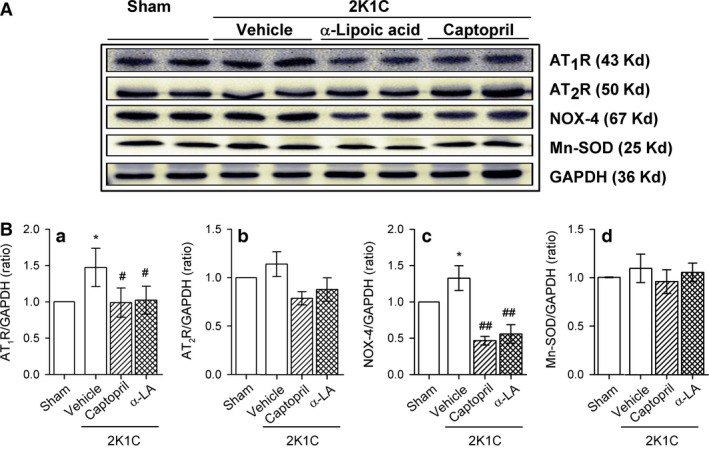
Hypertension often occurs in conjunction with insulin resistance. The purpose of this study was to evaluate whether sustained renal hypertension increases the risk of diabetes mellitus in rats, and to define the underlying mechanisms. Two-kidney, one-clip hypertensive (2K1C) rats received captopril (50 mg/kg/day), α-lipoic acid (100 mg/kg/day), or vehicle treatment for 3 months after surgery. Blood pressure was measured by tail cuff plethysmography. Oral glucose tolerance test (OGTT), immunohistochemistry, and western blotting were performed. In addition, insulin secretion from islet cells was measured. OGTT yielded abnormal results, and the number of islet cells and the size of pancreatic β/α cells were decreased in 2K1C rats. Basal insulin levels were also reduced in the plasma. Insulin secretion from pancreatic islet cells in response to high glucose was also attenuated in 2K1C rats compared with sham rats. The levels of oxidative stress markers, including 8-hydroxydeoxyguanosine and NADPH oxidase-4, were increased in pancreatic tissue and pancreatic islets in 2K1C rats. The abnormalities observed in 2K1C rats were improved by captopril or α-lipoic acid treatment. These findings indicate that sustained renal hypertension may lead to pancreatic dysfunction, increasing oxidative stress in pancreatic islets.
高血压常与胰岛素抵抗同时出现。本研究的目的是评估持续性肾性高血压是否会增加大鼠患糖尿病的风险,并确定其潜在机制。双肾单夹高血压(2K1C)大鼠在手术后接受卡托普利(50毫克/千克/天)、α-硫辛酸(100毫克/千克/天)或赋形剂治疗3个月。通过尾袖体积描记法测量血压。进行口服葡萄糖耐量试验(OGTT)、免疫组织化学和蛋白质印迹分析。此外,还测量了胰岛细胞的胰岛素分泌。OGTT结果异常,2K1C大鼠的胰岛细胞数量以及胰腺β/α细胞大小减少。血浆中的基础胰岛素水平也降低。与假手术大鼠相比,2K1C大鼠胰岛细胞对高糖刺激的胰岛素分泌也减弱。2K1C大鼠胰腺组织和胰岛中氧化应激标志物(包括8-羟基脱氧鸟苷和NADPH氧化酶-4)的水平升高。卡托普利或α-硫辛酸治疗改善了2K1C大鼠中观察到的异常情况。这些发现表明,持续性肾性高血压可能导致胰腺功能障碍,增加胰岛中的氧化应激。