Mao Fei, Kong Qingya, Ni Wei, Xu Xiang, Ling Dazheng, Lu Zhengyu, Li Jian
Shanghai Key Laboratory of New Drug Design School of Pharmacy East China University of Science and Technology 130 Mei Long Road Shanghai 200237 P. R. China.
ChemistryOpen. 2016 Mar 21;5(4):357-68. doi: 10.1002/open.201600015. eCollection 2016 Aug.
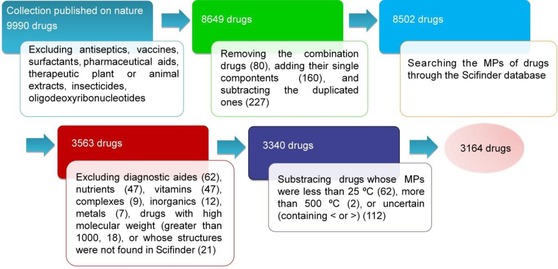
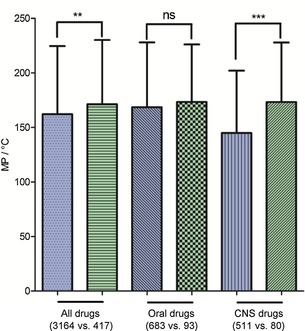
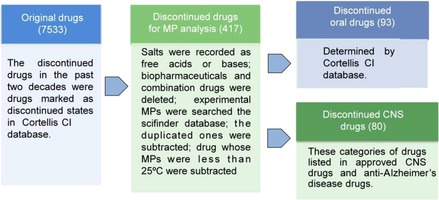
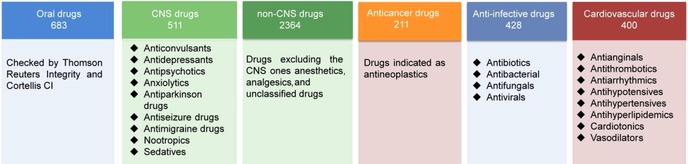
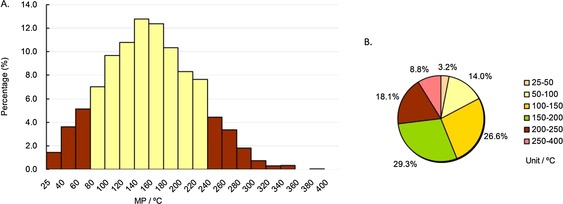
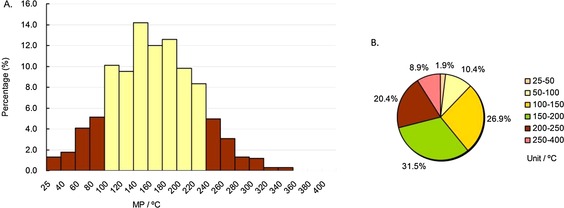
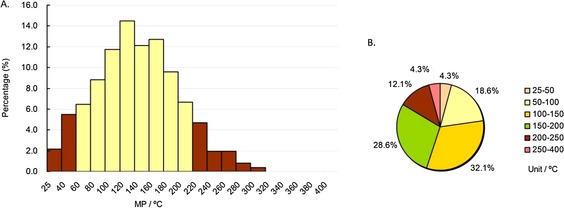
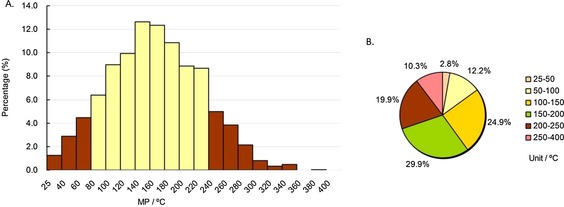
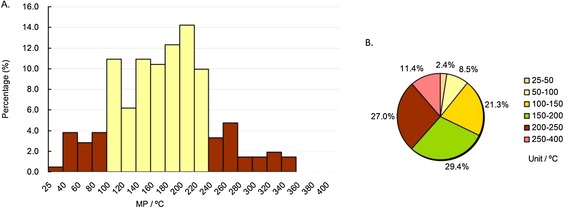
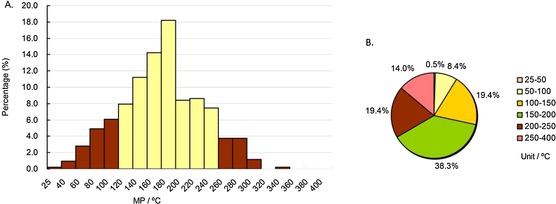
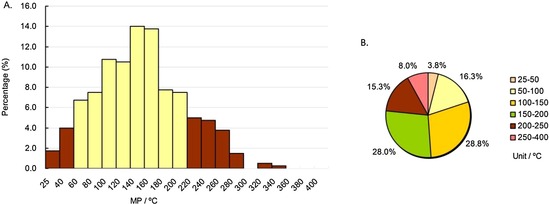
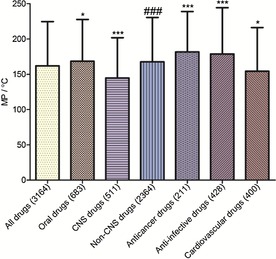
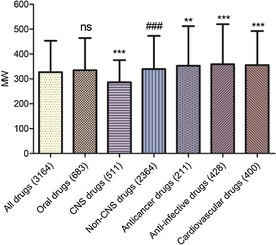
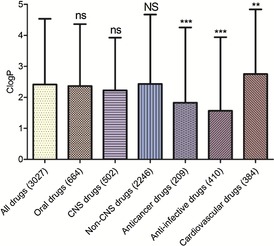
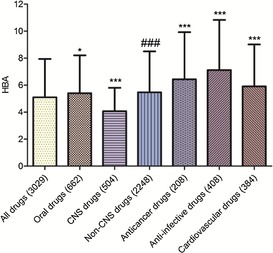
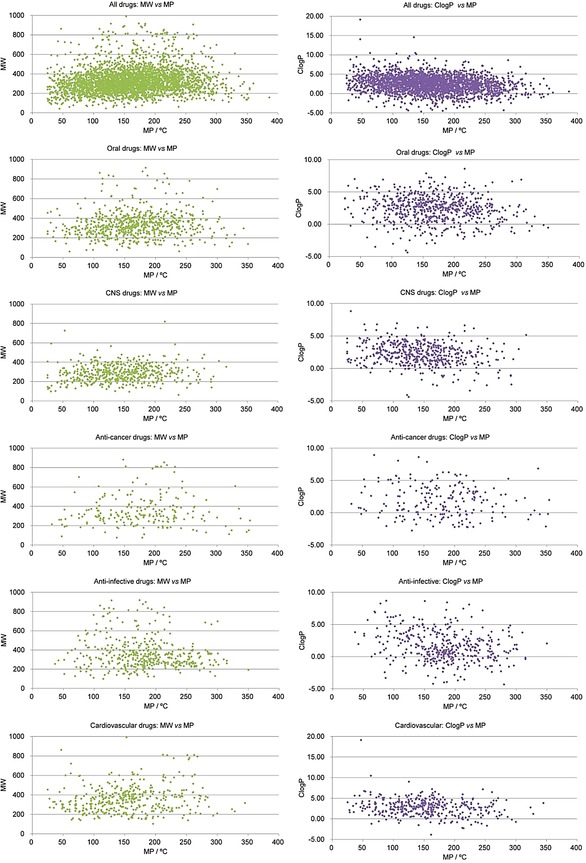
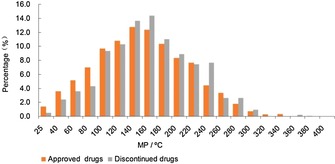
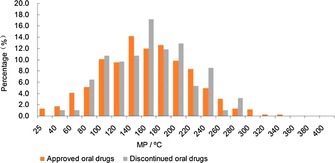
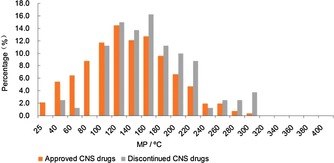
The melting point (MP), an easily accessible physical parameter, has considerable potential for the judgment of drug-like properties. However, to the best of our knowledge, there are no useful guidelines for understanding the relationship between the MP and drug-like properties. To this end, we have constructed the largest MP database (experimental value) of globally approved drugs (3164 organic small-molecule drugs) and discontinued drugs (417 organic small-molecule drugs) and subsequently extracted six subdatabases from the whole approved database and two subdatabases from the discontinued database. The MP distribution statistics and analysis of approved drugs reveal five noteworthy observations; moreover, the MP distribution statistics and analysis of discontinued drugs further supplement these criteria. In addition, the comparison of molecular weight (MW) versus MP and Clog P versus MP distributions of different classes of approved drugs indicated that the MWs and Clog P values of most drugs in the optimal MP range were not more than 500 and 5, respectively, implying the MP distribution criterion was in accordance with Lipinski's rule of five.
熔点(MP)是一个易于获取的物理参数,在判断类药性质方面具有很大潜力。然而,据我们所知,目前尚无用于理解熔点与类药性质之间关系的实用指南。为此,我们构建了全球已批准药物(3164种有机小分子药物)和已停用药物(417种有机小分子药物)的最大熔点数据库(实验值),随后从整个已批准数据库中提取了六个子数据库,并从已停用数据库中提取了两个子数据库。对已批准药物的熔点分布统计和分析揭示了五个值得注意的观察结果;此外,对已停用药物的熔点分布统计和分析进一步补充了这些标准。此外,不同类别已批准药物的分子量(MW)与熔点以及 clogP 与熔点分布的比较表明,最佳熔点范围内大多数药物的分子量和 clogP 值分别不超过500和5,这意味着熔点分布标准符合 Lipinski 五规则。