
探索进行生物除磷的微生物群落的结构和功能变化。
Exploring the Shift in Structure and Function of Microbial Communities Performing Biological Phosphorus Removal.
作者信息
Mao Yanping, Wang Zhiping, Li Liguan, Jiang Xiaotao, Zhang Xuxiang, Ren Hongqiang, Zhang Tong
机构信息
College of Chemistry and Environmental Engineering, Shenzhen University, Shenzhen, China.
Environmental Biotechnology Laboratory, Department of Civil Engineering, The University of Hong Kong, Pokfulam Road, Hong Kong, China.
出版信息
PLoS One. 2016 Aug 22;11(8):e0161506. doi: 10.1371/journal.pone.0161506. eCollection 2016.
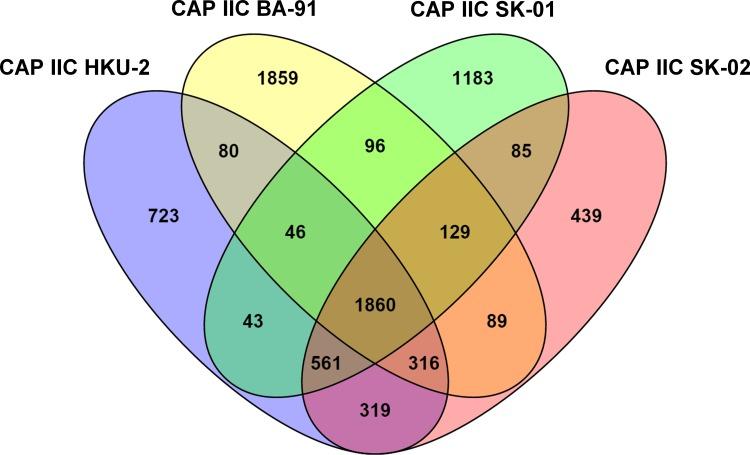
A sequencing batch reactor fed mainly by acetate was operated to perform enhanced biological phosphorus removal (EBPR). A short-term pH shock from 7.0 to 6.0 led to a complete loss of phosphate-removing capability and a drastic change of microbial communities. 16S rRNA gene pyrosequencing showed that large proportions of glycogen accumulating organisms (GAOs) (accounted for 16% of bacteria) bloomed, including Candidatus Competibacter phosphatis and Defluviicoccus-related tetrad-forming organism, causing deteriorated EBPR performance. The EBPR performance recovered with time and the dominant Candidatus Accumulibacter (Accumulibacter) clades shifted from Clade IIC to IIA while GAOs populations shrank significantly. The Accumulibacter population variation provided a good opportunity for genome binning using a bi-dimensional coverage method, and a genome of Accumulibacter Clade IIC was well retrieved with over 90% completeness. Comparative genomic analysis demonstrated that Accumulibacter clades had different abilities in nitrogen metabolism and carbon fixation, which shed light on enriching different Accumulibacter populations selectively.
以乙酸盐为主要进料的序批式反应器用于强化生物除磷(EBPR)。从7.0到6.0的短期pH冲击导致除磷能力完全丧失以及微生物群落的急剧变化。16S rRNA基因焦磷酸测序显示,大量糖原积累菌(GAOs)(占细菌的16%)大量繁殖,包括磷酸盐竞争杆菌属(Candidatus Competibacter phosphatis)和与四联球菌属相关的四联形成菌,导致EBPR性能恶化。EBPR性能随时间恢复,优势聚磷菌(Accumulibacter)分支从IIC类转变为IIA类,而GAOs种群显著减少。聚磷菌种群变异为使用二维覆盖方法进行基因组分箱提供了良好机会,并且成功检索到了完整性超过90%的IIC类聚磷菌基因组。比较基因组分析表明,聚磷菌分支在氮代谢和碳固定方面具有不同能力,这为选择性富集不同的聚磷菌种群提供了思路。


 Zotero 插件