Bardia Aditya, Iafrate John A, Sundaresan Tilak, Younger Jerry, Nardi Valentina
Massachusetts General Hospital Cancer Center, Harvard Medical School, Boston, Massachusetts, USA
Massachusetts General Hospital Cancer Center, Harvard Medical School, Boston, Massachusetts, USA.
Oncologist. 2016 Sep;21(9):1035-40. doi: 10.1634/theoncologist.2016-0240. Epub 2016 Aug 22.
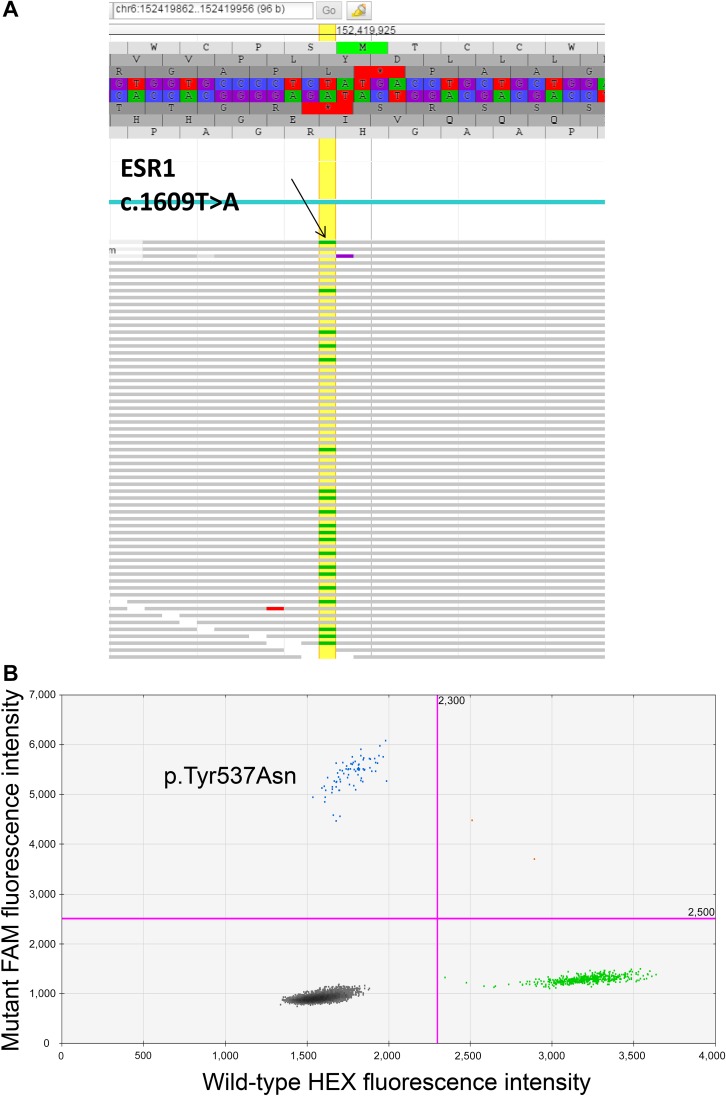
: The last decade in oncology has witnessed impressive response rates with targeted therapies, largely because of collaborative efforts at understanding tumor biology and careful patient selection based on molecular fingerprinting of the tumor. Consequently, there has been a push toward routine molecular genotyping of tumors, and large precision medicine-based clinical trials have been launched to match therapy to the molecular alteration seen in a tumor. However, selecting the "right drug" for an individual patient in clinic is a complex decision-making process, including analytical interpretation of the report, consideration of the importance of the molecular alteration in driving growth of the tumor, tumor heterogeneity, the availability of a matched targeted therapy, efficacy and toxicity considerations of the targeted therapy (compared with standard therapy), and reimbursement issues. In this article, we review the key considerations involved in clinical decision making while reviewing a molecular genotyping report. We present the case of a 67-year-old postmenopausal female with metastatic estrogen receptor-positive (ER+) breast cancer, whose tumor progressed on multiple endocrine therapies. Molecular genotyping of the metastatic lesion revealed the presence of an ESR1 mutation (encoding p.Tyr537Asn), which was absent in the primary tumor. The same ESR1 mutation was also detected in circulating tumor DNA (ctDNA) extracted from her blood. The general approach for interpretation of genotyping results, the clinical significance of the specific mutation in the particular cancer, potential strategies to target the pathway, and implications for clinical practice are reviewed in this article.
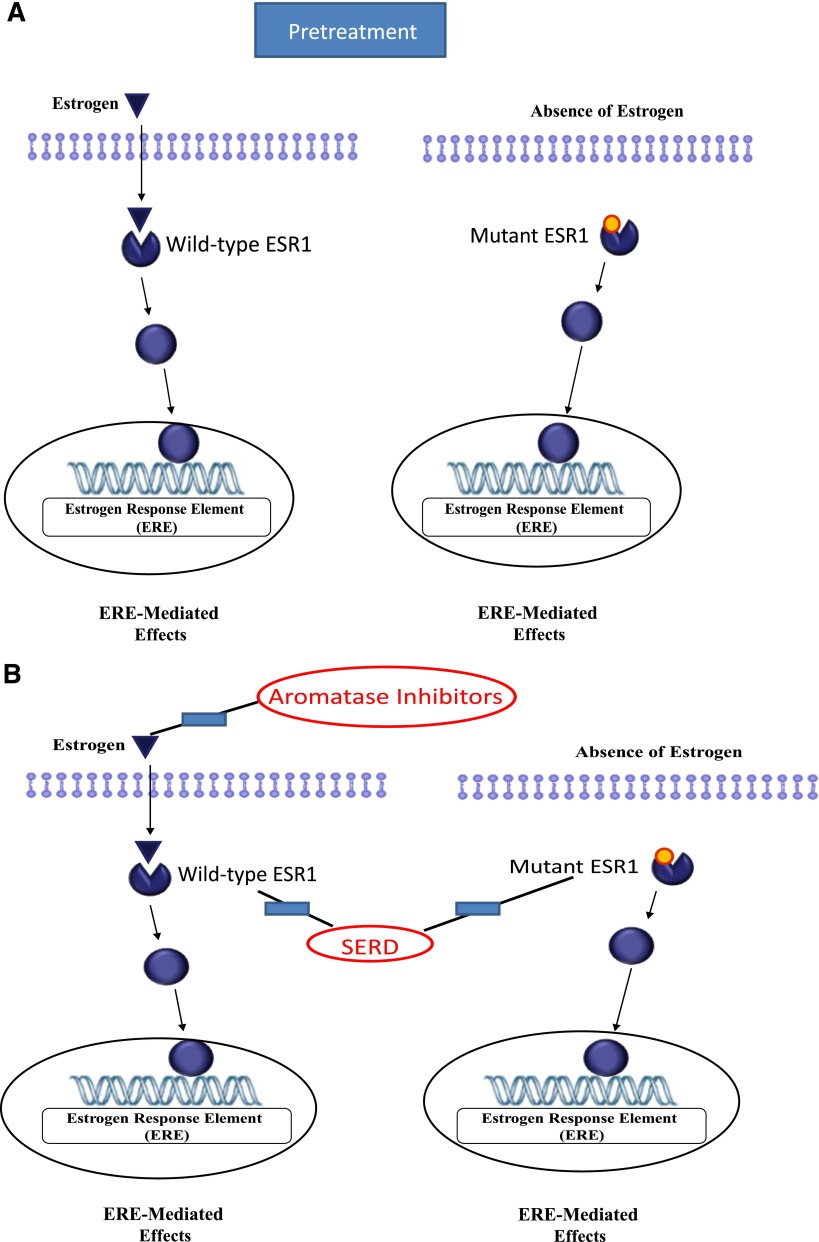
ER+ breast tumors are known to undergo genomic evolution during treatment with the acquisition of new mutations that confer resistance to treatment.ESR1 mutations in the ligand-binding domain of ER can lead to a ligand-independent, constitutively active form of ER and mediate resistance to aromatase inhibitors.ESR1 mutations may be detected by genomic sequencing of tissue biopsies of the metastatic tumor or by sequencing the circulating tumor cells or tumor DNA (ctDNA).Sequencing results may lead to a therapeutic "match" with an existing FDA-approved drug or match with an experimental agent that fits the clinical setting.
肿瘤学领域的过去十年见证了靶向治疗令人瞩目的缓解率,这很大程度上归功于在理解肿瘤生物学方面的协同努力以及基于肿瘤分子指纹进行的谨慎患者选择。因此,人们一直在推动肿瘤的常规分子基因分型,并且已经开展了大型基于精准医学的临床试验,以使治疗与肿瘤中观察到的分子改变相匹配。然而,在临床中为个体患者选择“正确的药物”是一个复杂的决策过程,包括对报告的分析解读、考虑分子改变在驱动肿瘤生长中的重要性、肿瘤异质性、匹配的靶向治疗的可用性、靶向治疗的疗效和毒性考量(与标准治疗相比)以及报销问题。在本文中,我们在回顾分子基因分型报告时,审视临床决策中涉及的关键考量因素。我们呈现了一位67岁绝经后转移性雌激素受体阳性(ER +)乳腺癌女性的病例,其肿瘤在多种内分泌治疗后进展。转移性病灶的分子基因分型显示存在ESR1突变(编码p.Tyr537Asn),而原发性肿瘤中不存在该突变。从她血液中提取的循环肿瘤DNA(ctDNA)中也检测到了相同的ESR1突变。本文回顾了基因分型结果解读的一般方法、特定癌症中特定突变的临床意义、靶向该通路的潜在策略以及对临床实践的影响。
已知ER +乳腺癌肿瘤在治疗期间会发生基因组进化,获得赋予治疗抗性的新突变。ER配体结合域中的ESR1突变可导致ER形成非配体依赖性的组成型活性形式,并介导对芳香化酶抑制剂的抗性。ESR1突变可通过转移性肿瘤组织活检的基因组测序或通过对循环肿瘤细胞或肿瘤DNA(ctDNA)进行测序来检测。测序结果可能导致与现有的FDA批准药物实现治疗“匹配”,或与适合临床情况的实验药物实现匹配。