Sims-Williams Hugh, Matthews Julian C, Talbot Peter S, Love-Jones Sarah, Brooks Jonathan Cw, Patel Nikunj K, Pickering Anthony E
School of Physiology, Pharmacology & Neuroscience, Medical Sciences Building, University of Bristol, Bristol BS8 1TD, United Kingdom; Department of Neurosurgery & Pain Medicine, North Bristol NHS Trust, Bristol BS10 5NB, United Kingdom.
Imaging Sciences, MAHSC, University of Manchester, M20 3LJ, United Kingdom.
Neuroimage. 2017 Feb 1;146:833-842. doi: 10.1016/j.neuroimage.2016.08.038. Epub 2016 Aug 21.
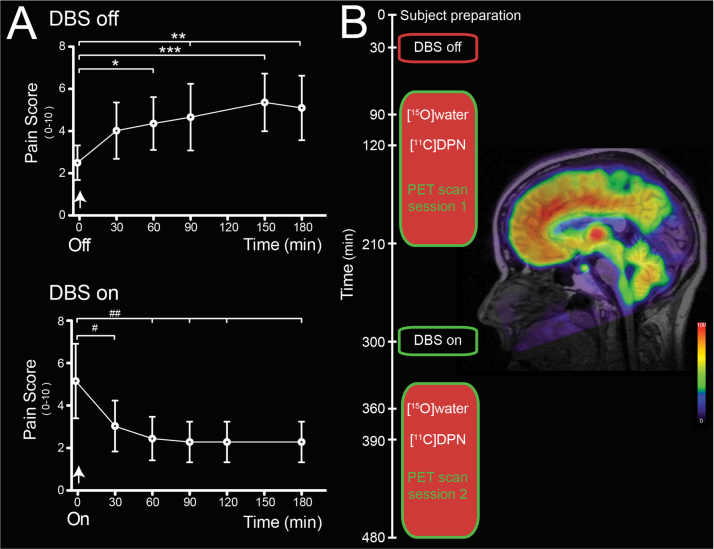
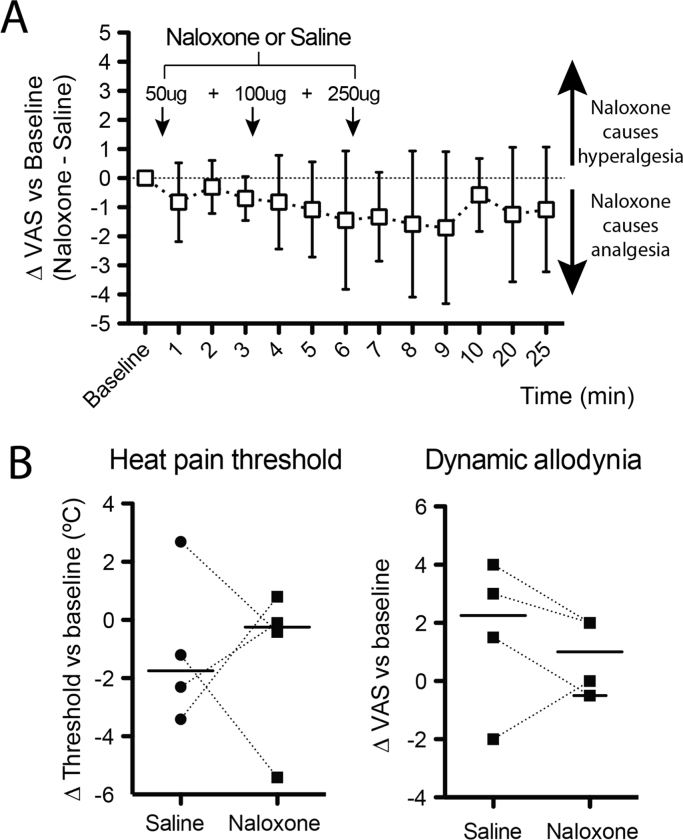
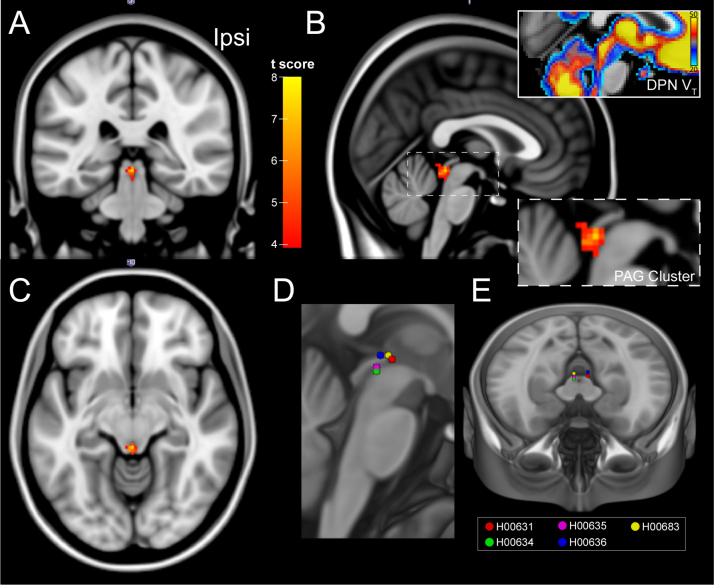
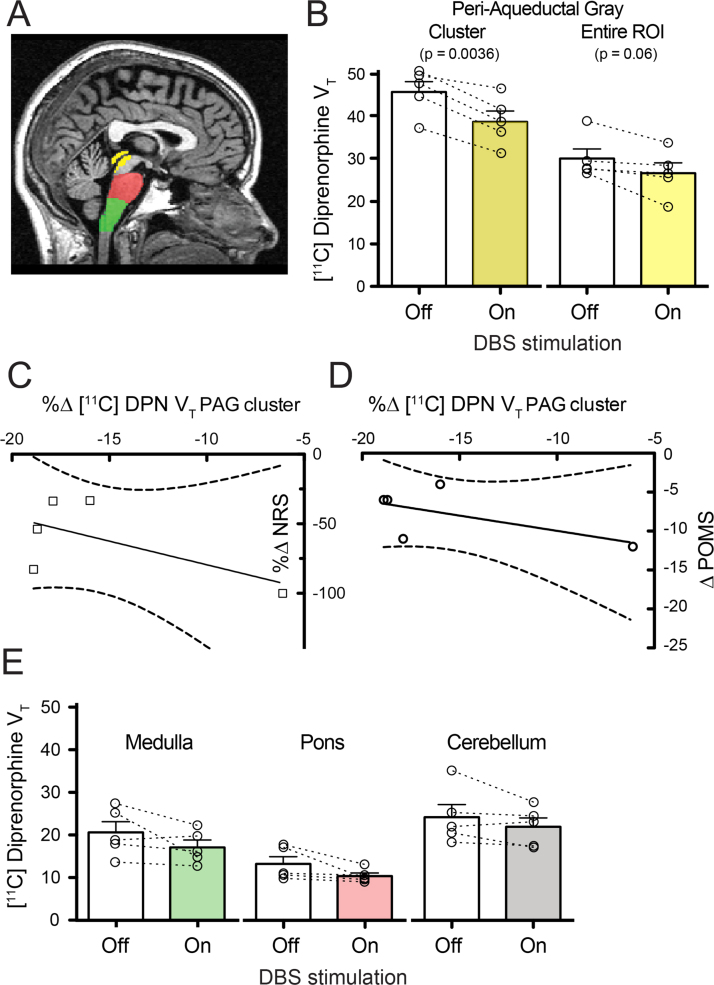
Deep brain stimulation (DBS) of the periaqueductal gray (PAG) is used in the treatment of severe refractory neuropathic pain. We tested the hypothesis that DBS releases endogenous opioids to exert its analgesic effect using [C]diprenorphine (DPN) positron emission tomography (PET). Patients with de-afferentation pain (phantom limb pain or Anaesthesia Dolorosa (n=5)) who obtained long-lasting analgesic benefit from DBS were recruited. [C]DPN and [O]water PET scanning was performed in consecutive sessions; first without, and then with PAG stimulation. The regional cerebral tracer distribution and kinetics were quantified for the whole brain and brainstem. Analysis was performed on a voxel-wise basis using statistical parametric mapping (SPM) and also within brainstem regions of interest and correlated to the DBS-induced improvement in pain score and mood. Brain-wide analysis identified a single cluster of reduced [C]DPN binding (15.5% reduction) in the caudal, dorsal PAG following DBS from effective electrodes located in rostral dorsal/lateral PAG. There was no evidence for an accompanying focal change in blood flow within the PAG. No correlation was found between the change in PAG [C]DPN binding and the analgesic effect or the effect on mood (POMS) of DBS. The analgesic effect of DBS in these subjects was not altered by systemic administration of the opioid antagonist naloxone (400ug). These findings indicate that DBS of the PAG does indeed release endogenous opioid peptides focally within the midbrain of these neuropathic pain patients but we are unable to further resolve the question of whether this release is responsible for the observed analgesic benefit.
中脑导水管周围灰质(PAG)的深部脑刺激(DBS)用于治疗严重的难治性神经性疼痛。我们使用[C]二丙诺啡(DPN)正电子发射断层扫描(PET)来检验DBS释放内源性阿片类物质以发挥其镇痛作用的假说。招募了因去传入性疼痛(幻肢痛或痛性麻木,n = 5)而从DBS中获得持久镇痛益处的患者。连续进行[C]DPN和[O]水PET扫描;第一次在不进行PAG刺激的情况下进行,然后在进行PAG刺激的情况下进行。对全脑和脑干的区域脑示踪剂分布及动力学进行定量分析。使用统计参数映射(SPM)在体素水平上进行分析,并在脑干感兴趣区域内进行分析,且与DBS引起的疼痛评分和情绪改善相关。全脑分析发现,来自位于嘴侧背侧/外侧PAG的有效电极进行DBS后,尾侧背侧PAG中[C]DPN结合减少了单一簇(减少15.5%)。没有证据表明PAG内伴随有血流的局灶性变化。未发现PAG中[C]DPN结合的变化与DBS的镇痛效果或对情绪(POMS)的影响之间存在相关性。阿片类拮抗剂纳洛酮(400μg)全身给药并未改变DBS对这些受试者的镇痛效果。这些发现表明,PAG的DBS确实在这些神经性疼痛患者的中脑内局部释放了内源性阿片肽,但我们无法进一步解决这种释放是否是观察到的镇痛益处的原因这一问题。