
Ets2基因敲低在体内和体外均抑制食管鳞状细胞癌的肿瘤发生。
Ets2 knockdown inhibits tumorigenesis in esophageal squamous cell carcinoma in vivo and in vitro.
作者信息
Li Qinghua, Yang Lu, Han Kang, Zhu Liqiang, Zhang Yanting, Ma Shanshan, Zhang Kun, Yang Bo, Guan Fangxia
机构信息
The First Affiliated Hospital of Zhengzhou University, Zhengzhou 450052, Henan Province, China.
School of Life Sciences, Zhengzhou University, Zhengzhou 450001, Henan Province, China.
出版信息
Oncotarget. 2016 Sep 20;7(38):61458-61468. doi: 10.18632/oncotarget.11369.
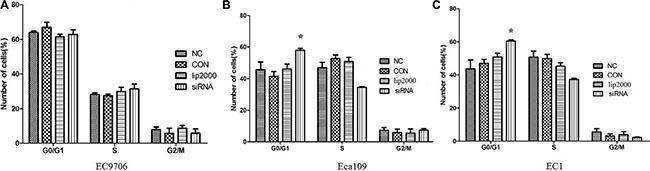
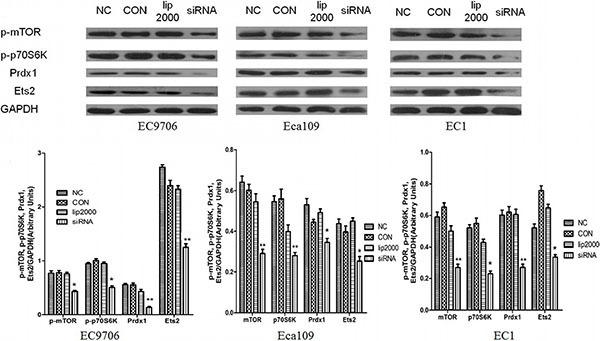
Increased expression of Ets2 is reported upregulated in esophageal squamous cell carcinoma tissue. However, the function of Ets2 in carcinogenesis of ESCC is poorly understood. Here, the rise of Ets2 was confirmed in ESCC cells and Ets2 depletion by RNA interference promotes cell apoptosis, inhibits cell proliferation, attenuates cell invasion and induces cell cycle G0/G1 arrest in vitro. Moreover, in vivo, Xenograft mouse model studies showed Ets2 knockdown inhibits tumor formation and metastasis significantly. Furthermore, Ets2 depletion inactivates the mTOR/p70S6K signaling pathway both in vitro and in vivo. Taken together, these findings strongly suggest that a critical role of Ets2 in human ESCC pathogenesis via the inactivation of the mTOR/p70S6K signaling pathway.
据报道,食管鳞状细胞癌组织中Ets2的表达增加。然而,Ets2在食管鳞状细胞癌发生过程中的功能尚不清楚。在此,我们证实了食管鳞状细胞癌细胞中Ets2的升高,并且通过RNA干扰使Ets2缺失可促进细胞凋亡、抑制细胞增殖、减弱细胞侵袭并在体外诱导细胞周期G0/G1期阻滞。此外,在体内,异种移植小鼠模型研究表明,Ets2基因敲低可显著抑制肿瘤形成和转移。此外,Ets2缺失在体外和体内均使mTOR/p70S6K信号通路失活。综上所述,这些发现强烈表明Ets2通过使mTOR/p70S6K信号通路失活在人类食管鳞状细胞癌发病机制中起关键作用。




 Zotero 插件