Xu Zexuan, Bassett Seth Willis, Hu Bill, Dyer Scott Barrett
Department of Earth, Ocean and Atmosphere Science, Florida State University, Tallahassee, Florida 32306, USA.
Climate and Ecosystem Sciences Division, Lawrence Berkeley National Laboratory, Berkeley, California 94720, USA.
Sci Rep. 2016 Aug 25;6:32235. doi: 10.1038/srep32235.
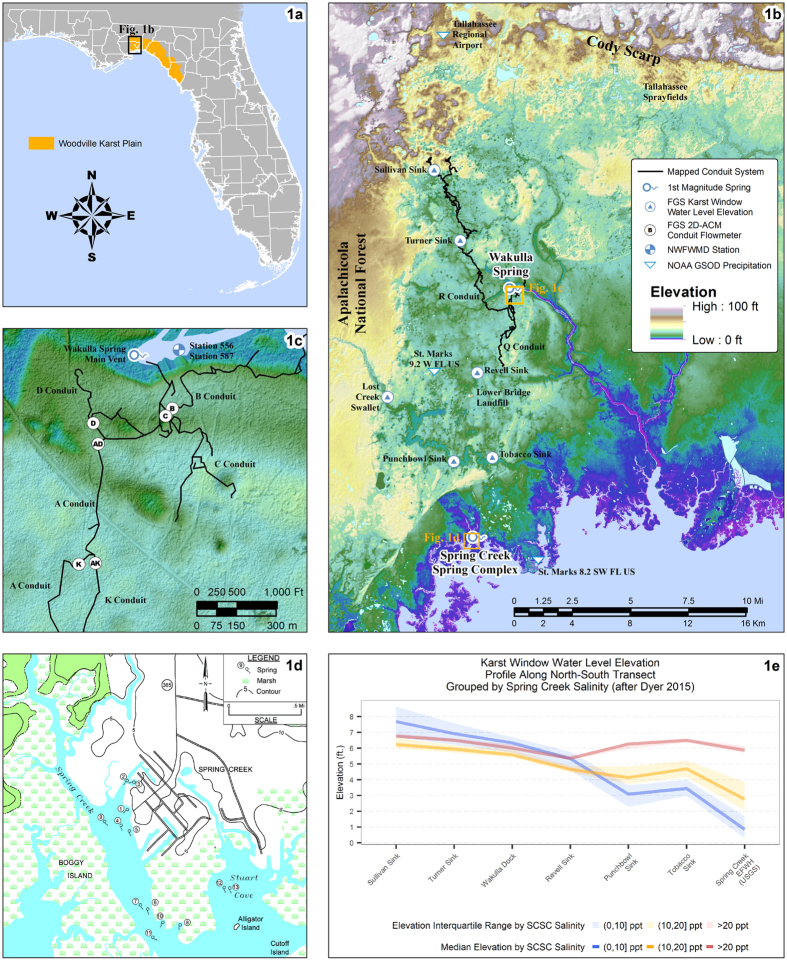
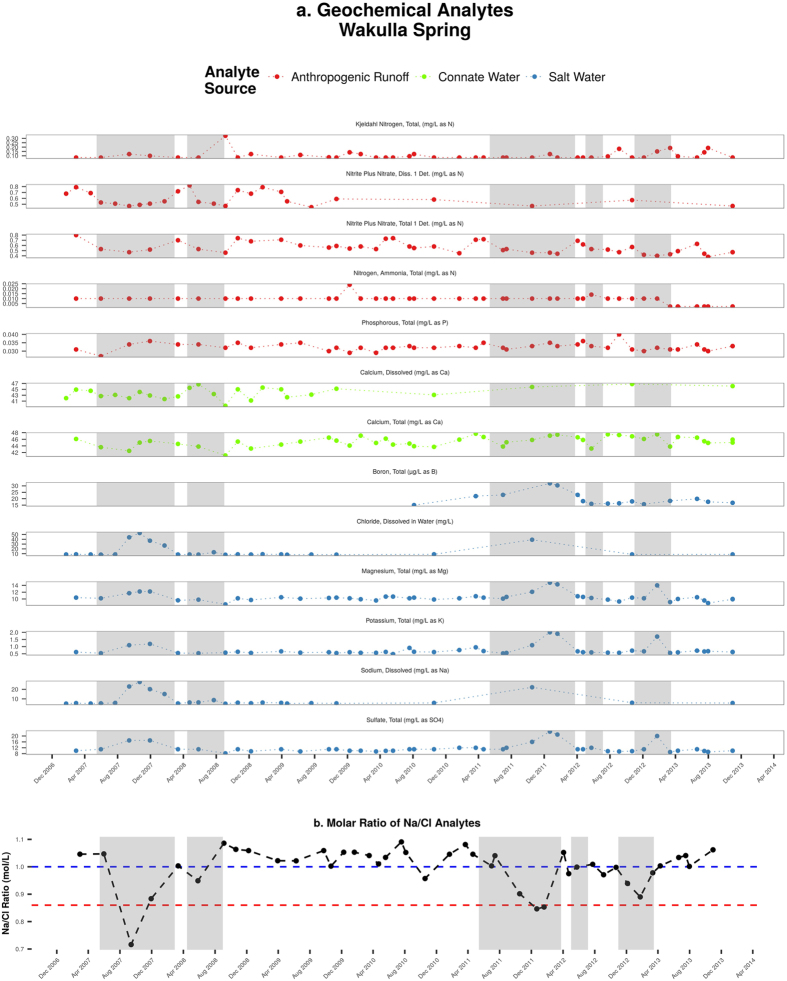
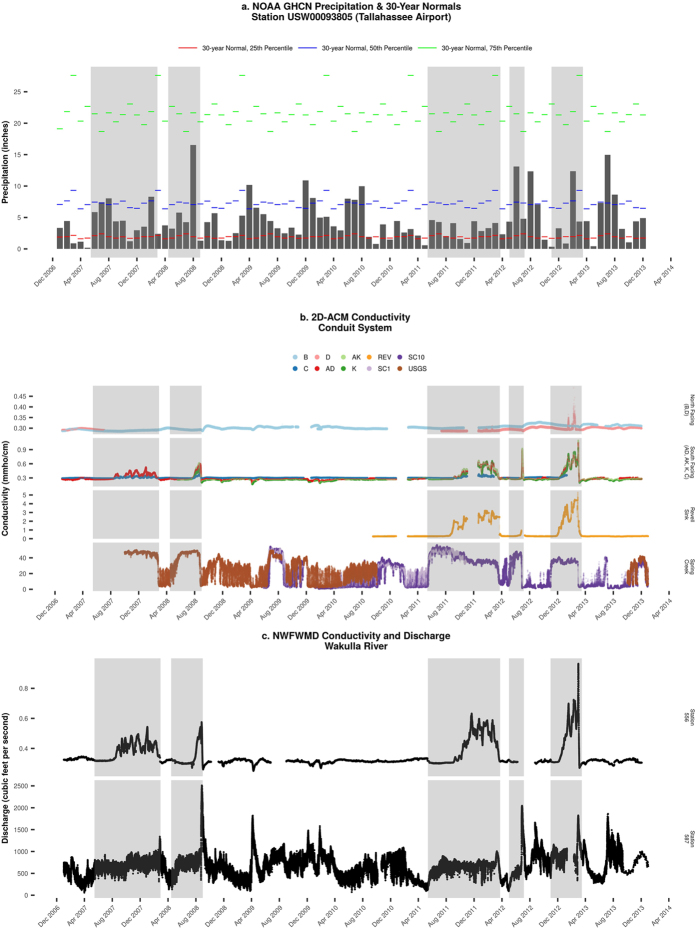
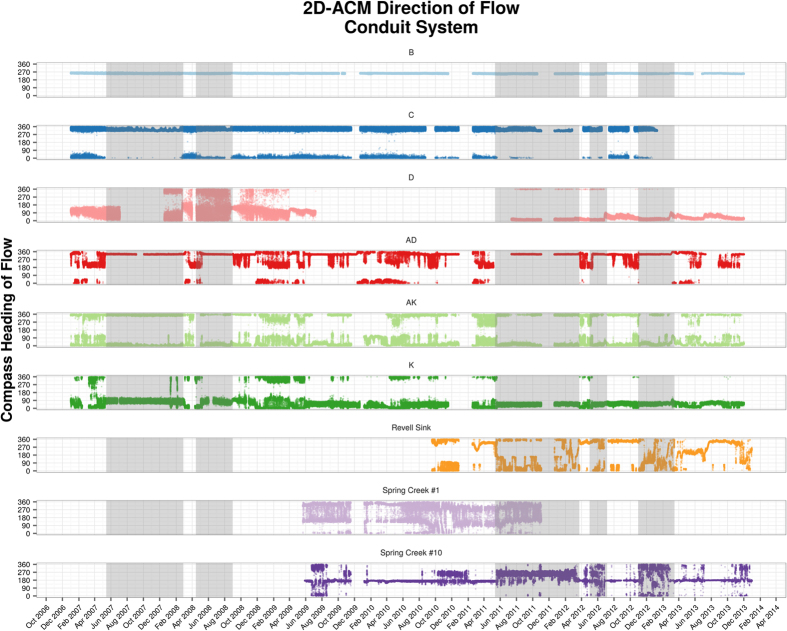
Five periods of increased electrical conductivity have been found in the karst conduits supplying one of the largest first magnitude springs in Florida with water. Numerous well-developed conduit networks are distributed in the Woodville Karst Plain (WKP), Florida and connected to the Gulf of Mexico. A composite analysis of precipitation and electrical conductivity data provides strong evidence that the increases in conductivity are directly tied to seawater intrusion moving inland and traveling 11 miles against the prevailing regional hydraulic gradient from from Spring Creek Spring Complex (SCSC), a group of submarine springs at the Gulf Coast. A geochemical analysis of samples from the spring vent rules out anthropogenic contamination and upwelling regional recharge from the deep aquifer as sources of the rising conductivity. The interpretation is supported by the conceptual model established by prior researchers working to characterize the study area. This paper documents the first and longest case of seawater intrusion in the WKP, and also indicates significant possibility of seawater contamination through subsurface conduit networks in a coastal karst aquifer.
在为佛罗里达州最大的一级泉之一供水的岩溶管道中,发现了五个电导率增加的时期。众多发育良好的管道网络分布在佛罗里达州的伍德维尔岩溶平原(WKP),并与墨西哥湾相连。对降水和电导率数据的综合分析提供了有力证据,表明电导率的增加与海水入侵直接相关,海水入侵向内陆移动,并逆着主导区域水力梯度从海岸的一组海底泉——斯普林溪泉群(SCSC)行进了11英里。对泉口样本的地球化学分析排除了人为污染和来自深层含水层的上升区域补给作为电导率上升来源的可能性。这一解释得到了先前致力于研究区域特征的研究人员建立的概念模型的支持。本文记录了WKP首次出现且持续时间最长的海水入侵情况,同时也表明了沿海岩溶含水层中通过地下管道网络发生海水污染的重大可能性。