Bailleul Geoffrey, Kravtzoff Amanda, Joulin-Giet Alix, Lecaille Fabien, Labas Valérie, Meudal Hervé, Loth Karine, Teixeira-Gomes Ana-Paula, Gilbert Florence B, Coquet Laurent, Jouenne Thierry, Brömme Dieter, Schouler Catherine, Landon Céline, Lalmanach Gilles, Lalmanach Anne-Christine
ISP, INRA, Université François Rabelais de Tours, UMR 1282, Nouzilly, France.
CEPR, INSERM, Université François Rabelais, UMR 1100, Tours, France.
PLoS One. 2016 Aug 25;11(8):e0161573. doi: 10.1371/journal.pone.0161573. eCollection 2016.
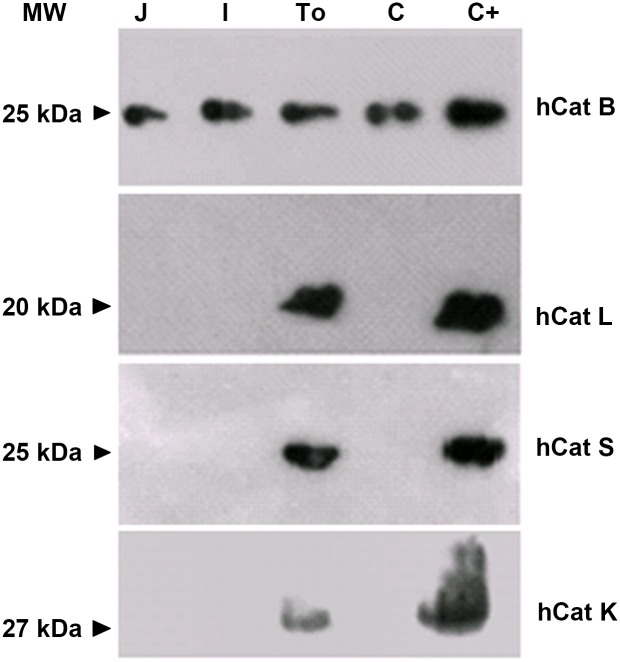
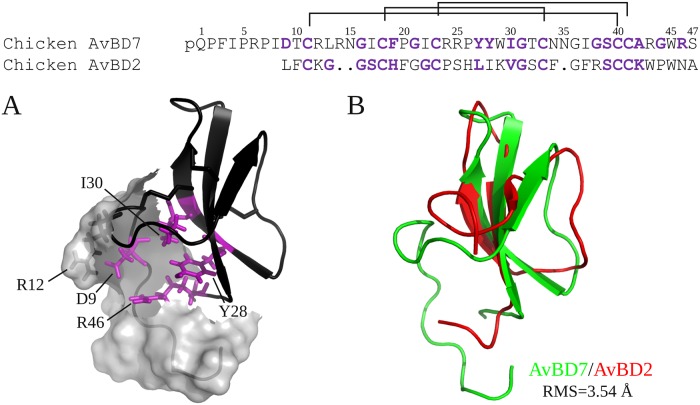
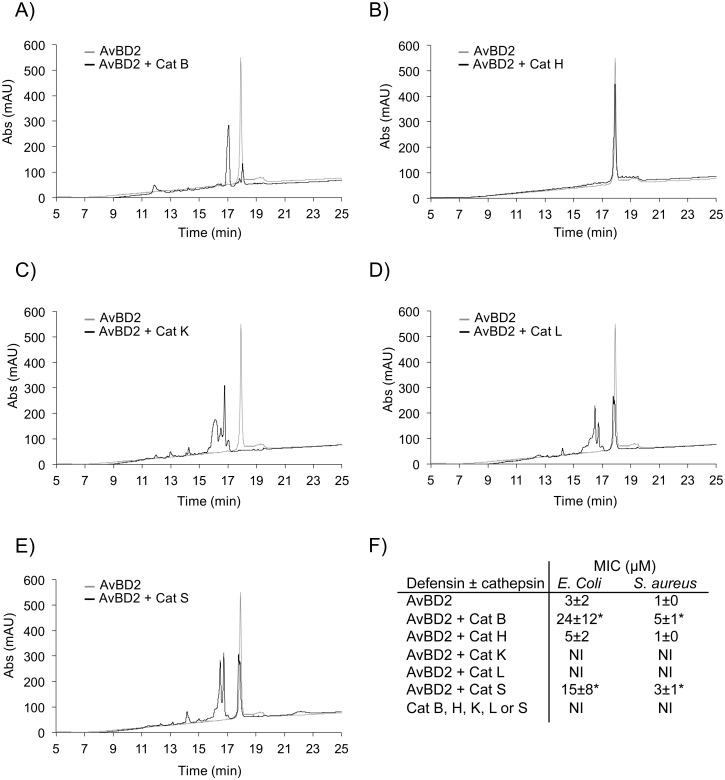
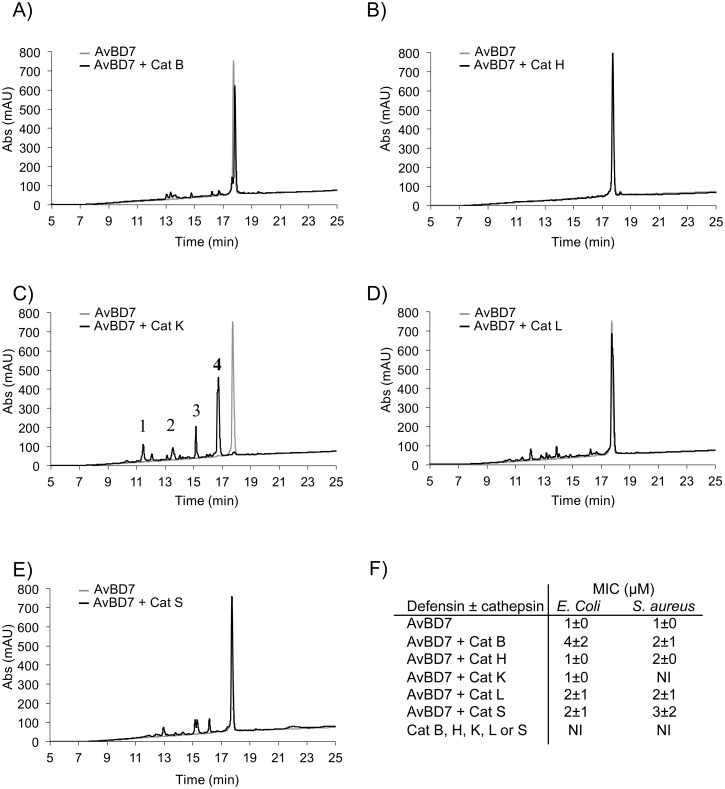
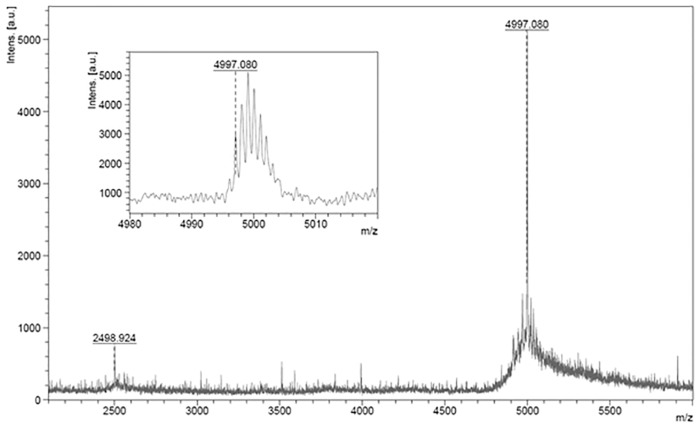
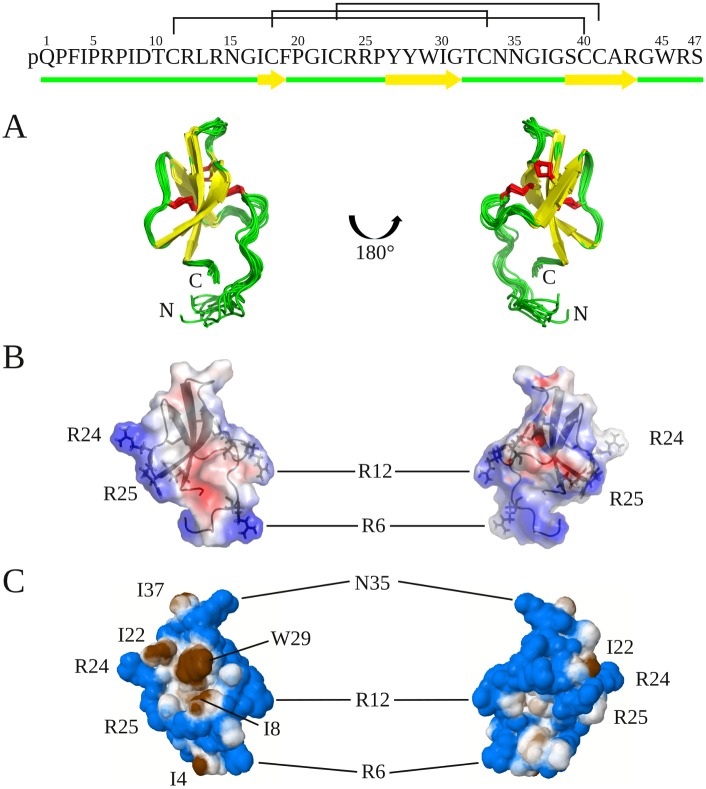
Defensins are frontline peptides of mucosal immunity in the animal kingdom, including birds. Their resistance to proteolysis and their ensuing ability to maintain antimicrobial potential remains questionable and was therefore investigated. We have shown by bottom-up mass spectrometry analysis of protein extracts that both avian beta-defensins AvBD2 and AvBD7 were ubiquitously distributed along the chicken gut. Cathepsin B was found by immunoblotting in jejunum, ileum, caecum, and caecal tonsils, while cathepsins K, L, and S were merely identified in caecal tonsils. Hydrolysis product of AvBD2 and AvBD7 incubated with a panel of proteases was analysed by RP-HPLC, mass spectrometry and antimicrobial assays. AvBD2 and AvBD7 were resistant to serine proteases and to cathepsins D and H. Conversely cysteine cathepsins B, K, L, and S degraded AvBD2 and abolished its antibacterial activity. Only cathepsin K cleaved AvBD7 and released Ile4-AvBD7, a N-terminal truncated natural peptidoform of AvBD7 that displayed antibacterial activity. Besides the 3-stranded antiparallel beta-sheet typical of beta-defensins, structural analysis of AvBD7 by two-dimensional NMR spectroscopy highlighted the restricted accessibility of the C-terminus embedded by the N-terminal region and gave a formal evidence of a salt bridge (Asp9-Arg12) that could account for proteolysis resistance. The differential susceptibility of avian defensins to proteolysis opens intriguing questions about a distinctive role in the mucosal immunity against pathogen invasion.
防御素是动物界(包括鸟类)黏膜免疫的一线肽。它们对蛋白水解的抗性以及随之而来的维持抗菌潜力的能力仍存在疑问,因此对此进行了研究。我们通过对蛋白质提取物进行自下而上的质谱分析表明,禽类β-防御素AvBD2和AvBD7在鸡肠道中广泛分布。通过免疫印迹在空肠、回肠、盲肠和盲肠扁桃体中发现了组织蛋白酶B,而仅在盲肠扁桃体中鉴定出组织蛋白酶K、L和S。通过反相高效液相色谱、质谱和抗菌试验分析了AvBD2和AvBD7与一组蛋白酶孵育后的水解产物。AvBD2和AvBD7对丝氨酸蛋白酶以及组织蛋白酶D和H具有抗性。相反,半胱氨酸组织蛋白酶B、K、L和S降解AvBD2并消除其抗菌活性。只有组织蛋白酶K切割AvBD7并释放出Ile4-AvBD7,这是AvBD7的一种N端截短的天然肽形式,具有抗菌活性。除了β-防御素典型的三链反平行β-折叠外,通过二维核磁共振光谱对AvBD7进行的结构分析突出了被N端区域包埋的C端的可及性受限,并正式证明了一个盐桥(Asp9-Arg12),这可以解释其对蛋白水解的抗性。禽类防御素对蛋白水解的不同敏感性引发了关于其在抵抗病原体入侵的黏膜免疫中独特作用的有趣问题。